

Audio By Carbonatix
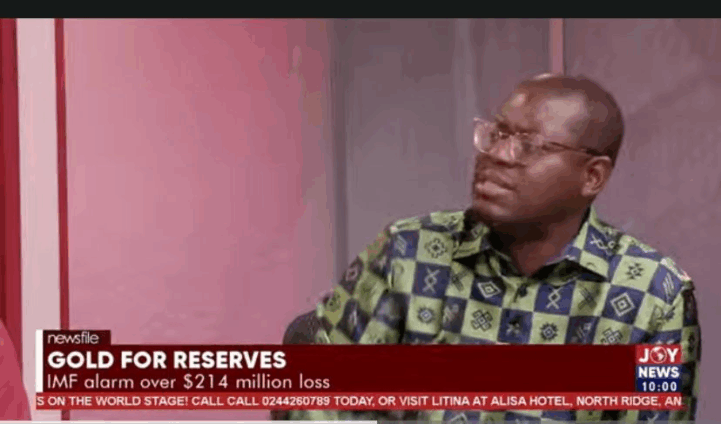
Honorary Vice President of IMANI-Africa, Bright Simons, has called for stronger scrutiny of the cost and efficiency of government institutions, arguing that institutions created to drive national development must still be held to strict performance and sustainability standards.
Speaking on JoyNews' Newsfile on Saturday, January 3, Mr Simon said debates surrounding the GoldBod, the Bank of Ghana, and gold market interventions reflect a broader national challenge, noting that similar efficiency concerns cut across many state institutions.
“There are many policy institutions in this country where we assume efficiency simply because they are not profit-oriented. That assumption is dangerous,” he cautioned.
To support his argument, Mr Simon cited the Ghana Cocoa Board (COCOBOD), describing it as a statutory public institution established to promote the cocoa sector, improve farmer welfare, and generate foreign exchange, rather than to make profits.
“COCOBOD is not a limited liability company, yet we carefully track its losses and are rightly concerned about their impact on the sector,” he noted.
He said successive COCOBOD chief executives have repeatedly raised concerns about how persistent losses burden the cocoa industry, adding that his own analysis shows that COCOBOD’s losses over the past four years are significantly lower than losses being discussed in some other policy interventions.
According to Mr. Simon, if the state is prepared to rigorously assess COCOBOD’s use of resources, the same standard must apply to other policy-driven institutions, including those involved in gold market operations.
“It is the same logic. If we demand efficiency in one policy institution, we cannot excuse inefficiency in another,” he stressed.
Mr. Simon also pointed to fuel pricing and subsidies as a familiar example of the cost implications of public policy, noting that fuel prices have a cascading effect on inflation, industrial activity and household welfare.
“Fuel touches every part of the economy. That is why governments subsidised it for many years to protect businesses and ordinary citizens,” he explained.
However, he warned that when subsidies become unsustainable, the government is forced to introduce corrective measures, including taxes, to recover mounting costs.
“The fact that a policy is beneficial does not mean we should ignore inefficiency. At some point, the bill must be paid,” he said.
He urged policymakers to balance developmental objectives with efficiency, transparency and fiscal discipline, warning that failure to do so could pose long-term risks to the country’s economic stability.
Latest Stories
-
Mahama endorses ADB at Kwahu Business Summit
41 minutes -
Every gram will be tracked – Gold Board unveils traceability push to deal with illegally-mined gold
47 minutes -
Analysis: Why the Bank of Ghana sold half its gold reserves
55 minutes -
Buy wrong gold, face prosecution – Gold Board CEO cracks down on rogue dealers
58 minutes -
Africa pushes integrated health agenda ahead of One Health Summit in Lyon
2 hours -
We own the strategy, its not head office decision – GCB MD positions bank as engine of Ghana’s economy
2 hours -
No more waiting for head office – GCB boss pushes Ghana-first banking
2 hours -
Mahama lauds Julius Debrah for shaping Kwahu Business Forum
2 hours -
Why actors beg in difficulty – Patience Ozokwor on Nollywood financial struggles
3 hours -
Any man who apologises to woman deserves to suffer – Brymo
3 hours -
Nigerian artistes no longer put effort into making music – Omah Lay claims
3 hours -
‘I’m now skeptical about going into politics’ – Davido
3 hours -
Nigeria’s Seplat Energy resumes operations as oil workers halt strike action
3 hours -
Nigeria launches manhunt after abductions by bandits in northwest Zamfara
3 hours -
Kenya fuel executives resign as state probes supply chain irregularities
4 hours