

Audio By Carbonatix
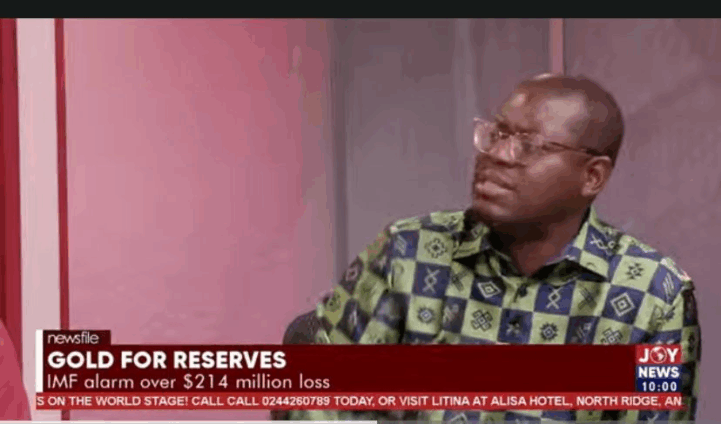
Honorary Vice President of IMANI-Africa, Bright Simons, has raised concerns over transparency, competition, and financing structures within Ghana’s gold trading and aggregation system, warning that the current setup may disadvantage private sector participants.
Speaking on JoyNews' Newsfile on Saturday, January 3, Mr. Simons said once the International Monetary Fund (IMF) identified losses in the Gold-for-Reserves programme as trading losses, responsibility could not be attributed to only one side of the transaction.
“If one institution is responsible for buying and another for selling, then responsibility is shared. At the very least, this is a joint effort,” he argued.
He questioned whether pricing mechanisms on both the buying and selling sides, particularly discounts and premiums offered by off-takers, were competitive and transparent.
“The only way to know whether off-taker pricing is competitive is through an open and transparent bidding platform,” he said.
According to him, feedback from self-financed gold aggregators suggests they are struggling to compete under the current system, especially against an aggregator that enjoys financing advantages.
“You have one aggregator receiving funding from the Bank of Ghana and another sourcing funds commercially from banks. One pays interest, the other does not. Who do you think will win?” he asked.
He dismissed claims that government funding is interest-free, insisting that such financing still carries economic cost, even if not explicitly priced.
Mr Simons also raised concerns about the aggregator licensing process, describing it as opaque and lacking transparency.
“Applicants are told that only one entity qualifies, but there is no publicly known evaluation mechanism,” he said.
He compared the situation to the telecoms sector, where the National Communications Authority (NCA) uses auctions to allocate scarce resources, allowing for greater transparency and public confidence.
“In this case, the public has no visibility. We are simply told who has been selected, without knowing the criteria or process,” he added.
He called for greater openness, competitive bidding, and clearer rules, warning that without reform, the system risks inefficiency and public mistrust.
Latest Stories
-
Global Organised Crime Index says fraud and tax evasion are widespread across Ghana’s economy
9 seconds -
Threats to journalists limit coverage of cocaine trade in Ghana – Global Organised Crime Index
3 minutes -
Kumawu MP commissions 4-unit nurses’ quarters at Bodomase
3 minutes -
Two arrested after suspected narcotics intercepted at Kasoa
4 minutes -
‘Our pipes stock are all gone’ — Duraplast marketing manager counts losses after Avenor fire
8 minutes -
Ntim Fordjour calls for cancellation of Ghana-Colombia maritime deal over drug trafficking concerns
10 minutes -
Daily Insight for CEOs: The CEO’s Q4 leadership priorities
13 minutes -
Cybersecurity is a business risk, not just an IT issue – CSA Director-General
13 minutes -
NSA releases 70,072 postings for 2026/2027 national service year
15 minutes -
Osu residents oppose road expansion over planned demolition of ancestral homes
16 minutes -
Kwakye Ofosu calls Aboagye ‘neophyte and time waster’ over cocaine debate
17 minutes -
Parliamentary immunity must not shield MPs from criminal investigations – Srem-Sai
21 minutes -
Global Organized Crime Index links Chinese trawlers to depletion of Ghana’s fish stocks
22 minutes -
Reject ‘Cocaine Coast’ label through action, not words – Miracles Aboagye tells government
23 minutes -
Fire at North Industrial Area triggers power outage in parts of Accra
24 minutes