

Audio By Carbonatix
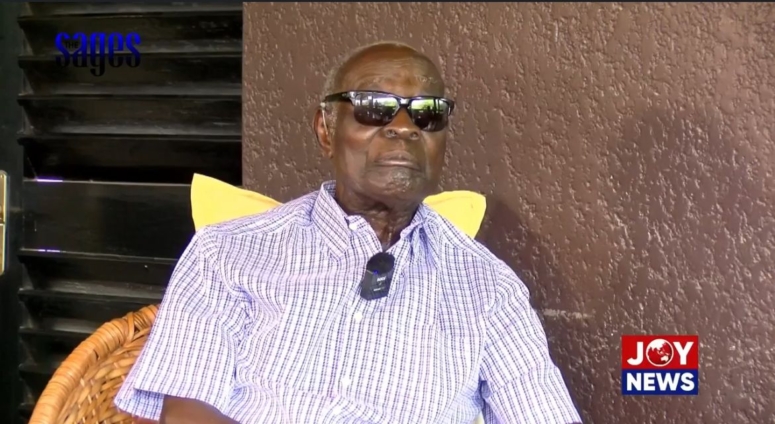
Renowned Ghanaian architect and Pan-Africanist, Prof. John Owusu Addo, has blamed the unplanned nature of Ghana's urban landscape on political interference and a lack of respect for professional expertise in planning and architecture.
Speaking on The Sages on JoyNews, the renowned architect expressed frustration at how politicians and powerful stakeholders routinely sideline professionals trained to design and manage the country’s urban development.
“We have trained town planners, architects and so on. But politicians will not allow them to do their work as they’ve been taught.”
According to him, the planning process has been hijacked by non-technical actors whose personal interests often override professional guidance and established laws.
“Town and country planning, that is urban design, the planning laws are changed at will because those who sit on the committee have no idea. There’s only the town planning officer and one voice against many who have all sorts of interests. Chiefs, politicians, businessmen, they all have interest in land acquisition and development.”
Prof. Owusu Addo said the professionals planners, architects, and technicians are often outnumbered and outvoted, rendering their knowledge and expertise ineffective in the decision-making process.
“And the poor technician or the planner or architect has very little say. And that is why we have our towns and cities. We don’t follow the law.”
“The laws are there. But we are not able to implement them, to enforce them. That’s why we have cities and towns which develop in any way they like.”
He also explained that simply tearing down old buildings and replacing them with new ones on the same plot offers no meaningful transformation.
“In the big cities, the tendency has been to replace one building which is probably outmoded or it has problems. Somebody buys the old building and he puts exactly in his place another building. That is not the way to develop a modern city.”
He advocated for a broader, more visionary approach where larger areas are redeveloped together, with banks and developers backing comprehensive plans designed by professionals.
“You should have about 10 or 20 such buildings in a big area and get the developer and they get the bankers to back them. And you give the architect and the planner and the engineers an opportunity to redesign the whole place. Pedestrian movements, walks, walkways, shops and so on.”
“And that is how modern cities are developed. And not by piecemeal. That is just replacing individual buildings with old buildings, with new buildings.”
Prof. Owusu Addo’s remarks come at a time when Ghana’s major cities, especially Accra and Kumasi, continue to battle congestion, flooding, poor zoning, and infrastructure challenges.
Latest Stories
-
GPL 2025/26: Antwi delivers as Dreams edge Aduana to boost survival push
3 minutes -
Black Queens to continue Pink Ladies Cup participation
15 minutes -
Mergers and acquisitions are surging amidst market exuberance on the exit trail
22 minutes -
Bekwai court jails 30-Year-old for 25 years over mining site robbery
29 minutes -
MultiPro Ghana pays courtesy call to Chief Imam, reinforcing its commitment to faith and community
34 minutes -
Zenith Bank rolls out maiden SME Business Empowerment Lab to support growth of Ghanaian enterprises
41 minutes -
GPL 2025/26: Abaidoo strikes late to earn Chelsea a point against Young Apostles
47 minutes -
Mid-March hearing expected after Ofori-Atta bond case stalls
60 minutes -
Legend of the week – Daddy Lumba
1 hour -
No hearing took place on February 19 — Ofori-Atta’s lawyers clarify
1 hour -
GPL 2025/26: Hohoe United defeat Samartex to move closer to safety
1 hour -
GPL 2025/26: Asante Kotoko held by 10-man Vision FC
1 hour -
Today’s Front pages: Monday, March 2, 2026
2 hours -
Africa’s Energy sovereignty is being tested in the Strait of Hormuz
2 hours -
TikToker “Duabo King” arrested for spreading false claims about Kumasi police officers
2 hours