

Audio By Carbonatix
Research suggests that some children as young as five, are exposed to sexual exploitation.
Again, some societal norms and practices put young people and their sexual and reproductive health at a greater risk thereby burdening the entire country in the long run.
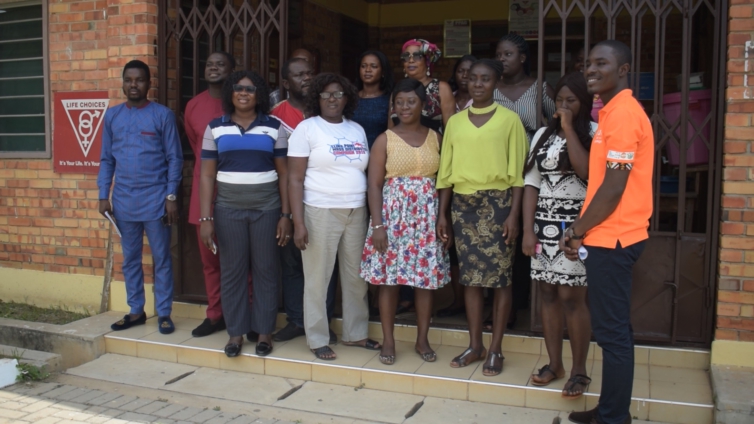
In a bid to address the issue, the Planned Parenthood Association of Ghana (PPAG) is empowering young girls against negative effects of societal norms and to compel them to achieve their aim.
The programme, UNFPA – PPAG Adolescent Girls Project, seeks to curb this menace in the short and long term.
Project officer, Anthony Kwabena Sarfo observes that many young girls are married off to men after getting pregnant.
At a pre implementation and stakeholder consultative meeting in Kumasi, he said, young girls should be brought back to school after delivery.
He encouraged stakeholders and society to assist girls in achieving their goals.
''We hope that through this engagement, we'll realize that young girls have aspirations, they have body autonomy that they should exercise as young people.
“Society, family and parents should support the vision and goals that young girls have set for themselves and we are hoping that the society and country gets better,” he stressed.
Gender desk officer at Kumasi Metropolitan Assembly (KMA), Anastasia Ayuni also emphasized on the need for parents to assist the girls so that such acts are not repeated.
She cautioned young girls to learn how to manage their sexual urges.
“Since they are humans, once in a while they'll have that curiosity, but I will want them to know how to handle it," she said
“But should there be pregnancy, I want them to know it's okay, it's not the end of the world so that they don't quickly opt for abortions which are mostly done in an unsafe environment,” she added.
Miss Anastasia hopes that by the end of the programme, there'll be girls going back to school after delivery and a reduction in teenage pregnancy.
Owusuaa Rebecca, is a teacher at Akosa M/A JHS North Suntreso.
“We hope to see these girls back to school and I know this programme will help break the silence,” she said.
She hopes that even after the project has ended, the reproductive health education and services for young people will continue.
The project is funded by United Nations Population Fund (UNFPA)
Latest Stories
-
GIP Secures $20m boost from Norfund, Axis Pensions to deepen SME financing in Ghana
6 minutes -
Newlywed wife of US soldier freed by ICE after detention at military base
22 minutes -
GMet forecasts thunderstorms, gusty winds over southern Ghana
27 minutes -
John Kpikpi supports Taviefe youth with GH¢5000, calls for unity and new leadership
30 minutes -
John Kpikpi courts Taviefe youth, urges shift towards Progressive Alliance for Ghana
37 minutes -
Reconstruct, Don’t Refurbish: Terminal 2 and the high cost of policy misjudgement
44 minutes -
Starmer arrives in Saudi Arabia after US-Iran ceasefire deal
45 minutes -
Maxwell Kwame Odoom-Tsibu
50 minutes -
Health NGOs warn of imminent family planning crisis over delayed UNFPA supplies at Tema Port
50 minutes -
President Mahama begins Paris visit with French Senate talks, meets Macron later today
51 minutes -
World is lining up for Russian energy, the Kremlin says
54 minutes -
Don’t force reconciliation during pregnancy – Counsellor Angie warns amid unresolved trauma
1 hour -
Libya: Aliou Cisse leaves national team role after salary row
1 hour -
NRSA declares commercial use of Toyota Voxy illegal
1 hour -
Police hunt suspects after gunfire triggers chaos at Kotoku Onion Market
1 hour