

Audio By Carbonatix
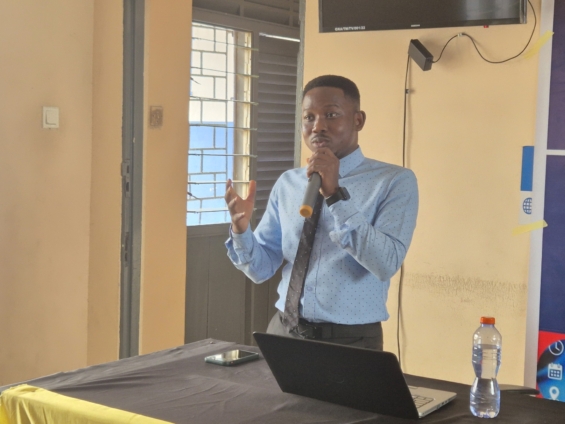
A Physician Assistant at the Pleasant Medical Centre, Rocky Tettedzie, has cautioned the public against the practice of taking drugs before being diagnosed with a health condition.
Mr Tettedzie emphasised that this approach is not an effective preventive strategy and highlighted the risks and effects associated with self-medicating prior to receiving a proper diagnosis from healthcare professionals.
Speaking at the 75th Anniversary of the Ghana Journalists Association-Tema Chapter on the topic “Preventive Healthcare," he explained that many individuals resort to self-medication upon experiencing some symptoms, often assuming they have malaria, and promptly obtain anti-malarial drugs without diagnosis.
He said that some symptoms mimicking malaria might indicate a different health condition, and using drugs before a proper diagnosis can mask the actual condition, leading to delayed or incorrect treatment.
“Taking drugs that have not been prescribed can cause side effects or adverse reactions, which can either worsen health conditions or prevent protection,” he said.
He added that, while there are anti-malarial drugs available for preventive use, especially for travellers visiting malaria-prone areas, these are prescribed based on the specific malaria strain in the region.
He stated that, “anti-malarial drugs used for treatment are different from those used for prevention, so taking malaria drugs without being diagnosed, does not provide the sustained protective effect needed to prevent malaria.”
Mr. Tettedzie also stressed that medication taken without diagnosis may not be the right type of dosage needed to prevent a health condition, therefore rendering them ineffective, and the misuse of these drugs can lead to drug resistance, making medications less effective or ineffective for treating actual health conditions in the future.
He advised that to avoid or reduce the risk of developing health problems, it is safer to take preventive measures such as vaccinations to ward off infectious diseases, routine medical examinations, and adopting healthy lifestyle behaviours like eating a balanced diet, regular physical activity, good hand hygiene, and following safe sex practices.
Latest Stories
-
Only 14% of the world’s cities breathed safe air in 2025, new global report finds
27 minutes -
Ghana’s air quality improves for the first time since 2021; country places 11th in Africa – IQAir 2025 report
32 minutes -
Chad, DR Congo have dirtiest air in Africa; Réunion, Canary Islands cleanest, IQAir 2025 report
40 minutes -
Divine Mission Academy advances to finals of 2026 Luv FM VitaMilk Primary Schools Quiz
1 hour -
University of Ghana beat UENR to reach 2026 Honda Football Championship final
2 hours -
President Mahama urges international partners to respect Ghana’s position on LGBTQ issues
2 hours -
UDS edge UBIDS to reach 2026 Honda Football Championship final
2 hours -
Gender Minister holds first quarter ministerial advisory board meeting
2 hours -
Yirenkyi, Adjetey score lowest as Ayew tops ratings in Austria annihilation
2 hours -
Mahama courts diaspora support, highlights $7.8bn contribution to Ghana’s economy
2 hours -
President Mahama honoured with International Statesperson Award in US
3 hours -
Biggest winners from Ghana’s defeat to Austria
3 hours -
Gov’t working to address salary arrears of 2024 teachers – Education Minister assures
3 hours -
‘Democracy Is Not for Sale’ forum ends with strong calls to tackle vote buying, reform political financing
3 hours -
Parliament rejects Minority motion to investigate GoldBod losses
4 hours