

Audio By Carbonatix
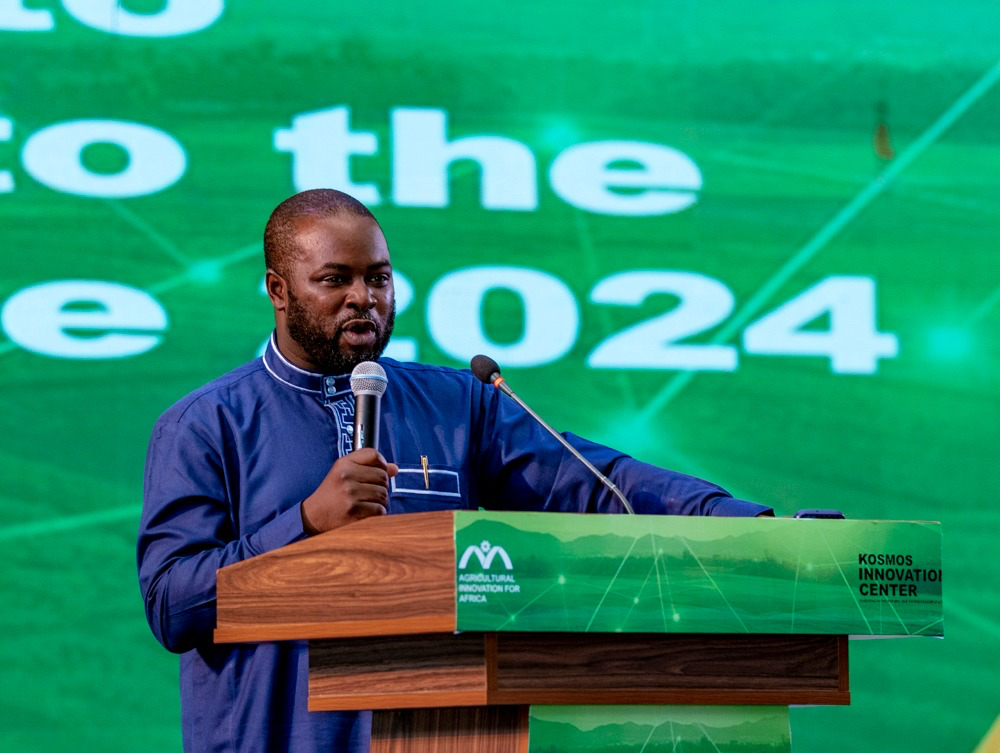
The National Project Coordinator for the International Trade Centre's Netherlands Trust Fund 5 Programme, has called on stakeholders in Ghana’s agricultural value chain to prepare for the integration of traceability systems within the sector.
Isaac Newton Acquah stated that implementing traceability is crucial to maintaining trade relationships with major agricultural export partners.
"The European Union is a major export partner for Ghana, and with new laws coming up in 2025 that require tracing any produce we’re exporting, we need to be prepared,” Acquah said.
Speaking at the second Agricultural Innovation for Africa (AIA) Conference, organised by the Kosmos Innovation Centre and its partners, Acquah highlighted the significant contribution of agriculture to Ghana’s Gross Domestic Product (GDP) and stressed the importance of adapting to evolving export market trends to ensure sustained benefits from the nation’s agricultural exports.
While acknowledging the challenges facing Ghana’s agricultural sector, Acquah noted that several industry players are tackling these issues.
“We have 99 problems, maybe more, but there are companies like Grow for Me, Sabon Sake, and Farmerline addressing access to finance, carbon sequestration, and traceability, respectively,” he said.
He noted the need to transform Ghana into a major exporter of agricultural produce.
“Our goal should be to transition from dependence on food imports to becoming a leading exporter. We need to generate surplus produce that can be exported for additional revenue,” he asserted.
Acquah also encouraged Ghanaian youth to take an active role in agriculture to help achieve national food security.
"Agriculture offers numerous opportunities for young people. You don’t need a background in agriculture to make an impact. Ultimately, it’s not just about job creation but ensuring food security," he added.
The AIA Conference, held under the theme “Empowering Youth Startups and Agri-MSMEs in Africa: Addressing Climate Change, Innovative Financing, Market Efficiency, and Gender Mainstreaming for Sustainable Food Systems,” brought together over 500 participants both virtually and in person, featuring discussions on innovative financing, market efficiency, and a workshop on traceability.
Latest Stories
-
Gov’t records 33% oversubscription of T-bills for the 3rd week running
8 minutes -
Leukaemia, Last Chance Abroad: Bone Marrow Transplant Centre to cost Ghana $11m – Leukaemia Foundation Project
11 minutes -
TAGG hails government for scrapping COVID-19 levy
28 minutes -
5 Ghanaian artistes to look out for in 2026
36 minutes -
Ghana needs $10m to build world-class Leukaemia Treatment Centre – Leukaemia Project Foundation
38 minutes -
Adelekezu residents burn six vehicles, destroy mining company’s property after boy’s death
39 minutes -
Colombian Vice President leads business delegation to GPHA to explore investment opportunities
42 minutes -
TCDA to establish 16,000 hectares of tree crop enclaves across all 16 regions
1 hour -
Pending applications won’t halt Kpandai parliamentary rerun – Kwame Akuffo
1 hour -
Adwoa Safo says her political future lies with Bawumia rather than Kennedy Agyapong
2 hours -
Black Stars to face Germany in pre-World Cup friendly on March 30
2 hours -
Hiving off AG’s powers to OSP without amending Article 88 is unconstitutional – Kwame Akuffo
2 hours -
AG has constitutional authority over OSP, including power to enter nolle prosequi – Kwame Akuffo
2 hours -
Visa, Absa Bank Ghana launch Absa Pay, Ghana’s first issuer wallet
2 hours -
Ghana-U.S. partnership deepening under new policy direction – Deputy Assistant Secretary
3 hours