

Audio By Carbonatix
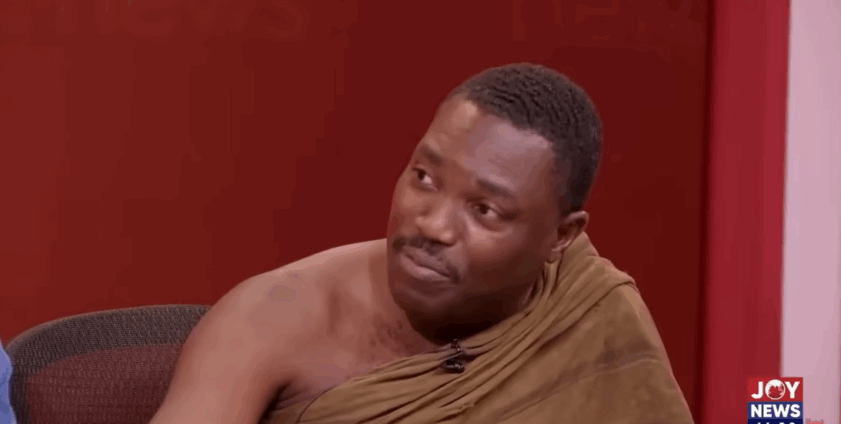
Private legal practitioner Kwame Akuffo says the Attorney-General (AG) remains constitutionally empowered to enter a nolle prosequi in cases being prosecuted by the Office of the Special Prosecutor (OSP), insisting that the anti-graft body does not enjoy absolute independence under Ghana’s constitutional framework.
Speaking on JoyNews’ Newsfile, Mr Akuffo argued that although the OSP was established to independently investigate and prosecute corruption-related offences, its authority ultimately “stands on the shoulders” of the Attorney-General, whose prosecutorial powers are firmly entrenched in Article 88 of the 1992 Constitution.
“The idea that the OSP can work entirely on its own, without any direction or intervention from the Attorney-General, for me, is not proper law,” he said. “Constitutionally, the Attorney-General is the only person mentioned and authorised with prosecutorial power. A subsidiary legislation cannot hive off constitutional powers and give them to the OSP.”
His comments come amid renewed public debate over the scope of the OSP’s independence, particularly following recent high-profile corruption cases and questions about whether the Attorney-General can discontinue prosecutions initiated by the Special Prosecutor through a nolle prosequi.
Akuffo, who said he opposed aspects of the Office of the Special Prosecutor Act when it was first introduced under former President Nana Akufo-Addo, maintained that attempts to transfer part of the Attorney-General’s powers to the OSP without a constitutional amendment were flawed.
“I was one of those who said it was unconstitutional to the extent that it sought to hive off Article 88 powers,” he stated.
“You cannot take part of the Constitution and give it to a third party through a subordinate law.”
He explained that while the OSP Act describes the office as independent, such independence must be interpreted in harmony with the Constitution, not above it. In his view, the Attorney-General’s authority to issue fiats, supervise prosecutions, and even intervene in matters such as extradition underscores the AG’s superior constitutional standing.
“The law should be interpreted in such a way that the Attorney-General supports the OSP, but the OSP is not on the same constitutional level as the Attorney-General,” Mr Akuffo said.
“The OSP is a working tool—an appendage of the Attorney-General’s office.”
The Office of the Special Prosecutor was established in 2017 as part of Ghana’s anti-corruption architecture, with a mandate to independently investigate and prosecute corruption and corruption-related offences involving public officers.
Its independence has often been cited as crucial to insulating prosecutions from political interference.
Latest Stories
-
Lawrence Kobena Nsarko Otoo, Esq
36 minutes -
Bel-Aqua intensifies mental well-being campaign ahead of 15th anniversary
39 minutes -
From banking to party finances: Alfred Kwadwo Thompson elected NPP Treasurer
44 minutes -
George Christian Papa Mends
49 minutes -
Ali Suraj elected NPP NASARA Coordinator
60 minutes -
Mustapha Hamid misses out on NPP Vice Chairmanship by 31 votes despite early poll lead
1 hour -
Kojo Bamba, Henry Nana Boakye and Nana Akomea elected NPP Vice Chairmen
2 hours -
From Delta Force to NPP First Vice Chairman – Kojo Bamba’s political journey
2 hours -
Police restore calm at Larteh following Odwira festival disturbance
3 hours -
‘All the camps will dissolve’ – Bawumia demands one NPP for 2028
3 hours -
There is no time to waste – Bawumia orders NPP to begin 2028 work
3 hours -
Sarkodie visits MobileMoney Fintech LTD
3 hours -
John Boadu unveils new NPP strategy to win back youth and modernise party
3 hours -
Hawa Koomson elected NPP National Women’s Organiser
3 hours -
John Boadu begins NPP rebuild from grassroots ahead of 2028 election
3 hours