

Audio By Carbonatix
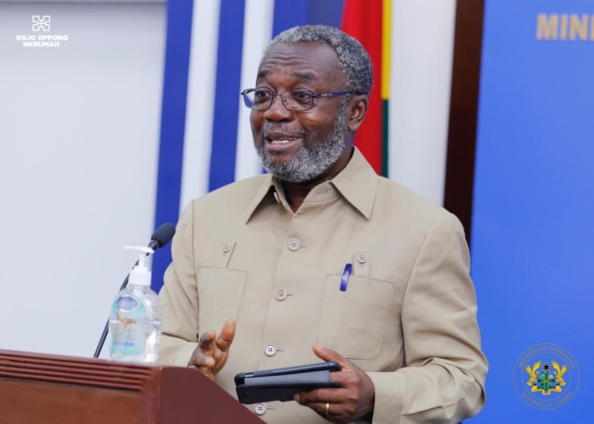
The Presidential Advisor on Health, Dr Anthony Nsiah Asare, has outlined a series of measures aimed at addressing the high rate of emigration among Ghanaian health professionals.
Over the years, influential persons in the country including Okyenhene Osagyefo Amoatia Ofori-Panin have expressed concern over the rate of medical brain drain in Ghana.
In 2023 alone, about 4,000 nurses and midwives are said to have left the country for greener pastures.
This growing trend became the theme for the 43rd Annual General Meeting of the Society of Private Medical and Dental Practitioners (SPMDP) where it pledged to play a crucial role in reversing the brain drain in Ghana's health sector while calling on government to uphold its responsibility to retaining health workers.
Thus, speaking on Joy FM's Super Morning Show, Dr Asare noted that the government is working earnestly to eliminate the push factors while enhancing pull factors to retain talent within the country.
As such, he revealed that the government has removed fees for postgraduate studies for doctors as part of its efforts to streamline the system and make it more accessible.
“No doctor pays fees for postgraduate studies anymore. We have streamlined the postgraduate system to ensure that all the cumbersome processes that were making the procedure difficult for people who wanted to enroll at the Ghana Postgraduate College have been removed," he stated.
He also mentioned plans to increase the number of training sites across the country, which would decentralise the system and provide more opportunities for career progression.
Addressing the economic factors contributing to brain drain, Dr. Nsiah Asare highlighted the need to stabilise the foreign exchange rate, which would make earnings in the country more comparable to those abroad.
“Once the cedi-dollar exchange rate is contained, then that means whatever money you get here will be a bit comparable to the one received abroad," he noted.
In addition to these measures, Dr Nsiah Asare disclosed plans to collaborate with the private sector to provide accommodation for health professionals stationed at various facilities.
“We also think that there will be accommodation provided for anybody sent to any health facility. And for this, the government cannot do it alone; we would have to do it with the private sector.
“And I am happy to say that a lot of the private sector people are very interested in helping the government put up accommodation for doctors like it has been done for judges so that we would have a medical village wherever a hospital is situated.”
Latest Stories
-
Knights and Ladies of Marshall group backs Catholic Bishops’ stance on anti-LGBTQ+
12 minutes -
Bright Simons writes: All the Filla in the Ibrahim Mahama/E&P – Gold Fields Saga
37 minutes -
Monetise Idiocy In Ghana
44 minutes -
The Ghanaian prophet and the mysterious death of his scottish wife Charmain Speirs
1 hour -
Nearly 400 sentenced in Nigeria for links to militant Islamists
2 hours -
Ghana’s recovery supported by gold strength despite global oil price pressures – Standard Bank Research
2 hours -
‘Excellence is our inheritance’ – Nana Sam Brew-Butler hails Mfantsipim’s 150-year reign in leadership
2 hours -
Kwaku Azar writes: A-G vs OSP
3 hours -
Mfantsipim–Adisadel rivalry built excellence, not division – Sam Jonah
3 hours -
Vice President launches Mfantsipim’s 150 years of shaping Ghana’s greatest mind
3 hours -
I assure Otumfuo, Mahama will join him to commission KNUST Teaching Hospital by end of this year – Haruna Iddrisu
4 hours -
Barcelona dominate derby to extend La Liga lead
4 hours -
Gov’t to roll out free special education for persons with disabilities from July 1 – Education Minister
4 hours -
Importers and Exporters Association declares full support for Publican AI port system
5 hours -
“We used it to test our officiating officials’ readiness” – Bawah Fuseini after CAA Athletics event
5 hours