

Audio By Carbonatix
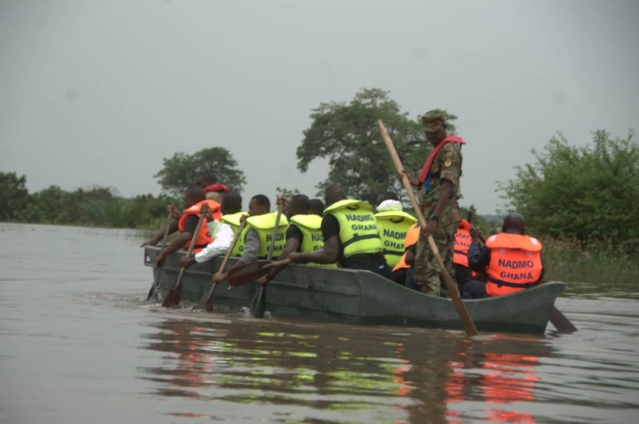
As Ghana enters another rainy season, the National Disaster Management Organisation (NADMO) is stepping up efforts to shift from a relief-centered approach to proactive preparedness, sending a clear message that “prevention pays.”
Floods continue to pose a serious threat across the country, especially in high-risk urban areas. Places such as Kwabre East and Asokore Mampong municipalities have been identified as major flood-prone zones due to recurring disaster incidents. In 2024 alone, Kwabre East recorded at least 17 disaster cases linked to flooding, fire and poor drainage.
“We had a number of children who were displaced and some buildings that collapsed,” said Abdul Latif Chambas, NADMO official at Kwabre East.
"But this year, NADMO is doing things differently. Rather than waiting for the next disaster to strike, the organization is taking strategic steps to empower local actors and save lives.
“I think it is important we do a simulation exercise. Because without a simulation exercise, it is gonna be very difficult to identify the gaps in the system,” said Charlotte Norman, Director for Climate Change Adaptation and Disaster Risk Reduction at NADMO.
Charlotte stated that when people are well-prepared before a flood happens, lives will be saved, and damage will be far less. NADMO’s strategy this season focuses on simulations and intensive training programs involving health workers, emergency responders, security agencies, assembly members, GMet and community leaders. These sessions aim to clearly define each stakeholder’s role during emergencies, ensuring a coordinated and efficient response when the rains come.
According to her, these simulations help everyone from health officers to assembly members understand what to do during a flood. “We’re spelling out everyone’s responsibilities.”
Facilitated by experts from the West African Science Service Centre on Climate Change and Adapted Land Use (WASCAL), the drills bring together critical agencies to build a unified response system that can act swiftly to reduce casualties and damages.
“The training down to the district level and has to link up with the national standard operation protocols and the districts as a community should be able to reduce negative impacts of hazards,” said Dr. Selack Seyni, a facilitator from WASCAL. “This is the only way we can reduce casualties, damages and losses that may be around disasters.”
At the local level, officials are taking lessons from past disasters to heart. We don’t want to wait for disaster to strike and then give out relief items,” said Abdul Latif. “Prevention is better. That’s why we’re acting now.”
Tackling the root causes of urban flooding
Flooding in Ghana’s cities is often the result of both natural and man-made factors. While intense and prolonged rainfall plays a key role, human activities such as poor waste disposal, building on waterways, weak planning regulations, and unplanned urban development exacerbate the situation.
The impact of climate change is also making things worse, with unpredictable weather patterns leading to heavier downpours and more frequent flooding.
Participants in the training programs say they now feel better equipped to handle flood emergencies.
“This is the first time I have had such an engagement with NADMO, and sitting on one table deciding how we will go about emergencies, disasters within the municipality, I found it insightful,” said Abena Serwah, a social welfare department worker who took part in the simulation. “Now, I know how to help if something happens.”
Another participant, Elsi Kusi Appiah, added: “It has been an eye-opener and now I know all the flood-prone areas.”
NADMO says the urgency to act has never been greater. The organization is reaffirming its commitment to saving lives and reducing the scale of destruction caused by floods in 2025 and beyond.
Preparedness is not just a strategy, it says, it’s a life-saving necessity and one message that echoes from the ground up is that prevention truly does pay.
Latest Stories
-
We can tackle multiple priorities – Sam George defends Anti-LGBTQ Bill push
15 minutes -
Statement: Ghana Chamber of Mines’ Response to Claims in Joe Jackson’s “Ananse Stories about the Economy of Ghana”
17 minutes -
GES opens 2026 teacher recruitment for licensed B.Ed graduates
19 minutes -
Ghana must value skilled trades, build resilient learners — Ibn Chambas
27 minutes -
Ghana must rethink education around relevance, resilience and responsibility — Ibn Chambas
30 minutes -
Prince Harry faces defamation lawsuit from charity he co-founded
32 minutes -
South Korea deploys thermal cameras to track escaped zoo wolf
34 minutes -
Calls for royal meeting with Epstein survivors grow ahead of US visit
37 minutes -
Ibn Chambas advocates blend of technology and human values in education
38 minutes -
UMA improves healthcare access in Asutifi North with GH₵700k ‘Kim Taylor Legacy’ Walkway
43 minutes -
Scholarships Authority and Fanaka University offer sponsorship for procurement and supply chain studies
47 minutes -
Bisa Kdei drops new single ‘Go N Look’ featuring Medikal
53 minutes -
Benin facing rising terrorism in north as French military presence faces growing criticism
54 minutes -
UEW Public Lecture Series 2026: Education debate ‘about the soul of Ghana’s future’ — Dr Ibn Chambas
55 minutes -
EU fingerprint and photo travel rules come into force from today
1 hour