

Audio By Carbonatix
The president of the Ghana Union of Traders’ Associations (GUTA) says the reason prices of goods remain high despite the cedi's recent gains is that the traders don’t trust that the gains will last.
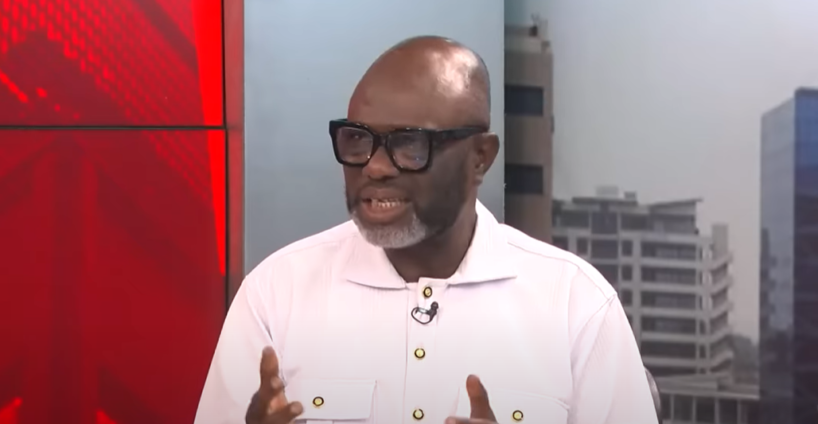
Dr. Joseph Obeng, speaking on JoyNews’ PM Express on Monday, May 12, said traders have been cautious because of what they’ve experienced in the past.
“When the cedi appreciates, they see the gain, and it’s not sustained,” he explained.
“That’s why people are asking me, especially when I made the call to reduce prices, ‘Are you sure this is going to last? Are you not rushing?’”
GUTA made headlines recently when it publicly appealed to the trading community to reflect the cedi’s appreciation in their pricing.
But on the show, the GUTA boss admitted that traders are hesitant because they fear history will repeat itself.
“It’s very important for us to think about how to maintain this gain,” he said. “This gain will come to nothing if we are not able to sustain it.”
He emphasised that what matters now is not just the momentary appreciation of the currency but how government and the Bank of Ghana work to keep the gains steady.
“We have to talk about predictability and sustainability. That’s what we should be focusing on now,” he said.
In response to a question by host Evans Mensah about why market prices haven’t dropped, Dr. Obeng said, “It’s because of what has happened in the past.”
“The traders are simply not ready yet. They are watching to see if this is real.”
He was quick to clarify that this isn’t about unwillingness to cooperate but about protecting businesses from shocks.
“Whatever thing we have to do—if government puts prudent mechanisms in place, if the Bank of Ghana continues the stringent forex controls—then we can talk about maintaining it.”
Dr. Obeng linked sustained currency stability to a bigger economic recovery plan.
He said that when the exchange rate remains stable, it helps to bring inflation down and lower interest rates.
“This is what is going to push the other indicators that make businesses thrive,” he noted.
For him, the current moment should be seen as a window of opportunity.
“How are we taking advantage of the gains that we’ve made and sustaining them? That’s very important,” he stressed.
“This is how I’m looking at it—how we take advantage to enhance productivity.”
He believes that if stability is used to boost competitiveness in local industries, then Ghana could be on the path to true economic recovery.
“If you can use the stability of the currency to enhance productivity, that will make us competitive,” he said. “Then, of course, we are on the threshold to recovery.”
Latest Stories
-
Ablakwa highlights Ghana-France cooperation, praises Macron on reparatory justice
4 minutes -
Protect people, not prices – Joe Jackson rejects fuel tax cuts and subsidies
23 minutes -
Lawyer petitions President to halt Terminal 2 refurbishment over value-for-money concerns
35 minutes -
Sunyani Market traders urge government action amid surging ginger prices
37 minutes -
Maphlix Farms to supply 3,000 tonnes to help bridge tomato deficit
44 minutes -
Ho MP urges public access to officials’ asset declarations
46 minutes -
Ecowas Bank for Investment and Development targets SMEs in Ghana with fresh funding for 2026
56 minutes -
Two killed in Bosomtwe clash as residents demand increased security presence
1 hour -
Mahama returns from France to chair emergency Cabinet meeting on fuel prices
1 hour -
Ghana, Ukraine strengthen ties to boost agricultural productivity
1 hour -
Police arrest suspect over Adjen Kotoku Onion Market shooting
1 hour -
A-Plus claims independent candidates can defeat NPP, NDC with strong organisation
1 hour -
A-Plus backs Mahama’s leadership but rejects NDC label
1 hour -
Ghanaian women divided over natural and permed hair choices
1 hour -
Supreme Court to launch month-long 150th anniversary events
1 hour