

Audio By Carbonatix
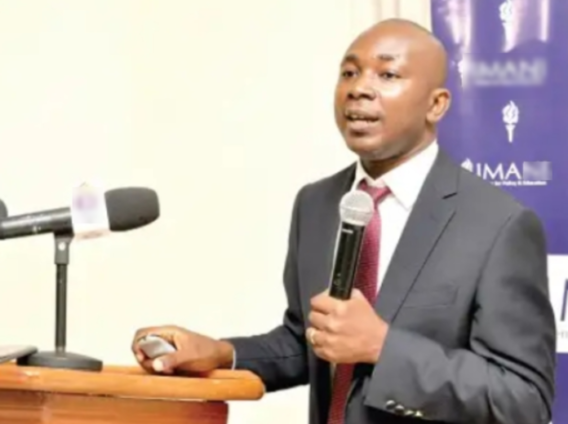
Economist Prof. Godfred Bokpin has warned that government cannot continue on its current fiscal path into 2026.
He says the government must begin to align its budget with the promises it made to Ghanaians.
“From 2026, 2027, government will have to operate its own budget, reflecting largely the promises it made to the electorate,” Dr. Bokpin said on JoyNews’ PM Express on Monday, May 12.
He noted that much of what is happening this year is not enough. “We are not doing much this year,” he said.
“Getting the cedi stabilised and all of that, it’s good news to some extent, but I am not in favour of major disruptions in the market.”
He said Ghana should be building long-term confidence.
“I would prefer that we accumulate the reserves that allow confidence to be sustained for a much longer period, even beyond five or 10 years.”
For him, the 2026 budget makes it clear. “It shows that we cannot continue on the path of expenditure-based fiscal consolidation to sustain the cedi.”
He stressed that stabilising the currency should not come at the expense of real economic transformation.
“You see the Asian growth dynamics, and you want to link it to whether there’s also a significant improvement from an interest rate point of view.
"And whether that translates to a lower cost of borrowing. And how all of that aligns with export diversification and realisation policy.”
Dr. Bokpin said the big question is whether these policies are actually working together.
“We want to be sure all these things link up in building the economy.”
He pointed to the cost of producing goods locally as a key issue.
“Let me give you an example. How does this lend well to local production of goods versus imported goods?”
He said the data shows a worrying trend.
“From November 2023, inflation on imported products actually rose higher than local inflation. So it means we were better off importing than producing here.”
That, he said, is dangerous for the private sector.
“What does that mean for the competitiveness of the indigenous private sector, those who produce here?”
Dr. Bokpin acknowledged recent positive inflows.
“In a certain sense, we can say that yes, we’ve seen the inflows, and that is playing out.”
But he warned that without deeper reform, it won’t last.
“So in my estimation, for the rest of this year, there’s a future for this path. But we have to stabilise it.”
For him, the message is simple. Ghana’s current fiscal strategy has an expiry date. “From 2026,” he said, “you’re on your own.”
Latest Stories
-
SSNIT intensifies informal sector enrolment drive with Techiman float
28 minutes -
Ghana seeks long-term mining investments that benefit local communities – Armah-Kofi Buah
34 minutes -
GHATOF demands compensation for 85 businesses affected by La Pleasure Beach demolition
40 minutes -
Bono Regional Minister calls for investor education to drive economic growth
44 minutes -
Ghana’s Ambassador to China, Kojo Bonsu, presents credentials to Nepalese President
47 minutes -
Fairtrade Africa’s Cocoa Hubs Project strengthens rural service centres in cocoa-growing communities
52 minutes -
MPs are not development officers – Edem Kpotosu
53 minutes -
SEC cautions investors against fraudulent investment schemes
54 minutes -
Land Ministry urges rCOMSDEP operators to reserve earnings for land reclamation
57 minutes -
Commercial drivers give authorities one week to clear traders from lorry terminals, bus stops
1 hour -
Trump calls off livestream of Fort Hood attacker’s execution by firing squad
1 hour -
Nana B denies claims that Kojo Bamba was his driver and bodyguard
1 hour -
Engage Now Africa to construct a 10-unit classroom block for struggling Navrongo Vocational Training Centre
2 hours -
One digital financial breach could expose linked accounts to fraud – Financial Crimes Manager
2 hours -
Ghana Russia Centre signs ICT cooperation agreement with Moscow University
2 hours