

Audio By Carbonatix
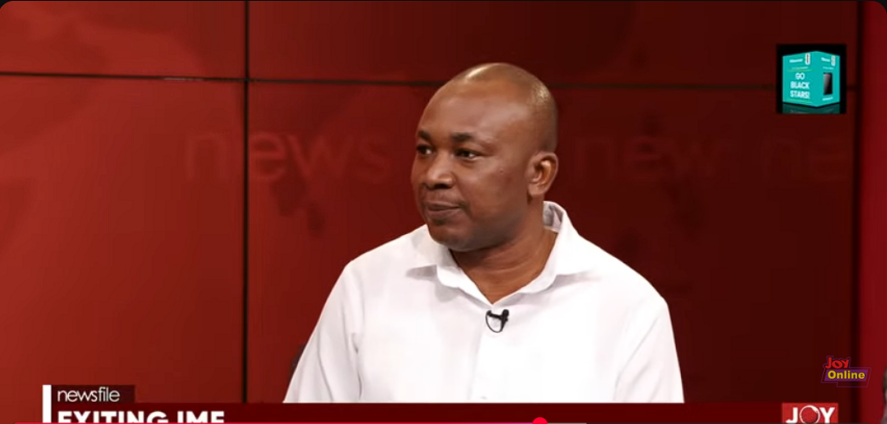
Professor of Finance at the University of Ghana, Godfred Bokpin, has said Ghana’s delayed decision to seek support from the International Monetary Fund (IMF) significantly worsened the country’s economic crisis and led to one of the most expensive IMF programmes in the nation’s history.
Speaking on JoyNews’ Newsfile on Saturday, May 16, Prof Bokpin said the previous government missed the right timing to approach the IMF, forcing the country into a more difficult and costly recovery path.
According to him, Ghana’s economic conditions by the third quarter of 2021 clearly showed the need for IMF intervention, but the previous goverment delayed action until the economy had deteriorated significantly.
He said countries such as Kenya acted earlier under similar economic circumstances and were able to avoid some of the severe measures Ghana later had to implement.
“The current programme that we are on, it is our considered view and we said this before that if the government had shown a little more proactiveness in reaching out to the IMF, we could have avoided domestic debt,” he said.
“We were almost at the same economic fundamentals as Kenya. Kenya went in for a programme, but we delayed and that worsened the economic fundamentals. Eventually, we had to go for perhaps the most pricey IMF programme in all our history,” he added.
He explained that the burden of the programme had gone beyond ordinary fiscal adjustments, with citizens bearing the cost through the Domestic Debt Exchange Programme (DDEP), expenditure rationalisation and the financial strain on public institutions, including the Bank of Ghana.
“If you look at the price that we have had to pay for these gains, it will take us years to recover, essentially, from the price we have had to pay,” he added.
Professor Bokpin also raised concerns over the financial losses reported by the Bank of Ghana, saying the issue remained unresolved despite recent clarifications by government and IMF officials.
He noted that while central banks are not necessarily profit-making institutions, the cost of their policy decisions must be assessed carefully, especially where those losses eventually become a burden on the public purse.
According to him, the recapitalisation of the Bank of Ghana means taxpayers will ultimately absorb the losses, making the issue one of national concern.
Latest Stories
-
NACOC, INL deepen cooperation to combat drug trafficking and organised crime
17 minutes -
GEPA CEO calls for investment to transform Ghana’s economic opportunities
20 minutes -
Photos: Antoine Semenyo says ‘I do’ to longtime partner Jordeen Buckley
39 minutes -
Gender Minister visits Nana Akua Addo, assures family of support
39 minutes -
You need to fake it sometimes to make it fun – Stephanie Benson tells couples
59 minutes -
Mahama Cares says political affiliation will not determine access to medical support
1 hour -
Government inherited GH¢111bn debt burden but continues infrastructure projects – Lands Minister
1 hour -
Mallam Atta traders urge government to speed up 24-hour market redevelopment
1 hour -
Catholic Church has a duty to speak on issues affecting human dignity – Bishop Gyamfi
1 hour -
KATH sickle cell, blood bank project stalled over $1.6m legal dispute – CEO
2 hours -
Restricting preaching in moving vehicles is an attempt to gag the church – Rev. Kwadwo Bempah
2 hours -
Central Charismatic Baptist Church marks 30 years, urges review of law restricting preaching on buses
2 hours -
Mafi Kope residents appeal for urgent medical intervention over illnesses affecting children, adults
2 hours -
ECG to limit planned power outages in Ashanti to two days a week
2 hours -
NYA CEO, management doing ‘yeoman’s job’with meagre budget — Parliament’s Youth Committee Chairman
2 hours