

Audio By Carbonatix
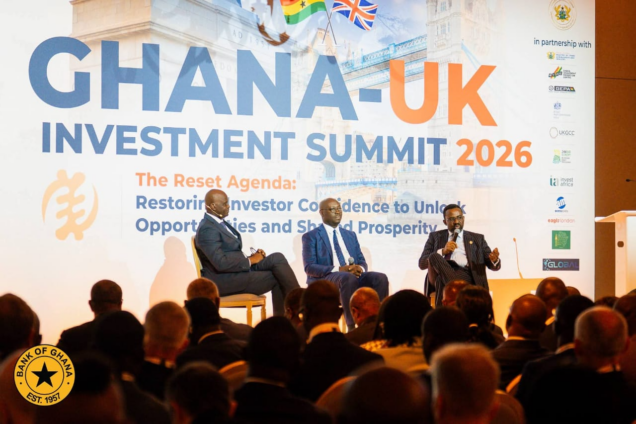
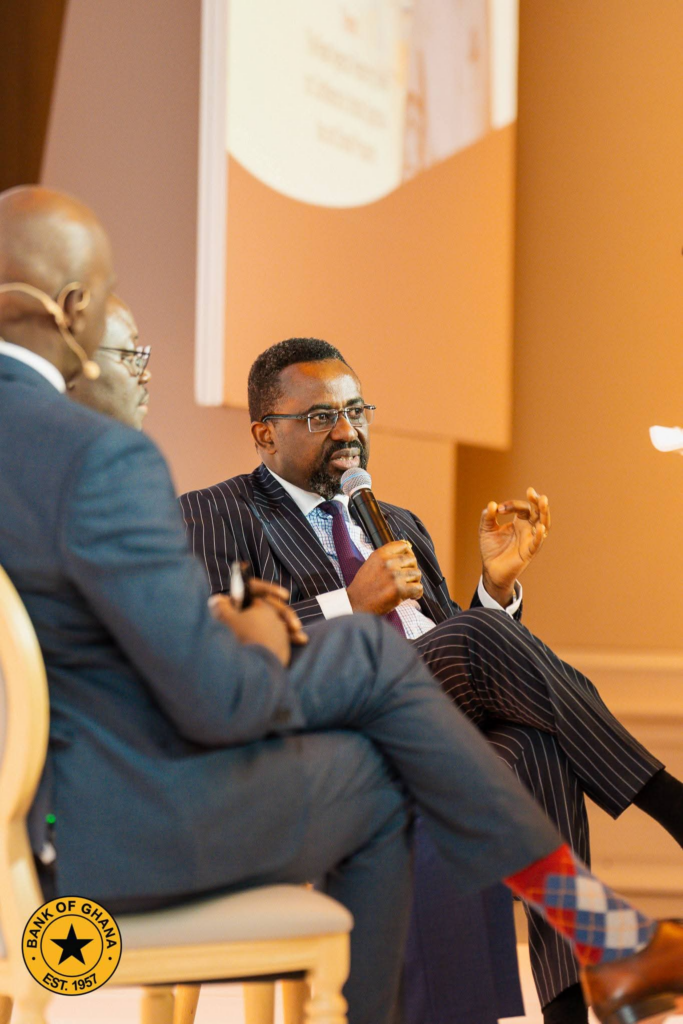
At the Ghana-UK Investment Summit in London, Governor of the Bank of Ghana, Johnson Pandit Asiama, outlined an ambitious vision for Ghana to become an International Financial Services Centre and the "Singapore of Africa."
The aspiration reflects growing confidence in Ghana's economic potential and its ability to position itself as a leading financial hub in Africa.
“Think about it; across Africa, there is none. If you go to the Emirates, each emirate has a financial services center. So why not Ghana? We have all it takes. In my mind, within the next two or three years, we can achieve that. Think about it: the Singapore of Africa.” Dr. Asiama said.
Yet, achieving this goal will require a more nuanced approach beyond attracting foreign investment. It will also depend on Ghana's ability to build a deep, competitive, and well-capitalised domestic investment ecosystem capable of financing long-term economic growth and tax revenue generation for the public coffers through private sector development.
According to Amma Gyampo, the Chief Executive of the Ghana Venture Capital and Private Equity Association (GVCA), the success of this vision will largely be determined by how effectively Ghana mobilizes its own resources.

"A strong domestic private capital ecosystem and regulatory support are essential if Ghana is to build resilient businesses and industries that can create sustainable jobs and achieve its ambition of becoming a regional financial hub," she noted.
To turn the Governor's vision into reality, the government must sustain ongoing structural reforms while strengthening engagement with local capital markets. In particular, targeted incentives are needed to unlock the significant resources held by pension funds, insurance companies, and private equity funds and channel them into productive sectors of the economy.
Unlocking Local Capital to Build National Champions
While foreign direct investment remains important, economies that achieve lasting transformation are often those that successfully mobilize domestic capital. Excessive reliance on foreign inflows can leave countries vulnerable to external shocks.
A stronger domestic investment ecosystem sends a strong signal to foreign investors attracted by regions that bet on themselves. By supporting regulators and ecosystem players active in this space, Ghana could channel local savings into high-growth enterprises, helping to scale the robust, well-established national and regional business champions across key sectors.
The Ghana Venture Capital and Private Equity Association (GVCA) argues that strengthening the private capital industry offers several long-term benefits.
First, it can accelerate sustainable job creation. Private equity funds provide growth financing to promising small and medium-sized enterprises, helping them expand operations, increase productivity, improve compliance, and create formal employment opportunities.
Second, a thriving private sector broadens the country's tax base. As local businesses grow and formalize, they generate higher corporate tax revenues, strengthening public finances without placing additional burdens on households.
Third, greater domestic investment contributes to economic resilience. Capital raised and invested locally helps reduce exposure to foreign exchange volatility while ensuring that a larger share of economic value creation remains within the Ghanaian economy.
Key Areas for Government Action
To bridge the gap between Ghana's financial sector ambitions and practical market realities, several reforms deserve priority attention.
Harmonizing Tax and Regulatory Frameworks
A more predictable regulatory environment would encourage greater participation by institutional investors and fund managers. Addressing regulatory uncertainties and introducing targeted tax incentives for investments in strategic sectors could stimulate private capital formation and attract additional long-term investment.
Unlocking Pension Fund Capital
Pension funds represent one of the largest pools of domestic capital available for economic development. Refining investment frameworks and establishing effective co-investment mechanisms could help reduce perceived risks and encourage greater allocation to alternative assets such as venture capital and private equity.
Such investments have played a significant role in supporting innovation and business expansion in many successful financial centers around the world.
Supporting High-Growth Businesses
Government can also accelerate economic transformation by creating targeted incentives for proven high-growth companies with the potential to expand across West Africa. Supporting these firms would strengthen Ghana's position as a regional business hub while generating employment, exports, and tax revenues.
Turning Vision into Reality
Ghana stands at an important juncture in its economic development journey. The ambition of becoming Africa's leading financial services destination is achievable, but success will depend on aligning macroeconomic aspirations with practical reforms that strengthen the domestic investment ecosystem.
Building the "Singapore of Africa" will require more than strong monetary policy and international investor interest. It will require deliberate efforts to unlock local capital, empower private enterprise, and create an environment where Ghanaian businesses can scale and compete globally.
By working closely with industry stakeholders, supporting regulatory capacity, and implementing reforms that mobilize domestic capital, Ghana can move beyond aspiration and lay the foundation for a more resilient, inclusive, and globally competitive economy.
Transforming Ghana into the “Singapore of Africa”: Why Domestic Private Capital Reforms Matter
At the Ghana-UK Investment Summit in London, Governor of the Bank of Ghana, Johnson Pandit Asiama, outlined an ambitious vision for Ghana to become an International Financial Services Centre and the "Singapore of Africa." The aspiration reflects growing confidence in Ghana's economic potential and its ability to position itself as a leading financial hub in Africa.
“Think about it; across Africa, there is none. If you go to the Emirates, each emirate has a financial services center. So why not Ghana? We have all it takes. In my mind, within the next two or three years, we can achieve that. Think about it: the Singapore of Africa.” Dr. Asiama said.
Yet, achieving this goal will require a more nuanced approach beyond attracting foreign investment. It will also depend on Ghana's ability to build a deep, competitive, and well-capitalised domestic investment ecosystem capable of financing long-term economic growth and tax revenue generation for the public coffers through private sector development.
According to Amma Gyampo, the Chief Executive of the Ghana Venture Capital and Private Equity Association (GVCA), the success of this vision will largely be determined by how effectively Ghana mobilizes its own resources.
"A strong domestic private capital ecosystem and regulatory support are essential if Ghana is to build resilient businesses and industries that can create sustainable jobs and achieve its ambition of becoming a regional financial hub," she noted.
To turn the Governor's vision into reality, the government must sustain ongoing structural reforms while strengthening engagement with local capital markets. In particular, targeted incentives are needed to unlock the significant resources held by pension funds, insurance companies, and private equity funds and channel them into productive sectors of the economy.
Unlocking Local Capital to Build National Champions
While foreign direct investment remains important, economies that achieve lasting transformation are often those that successfully mobilise domestic capital. Excessive reliance on foreign inflows can leave countries vulnerable to external shocks.
A stronger domestic investment ecosystem sends a strong signal to foreign investors attracted by regions that bet on themselves. By supporting regulators and ecosystem players active in this space, Ghana could channel local savings into high-growth enterprises, helping to scale the robust, well-established national and regional business champions across key sectors.
The Ghana Venture Capital and Private Equity Association (GVCA) argues that strengthening the private capital industry offers several long-term benefits.
First, it can accelerate sustainable job creation. Private equity funds provide growth financing to promising small and medium-sized enterprises, helping them expand operations, increase productivity, improve compliance, and create formal employment opportunities.
Second, a thriving private sector broadens the country's tax base. As local businesses grow and formalize, they generate higher corporate tax revenues, strengthening public finances without placing additional burdens on households.
Third, greater domestic investment contributes to economic resilience. Capital raised and invested locally helps reduce exposure to foreign exchange volatility while ensuring that a larger share of economic value creation remains within the Ghanaian economy.
Key Areas for Government Action
To bridge the gap between Ghana's financial sector ambitions and practical market realities, several reforms deserve priority attention.
Harmonising Tax and Regulatory Frameworks
A more predictable regulatory environment would encourage greater participation by institutional investors and fund managers. Addressing regulatory uncertainties and introducing targeted tax incentives for investments in strategic sectors could stimulate private capital formation and attract additional long-term investment.
Unlocking Pension Fund Capital
Pension funds represent one of the largest pools of domestic capital available for economic development. Refining investment frameworks and establishing effective co-investment mechanisms could help reduce perceived risks and encourage greater allocation to alternative assets such as venture capital and private equity.
Such investments have played a significant role in supporting innovation and business expansion in many successful financial centers around the world.
Supporting High-Growth Businesses
Government can also accelerate economic transformation by creating targeted incentives for proven high-growth companies with the potential to expand across West Africa. Supporting these firms would strengthen Ghana's position as a regional business hub while generating employment, exports, and tax revenues.
Turning Vision into Reality
Ghana stands at an important juncture in its economic development journey. The ambition of becoming Africa's leading financial services destination is achievable, but success will depend on aligning macroeconomic aspirations with practical reforms that strengthen the domestic investment ecosystem.
Building the "Singapore of Africa" will require more than strong monetary policy and international investor interest. It will require deliberate efforts to unlock local capital, empower private enterprise, and create an environment where Ghanaian businesses can scale and compete globally.
By working closely with industry stakeholders, supporting regulatory capacity, and implementing reforms that mobilise domestic capital, Ghana can move beyond aspiration and lay the foundation for a more resilient, inclusive, and globally competitive economy.
Latest Stories
-
NPP Bosome Freho Constituency Chairman reportedly arrested over ballot paper incident
14 minutes -
Happy 76th Birthday to the Daily Graphic!
39 minutes -
Amin Adam celebrates Prof. Alhassan Musah on appointment as KAAF University Vice-Chancellor
47 minutes -
Mahama reaffirms commitment to Volta development at Asogli Te Za
57 minutes -
Bawumia urges NPP aspirants to accept results, reunite party after elections
1 hour -
Double fibre cut disrupts Telecel services, 72,754 subscribers affected
1 hour -
Bawumia demands probe into financiers behind Ghana-linked cocaine shipments
1 hour -
Spain beat Czech Republic to maintain winning run
2 hours -
Ronaldo ‘greatest symbol’ of Portugal – Fernandes
2 hours -
NPP election: We thank NDC for making the attempt; we never expected them to show up – Karbo says after boycott
2 hours -
Tennessee prison chief to resign after Christa Pike’s failed execution
2 hours -
Free SHS suffering under NDC gov’t- Dr Bawumia
3 hours -
NSA cannot manage all Ghana’s sports facilities alone – Ampofo Ankrah
3 hours -
MoH announces mop-up recruitment for health professionals
3 hours -
Turn Saltpond history into economic opportunity – Stakeholders
3 hours