

Audio By Carbonatix
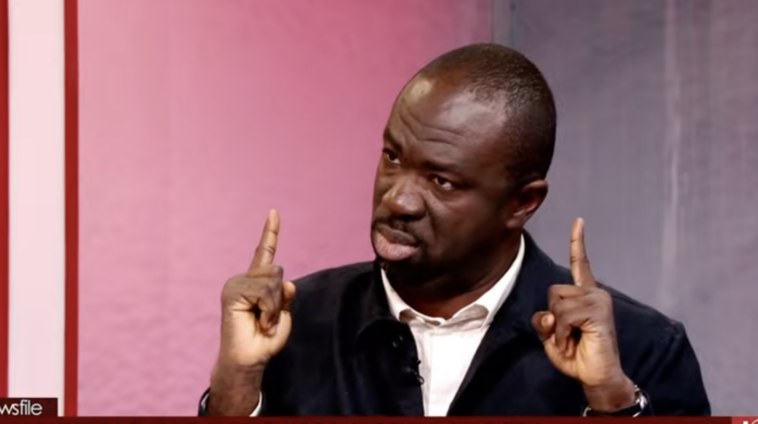
The Member of Parliament for Manhyia South, Nana Agyei Baffour Awuah, has called for a full-scale inquiry into the AKSA power deal, arguing that the bribery allegations surrounding the transaction expose serious weaknesses in Ghana’s systems for preventing corruption, protecting public funds and prosecuting wrongdoing.
Mr Baffour Awuah said the matter should not be dismissed as a political disagreement over the conduct of a government transaction, insisting that the allegations point to the possible compromise of public decision-making at a time when Ghana was particularly vulnerable in the power sector.
“My sense of the judgement is that, but for the influence, certain approvals would not have been obtained,” he said.
He was speaking on JoyNews’ Newsfile on Saturday, August 15, as renewed attention is focused on the Ghanaian power transaction following criminal proceedings in the United States involving former Goldman Sachs banker Asante Kwaku Berko.
Mr Baffour Awuah argued that the controversy should prompt Ghana to examine not only the conduct of individuals but also the institutional safeguards that allowed the alleged scheme to take place.
The Manhyia South MP sought to underline the seriousness of the allegations, arguing that the matter should not be treated as a theoretical discussion about improper influence.
“What is at stake is not merely a discussion of compromises or bribery but an actual bribery that has led to the conviction of Mr Berko in the United States of America,” he said.
The US Department of Justice has charged Mr Berko with conspiracy to violate the Foreign Corrupt Practices Act, substantive FCPA violations and conspiracy to commit money laundering. The department has stressed that the charges are allegations and that the defendant is presumed innocent unless and until proven guilty.
According to Mr Baffour Awuah, the individuals allegedly targeted by the bribery scheme were not ordinary private citizens but public officials whose positions gave them influence over decisions relating to the AKSA Energy project.
“The persons he has been convicted for bribing, they are not persons in Ghana, they are public office holders who were in a position to make one decision or the other in respect of the AKSA Energy deal,” he said.
He argued that the central concern was therefore the possible compromise of public decision-making.
“And so basically, they are people that have compromised public decision making at a very point where Ghanaians were very vulnerable,” he added.
The US indictment alleges that Mr Berko and co-conspirators sought to influence Ghanaian officials involved in securing approvals for Aksa Enerji's power project. The indictment describes alleged payments to officials and other steps purportedly taken to secure regulatory and governmental approvals.
The allegations relate to events between December 2014 and March 2017, when Mr Berko was an executive director in the investment banking division of Goldman Sachs International. He was part of a team working on a transaction between the bank's client, Turkish energy company Aksa Enerji, and the Republic of Ghana for a power plant.
Mr Baffour Awuah said the AKSA controversy should also be viewed against what he considers a worrying pattern of allegations concerning Ghanaian public contracts being pursued or exposed in foreign jurisdictions.
“We cannot gloss over them because they are becoming one too many, one too many instances where Ghanaian public contracts are said to have been compromised and then the persons involved or at the heart of the compromise are convicted in foreign court,” he said.
For him, such cases raise questions about whether Ghana's own institutions are adequately equipped to identify corruption before it affects public decisions and public finances.
He said the situation exposes weaknesses in the domestic systems designed to ensure value for money, prevent corruption and prosecute corruption when it occurs.
“It exposes, one, the failure in our systems domestically, the systems for ensuring value for money and then the systems for ensuring that we prevent corruption or we prosecute corruption locally,” he said.
Mr Baffour Awuah said the existence of multiple safeguards should make it difficult for bribery or improper influence to determine public decisions.
If allegations of bribery are ultimately established, he argued, Ghana must ask how the alleged conduct escaped those safeguards.
He said the problem becomes particularly concerning if similar failures occur repeatedly.
“When you have your systems to ensure value for money, your systems for ensuring prevention of corruption, your system for ensuring or prosecuting corruption at that level, failing not once, not twice, not thrice but many times, it's then obvious that something is terribly wrong with your system,” he said.
That, he maintained, is why an inquiry is necessary.
Mr Baffour Awuah rejected any suggestion that the NPP's demand for an investigation into the AKSA deal was politically motivated or frivolous.
“What it means is that the call we made was not a frivolous call,” he said.
“The call for an enquiry is very, very necessary for any country that wants to make progress.”
For him, a credible inquiry would need to establish what happened, identify the decision-makers involved, examine the approval processes and determine whether any laws or public-sector procedures were breached.
But he stressed that an inquiry should not end with the publication of a report.
“And when we do the enquiry, we must make sure that we act on the enquiry,” he said.
The Manhyia South MP also used his intervention to defend the NPP's record on prosecuting its own officials.
He insisted that the party had not historically used a nolle prosequi to discontinue corruption cases involving its appointees.
“I want to put it on record that at no point has the New Patriotic Party ever, whilst in government, filed nolle prosequi in respect of any of our appointees, former appointees, persons who are exposed to us sympathetically stand trial for corruption or corruption-related offence and then nolle prosequi has been filed in relation to it,” he said.
As an example, he cited the case of former Kufuor administration appointee Alhaji Mallam Issah.
“Under the New Patriotic administration, a former appointee under President Kufuor, Alhaji Mallam Issah was prosecuted, convicted, and sentenced to prison,” he said.
Latest Stories
-
Interest payments to average a high 20% of government revenue over next 4 years
1 hour -
Strategy of accumulating foreign reserves, gold carries high fiscal cost – S&P Global
2 hours -
Weak institutional arrangements, high debt servicing constrain Ghana’s rating – S&P
2 hours -
Bond market: Turnover declined by 28% to GH¢1.56bn
2 hours -
Volta Region National Public Speaking contest advances drug prevention conversation
2 hours -
New health training facility at Ampoma-Jema to address admission shortfalls, but Minister flags missing amenities
3 hours -
Black Challenge unveiled with sights set on Amputee World Cup glory
3 hours -
Pay striking teachers before expressway spending, Dr Kingsley Agyemang tells government
4 hours -
Customs intercepts assault rifle, two pistols and 610 rounds of ammunition at Tema Port
4 hours -
PKO boxers secure wins at Odwira Festival
4 hours -
South Tongu Records Rise in Teenage Pregnancy
5 hours -
Cabinet threw out US health compact faster than anything I’ve seen – Mahama
5 hours -
MoFA urges Finance Ministry to reverse World Bank food programme withdrawal over GH¢643m commitments
5 hours -
NAGRAT demands signed timelines before calling off strike
5 hours -
National Investment Quiz: West Africa SHS, St. Louis SHS advance to semi-finals
5 hours