

Audio By Carbonatix
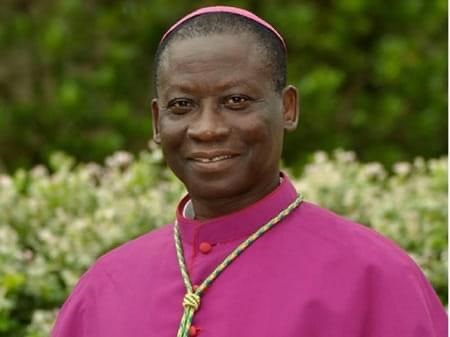
The President of the Ghana Catholic Bishops’ Conference, Reverend Matthew Kwasi Gyamfi, has emphasised that incarcerating homosexuals will not eradicate homosexuality; instead, it may exacerbate such behaviours.
He advocates for a reconsideration of the penalties outlined in the Proper Human Sexual Rights and Family Values bill.
Reverend Gyamfi argues that imprisoning individuals with such inclinations in Ghana's inadequate prison facilities may only reinforce their behaviour instead of facilitating rehabilitation.
In an interview with Citi FM on Thursday, February 29, he emphasised the importance of implementing corrective and reformative measures within the prison system to prevent potential adverse outcomes.
"We think that in the case of this particular law and the way it is being implemented, being placed in prison as the punishment that they have chosen, it is not going to solve the problem.
"Because you see if you round up same-sex people, and you know our prisons, they are going to end up in the same room, and what is going to prevent them from going through these activities in the prison?"
“And you are not going to put them there forever because they are going to be there for three months to six months.
"And then they practice this and come out as more experts at it than when you sent them there. Then you release them back into society. So, what is going to happen?"
“That is why we were concerned about a punishment that will correct them, that will reform them. So if the government is going this way or if the parliament is going this way that is why we are suggesting that in the prison there, they should add more of the corrective and reformative measures,” he stated.
On Wednesday, February 28, after nearly three years of deliberation, Parliament finally passed the highly controversial Anti-LGBTQ+ bill.
Introduced in the House as a private members' bill, the legislation received unanimous approval following the completion of the third reading.
Under the provisions of the bill, individuals involved in prohibited activities may face imprisonment ranging from six months to three years, while sponsors and promoters could be sentenced to three to five years imprisonment.
However, the bill has faced criticism from various quarters, with many people citing different reasons for their objections.
Latest Stories
-
$600m tomato imports undermining Ghana’s economy — Chamber of Agribusiness
20 minutes -
Rainstorm wreaks havoc: Faulty transformers, feeder failures leave parts of 3 regions without power
28 minutes -
CUTS International calls for urgent competition law amid sachet water price hikes
1 hour -
‘I never did this advert’, AI clones hijack Ghanaian identities for profit
1 hour -
25-year-old woman battles trauma after surviving deadly Nkwanta attack
2 hours -
Vice President honoured at Tortsogbeza as South Tongu leaders highlight development needs
2 hours -
Kwahu Business Forum 2026: Corporate citizenship, sustaining African businesses take centre stage with KGL as the case study
3 hours -
Trump seeks $152m to reopen notorious Alcatraz prison
5 hours -
Ex-Chelsea player Oscar retires with heart issue
5 hours -
CA Foundation drives constitutional literacy in Kpone Katamanso municipality
6 hours -
GPRTU to hold talks with Transport Ministry over rising fuel costs
6 hours -
CUTS International urges gov’t to halt sachet water price hike pending cost review
6 hours -
Chief Justice: Efficient Judiciary essential to reducing business costs
6 hours -
Bayern grabs 99th-minute winner to cap superb fightback
6 hours -
Ahmed Ibrahim urges Ghanaians to reflect Easter values in nation-building
6 hours