

Audio By Carbonatix
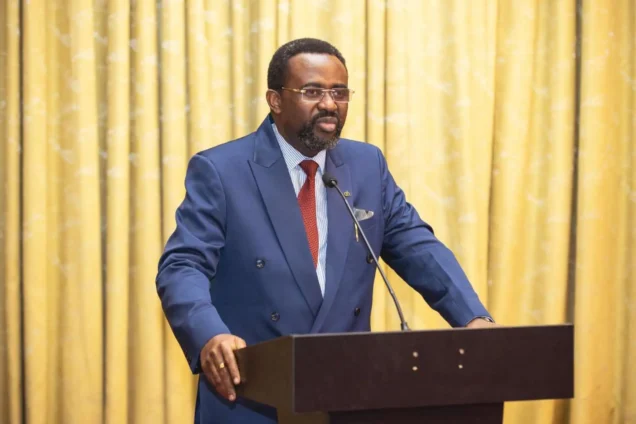
The Governor of the Bank of Ghana, Johnson Pandit Asiama, has disclosed that the central bank’s GH¢17 billion liquidity stabilisation measures in 2025 significantly contributed to a rapid decline in inflation, one of the steepest drops recorded in recent years.
Dr Asiama made the remarks on Monday while addressing the Parliamentary Committee on Economy and Development.
He explained that when he assumed office, inflation levels remained high and existing monetary conditions were not sufficiently tight to bring prices under control within a reasonable period.
According to the Governor, a major difficulty at the time was the presence of excess structural liquidity within the banking sector, which weakened the transmission of monetary policy decisions and allowed inflationary pressures to persist.
To address the problem, the central bank intensified its open market operations to absorb surplus liquidity from financial institutions.
He noted that such operations involve withdrawing excess funds from the banking system while paying interest on those funds to prevent too much money circulating in the economy.
“Liquidity management through open market operations is a core function of central banks around the world and is one of the primary tools used to ensure that monetary policy decisions are effectively transmitted through the financial system,” Dr Asiama said.
The Governor indicated that the policy actions have helped stabilise the economy and strengthen confidence in financial markets.
Inflation has dropped significantly from 23.8 per cent in December 2024 to 3.3 per cent in February 2026, representing one of the lowest inflation rates recorded in the country in recent times.
He added that the improvement has eased the pressure on household incomes, noting that lower inflation helps protect the purchasing power of Ghanaians by preventing wages from being eroded by rising prices.
Dr Asiama further revealed that the Ghanaian cedi has shown signs of stability, while interest rates have started to decline, creating more favourable borrowing conditions for businesses and households.
He also pointed to a strong improvement in the country’s external position, explaining that gross international reserves have risen to about 13.8 billion dollars, providing approximately 5.7 months of import cover.
Latest Stories
-
Government promises support for Kumasi Central Market fire victims
2 minutes -
Vibes The Movie: Big Ghun’s Ghanaian film earns five nominations at 2026 REFFA
33 minutes -
MamaCare CEO warns unresolved conflicts among health workers could undermine maternal and neonatal care
57 minutes -
Health professionals urged to translate medical knowledge into practice to save mothers
1 hour -
Conflicts among care providers linked to maternal, neonatal deaths – Expert
3 hours -
GIS marks 10th TIME conference, champions improved teaching practices
3 hours -
BRICS Or Balance? What Ghana’s bid really means
3 hours -
GPRTU wants full TRAFFITECH-GH implementation to start in 2027
4 hours -
Mahama announces plans to import electric wheelchairs for PWDs
4 hours -
KGL U17 Colts 2026: Western beat Prempeh Elite Academy to set up final final with Greater Accra Region
4 hours -
Late Solanke strike salvages 10-man Spurs draw at Man United
4 hours -
Gender Ministry to monitor welfare of Nana Akua Addo’s children amid domestic violence case
4 hours -
Benedict Okyere Yeboah: Ghana’s football problem goes beyond sacking a coach
4 hours -
GPL 2026/27: Darkwah Wiafe’s winner sees All Blacks beat Kotoko
4 hours -
ITF World Tour : Patel Wins Boys’ Singles Final at J100 Accra
5 hours