

Audio By Carbonatix
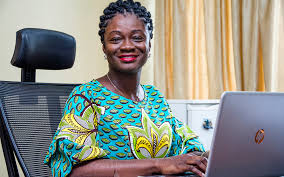
Head of the Economics Division at the Institute of Statistical, Social and Economic Research (ISSER), UG wants details of NBSSI loan beneficiaries published.
Professor Peter Quaye said citizens have the right to know what public funds are used for, therefore, government must make public such details.
"Who are we giving them to? How are they investing them? I think we need to publicise these as much as possible," he said on the Super Morning Show.
His comment comes as part of discussions on the country's debt stock and its impact on the economy.
During the discourse, Associate Professor and Dean of International Programmes Office at the University of Ghana who was also on the show highlighted some negative effects the country's Gh¢ 273.8 billion debt stock is likely to have on the economy.
Prof. Eric Osei-Assibey said Ghana is likely to face a myriad of economic challenges including high inflation rates, increased fiscal deficits among others, if monies borrowed are not properly utilised.
The Professor further stated that a country's repayment ability of every loan largely depends on how and what the loans were invested in, thus, Ghana must take keen interest in how it utilises monies contracted as loans.
Adding to this, Prof. Quartey noted that government must also be concerned about how public funds loaned to citizens are used.
"These are public funds. If you borrow from a private sector that confidentiality is there but if you're taking tax payers money, I believe it is appropriate that we publish some of these things," he added.
Government through the National Board for Small Scale Industries (NBSSI) launched a Covid-19 Resilience and Recovery Program for MSMEs dubbed "Nkosuo".
The program was designed to support and accelerate the growth of businesses that fell as a result of the Covid-19 pandemic.
It is a Gh₵ 90 million program aimed at supporting MSMEs, as well as start-ups in sectors such as agriculture and agro-businesses, water and sanitation, healthcare and pharmaceuticals, trade and commerce, the creative arts, among others.
It has a one year moratorium and a two-year repayment period.
Latest Stories
-
At least 30 feared dead in crush at Haitian tourist site
55 minutes -
Four arrested over murder of Scottish businessman in Kenya
1 hour -
New Mainoo deal closer, says Man Utd boss Carrick
1 hour -
Sinner beats Alcaraz to return to world top spot
1 hour -
An inappropriate joke nearly ended his career. Now he’s back with more humour
2 hours -
GPL 2025/26: Dreams FC stage stunning comeback to hammer Eleven Wonders
3 hours -
Livestream: The Probe examines Kumasi’s looming water crisis
3 hours -
MTN Ghana gears up to lead Africa’s AI revolution
3 hours -
Philanthropist Alhaji FuZak donates Da’wah bus to Ambariya Sunni community
3 hours -
GUTA calls for suspension of Publican AI system over trade disruptions
3 hours -
TTAG raises alarm over proposed recruitment of 7,000 teachers, demands national posting roadmap
4 hours -
Civilians feared killed after reports of air strike on Nigerian market
4 hours -
Bishop Simon Kofi Appiah installed as new Jasikan Diocese Bishop
4 hours -
Trump’s Strait of Hormuz blockade threat raises risks and leaves predicaments unchanged
4 hours -
US Court backs extradition of former MASLOC CEO Sedina Tamakloe-Attionu to Ghana
4 hours