

Audio By Carbonatix
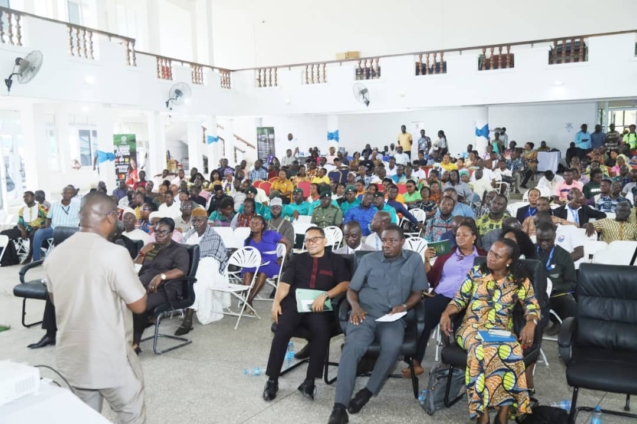
Koforidua, Ghana - The Public Utilities Regulatory Commission (PURC) held its second Regional Public Hearing Sessions for the Multi-Year Tariff Order (MYTO) 2025-2030 on September 24, 2025, in the Eastern Regional capital of Koforidua. The event, which took place at the Koforidua Centre for National Culture, is part of the Commission’s nationwide engagement with consumers.
The purpose of this engagement was to give consumers an opportunity to share their views on the tariff proposals, which were submitted to the Commission by utility service providers for a major tariff review. This is designed to promote transparency and accountability in the tariff review process.
In his address, the Executive Secretary of the Commission, Dr Shafic Suleman, emphasised the comprehensive socio-economic impact of the MYTO exercise and how the tariff determination affects households, businesses, industries, and service providers, and is therefore a process that must reflect both economic realities and social considerations.
PURC's Commitment to Transparency and Accountability
The Executive Secretary of PURC, Dr Shafic Suleman, emphasised the Commission's commitment to transparency and accountability in the tariff-setting process. "The MYTO is not just a technical exercise; it is about people," he said. "We are committed to protecting both consumers and service providers, and this can only be achieved by listening to the voices of our stakeholders."
The Chairperson of the PURC Stakeholder Committee, Hon. Nana Yaa Jantuah, delivered opening remarks in the local dialect, ensuring that all participants fully understood the significance of the deliberations. She referenced the PURC Act 538, which provides the legal basis for the Commission's work, and explained that the law requires PURC to balance the interests of both consumers and service providers. According to her, utilities must recover their costs and make reasonable returns, while ensuring that consumers receive quality service.
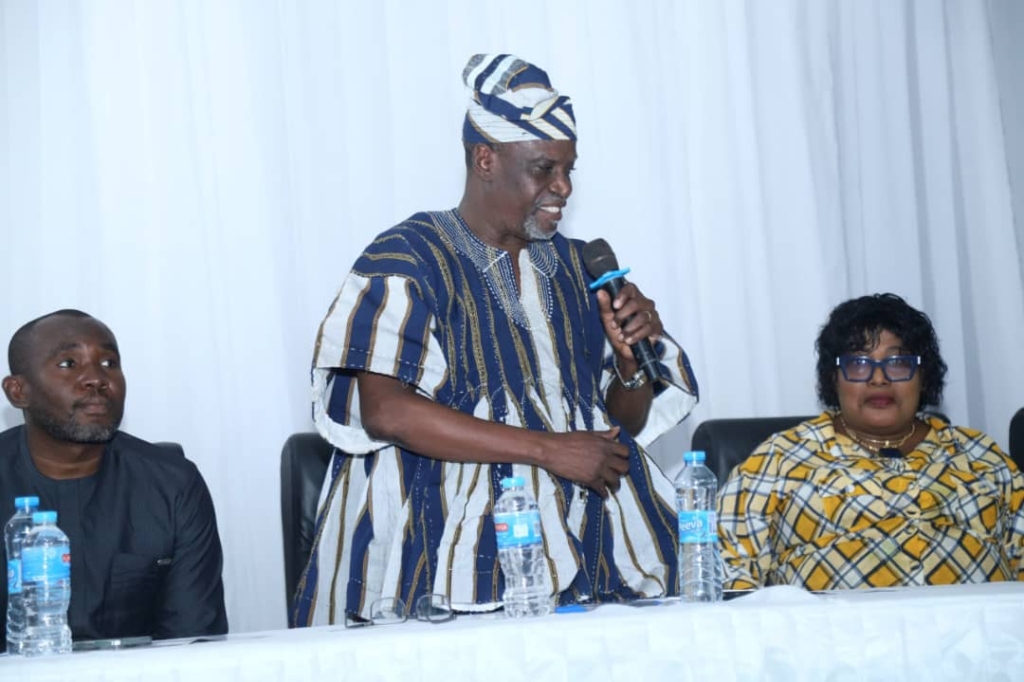
She encouraged the participants and all consumers watching virtually to pay close attention to the presentations and actively contribute their views (in-person and virtually). She emphasised that stakeholder participation is crucial to the credibility of the tariff-setting process.
Highlights of the Public Hearing
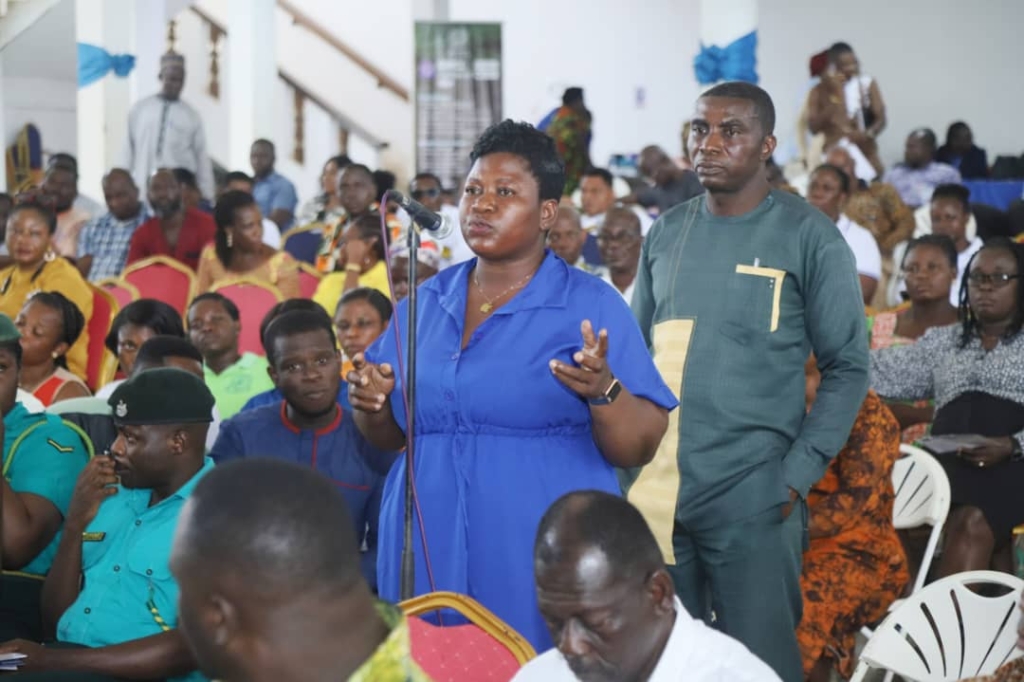
The utility service providers made their respective presentations, and an elaborate Question and Answer (Q&A) session was allowed, where stakeholders raised concerns and posed questions which bothered them. Key issues discussed included:
Impact of illegal mining on water bodies: Community members argued that the escalating costs of water treatment should not be passed onto consumers, and instead, the government should channel proceeds from mining activities to address environmental degradation.
Streetlight levy: Participants criticised the current arrangement, where the Electricity Company of Ghana (ECG) manages the levy. Participants proposed the decentralisation of the levy collected and, by extension, its administration to Metropolitan, Municipal, and District Assemblies (MMDAs).
Water quality: Stakeholders expressed concern over the deteriorating quality of Ghana’s water bodies and suggested exploring alternative sources of water production, such as large-scale rainwater harvesting and deep ground water extraction through the sinking of boreholes.
Metering: Participants called for more deployment of pre-payment meters, citing the challenges posed by postpaid meters and the need for transparency and better management of energy consumed.
Domestic production of poles: The public urged ECG to consider domestic production of poles as a way of creating jobs locally and reducing the costs of operation.
Guest of Honour
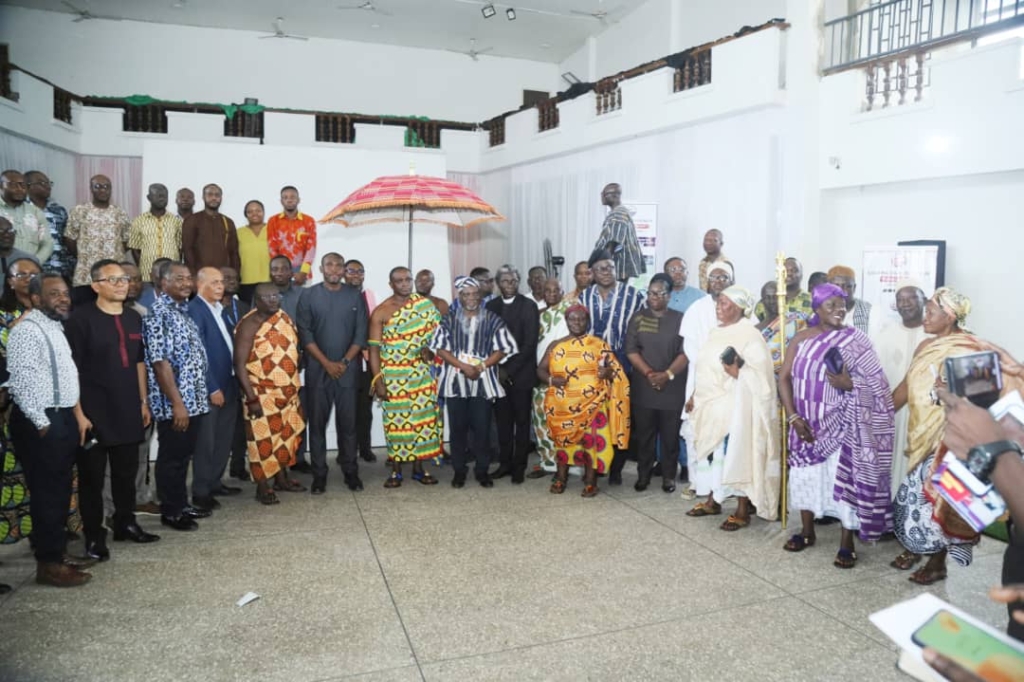
His Royal Majesty Nana Kweku Boateng III, the Guest of Honour, welcomed the Commission and expressed gratitude for its decision to hold the session in the Eastern Regional capital of Koforidua. He commended the Commission for adopting a participatory and transparent approach, stressing that transparency in regulatory processes minimises resistance and builds trust.
About PURC
The Public Utilities Regulatory Commission (PURC) is the regulatory body responsible for overseeing the electricity, water, and natural gas sectors in Ghana. The Commission's mandate includes ensuring that utility services are provided in a fair, efficient, and sustainable manner.
Latest Stories
-
Easter gesture: Ablakwa settles medical bills for 85 North Tongu constituents
2 hours -
Africa must harness its population strength—Titus-Glover
2 hours -
Visa-free access doesn’t mean unlimited stay – Lom Ahlijah
2 hours -
From Golgotha to Kwahu: The Easter Migration of the Faithful and the Faithless
3 hours -
How the Ghanaian onion traders’ standoff with Nigeria unfolded and threatened local supply
3 hours -
No compensation for demolished structures on 24-Hour Economy market lands — Gov’t to structure owners
3 hours -
Financial Institutions must back local enterprises to spur growth – Deputy Minority Whip
4 hours -
Photos: Gomoa Easter Carnival 2026 ends in a burst of colour and celebration
4 hours -
Gomoa Easter carnival ends in colour as fashion, music and celebrity appearances light up final night
4 hours -
Families pick Luv Fm Family Party to celebrate Easter Monday with music and more
5 hours -
IMANI flags procurement issues in Ghana Gas insurance switch
5 hours -
Kaneshie footbridge rehabilitation to take up to 9 months — AMA
5 hours -
AMA confirms trading will be banned on Kaneshie footbridge after rehabilitation
5 hours -
IMANI flags procurement concerns in state insurance placements
5 hours -
Mahama’s push for visa-free Africa reflects Nkrumah’s Pan-African vision – Rashid Tanko-Computer
6 hours