

Audio By Carbonatix
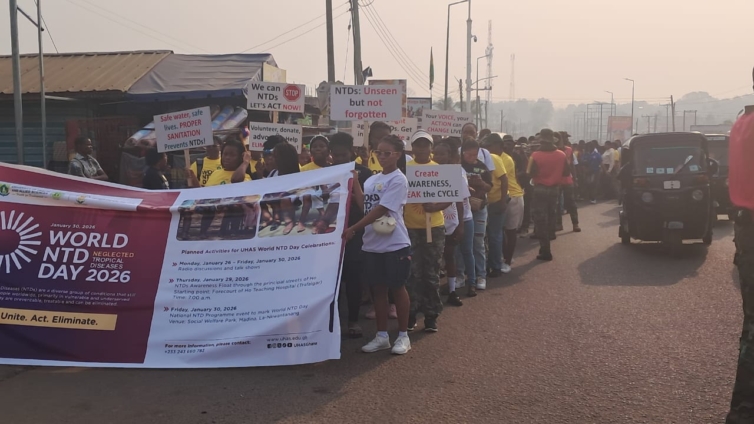
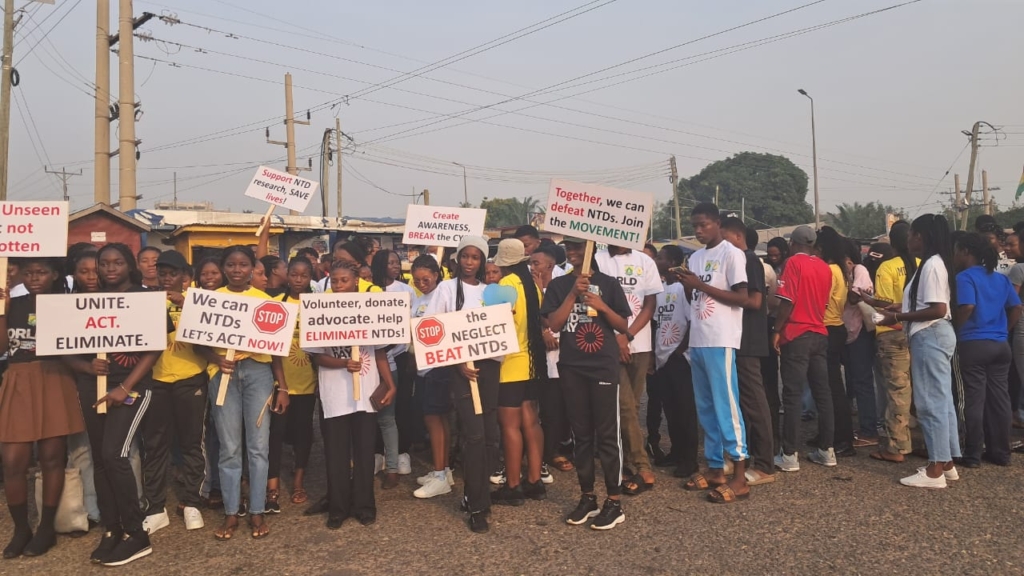
Bright banners, colourful posters and enthusiastic chants filled the streets of Ho on Thursday as health workers and students from medical and nursing institutions staged a public awareness float to mark World Neglected Tropical Diseases (NTDs) Day 2026.
The event brought together students and health professionals to educate the public, reduce stigma and promote action against diseases that disproportionately affect vulnerable communities.
Neglected Tropical Diseases are a group of 21 conditions affecting populations worldwide, 14 of which are endemic in Ghana, including elephantiasis, trichomoniasis, leprosy and leishmaniasis. Closely linked to poverty and poor sanitation, these diseases often result in disability, social exclusion and long-term health complications, yet remain largely overlooked.
Speaking at the event, the Director of the Centre for Neglected Tropical Diseases (CNTD) at the University of Health and Allied Sciences (UHAS), Dr Alfred Kwesi Manyeh, underscored the importance of early education and awareness.
“By involving students — our future doctors, nurses and community health workers — we ensure that they understand these diseases even before starting their professional practice. This knowledge helps reduce stigma and promotes compassionate care for those affected,” he said.
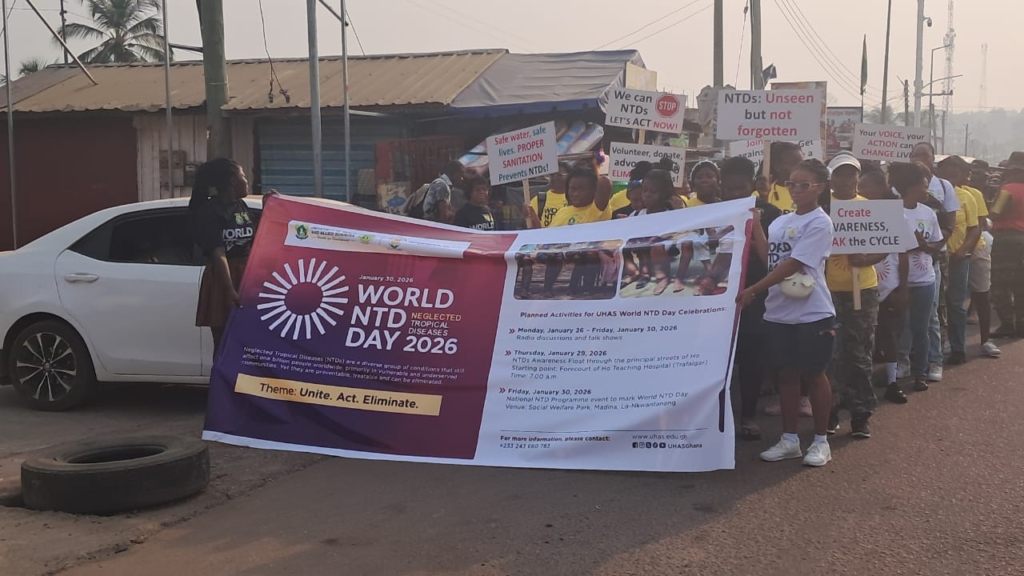
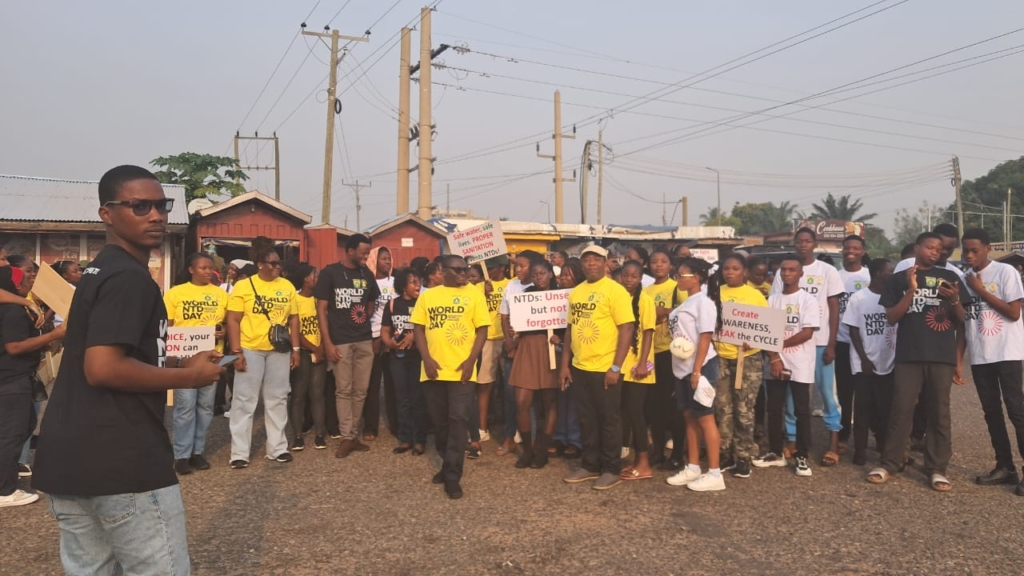
The colourful float moved through the principal streets of Ho, with students distributing information leaflets, engaging residents and demonstrating hygiene practices that help prevent the spread of NTDs. The activity forms part of a broader national programme officially marked on January 30, aimed at ensuring awareness reaches communities across the country.
A Lecturer at the School of Pharmacy, UHAS, Dr Jonathan Jato, highlighted the need to pair public education with research and evidence-based interventions.
“While education is key, understanding the diagnosis, prevalence and treatment models of these diseases allows us to design effective interventions. Anti-helminth infections, for example, are largely preventable when communities adopt good sanitation and hygiene practices,” he explained.
The 2026 campaign theme, “Act Now to Eliminate Neglected Tropical Diseases,” calls on policymakers, health professionals and community members to take decisive action. Both Dr Manyeh and Dr Jato stressed that eliminating NTDs requires collective effort, with students and young professionals playing a crucial role in sustaining long-term impact.
By the end of the float, the streets of Ho were filled with discussion and learning, reinforcing a clear message from the Volta Region: neglected tropical diseases can be prevented, treated and eliminated when communities work together.
Latest Stories
-
Ho Central Mosque reopens amid unresolved leadership dispute that led to closure
1 hour -
Minority caucus questions GH¢16.4m in Ablakwa’s SA evacuation spending, demands independent audit
1 hour -
Gender Ministry meets Nana Akua Addo’s husband over domestic violence after hospital discharge
2 hours -
UG Vice-Chancellor urges swift operationalisation of National Research Fund
3 hours -
Pope Leo to have surgery after lump found in lung
3 hours -
Joseph Cudjoe writes: Ghana must break free from the dangerous mindset that natural resources are the foundation for wealth
3 hours -
Children among 109 dead after boat capsizes off Djibouti, UN says
3 hours -
OmniBSIC Bank’s 11th health walk promotes fitness and business growth
3 hours -
2026 World Maritime Day: Danish Embassy organises “The Gulf of Guinea Speaks”
4 hours -
New Economy will tackle unemployment and restore hope – Ato Forson
4 hours -
IMMILAC president recounts personal losses as security women lead breast cancer awareness campaign in Wa
4 hours -
University of Ghana postpones October 12 reopening as GAUA strike persists
4 hours -
Bahass Foundation launches vocational skills training to support mental health recovery in Wa
5 hours -
NPP orders parliamentary aspirants and their supporters to suspend campaign activities
5 hours -
Techiman unites against child marriage: Joy Impact Makers Awardee leads charge on International Day of the Girl Child
5 hours