

Audio By Carbonatix
The Private Universities Students’ Association of Ghana (PUSAG) has declared a new era of equity in Ghana’s tertiary education sector, applauding the government and the Minister for Education, Haruna Iddrisu, for implementing a series of historic reforms that fundamentally reset the relationship between the state and private universities.
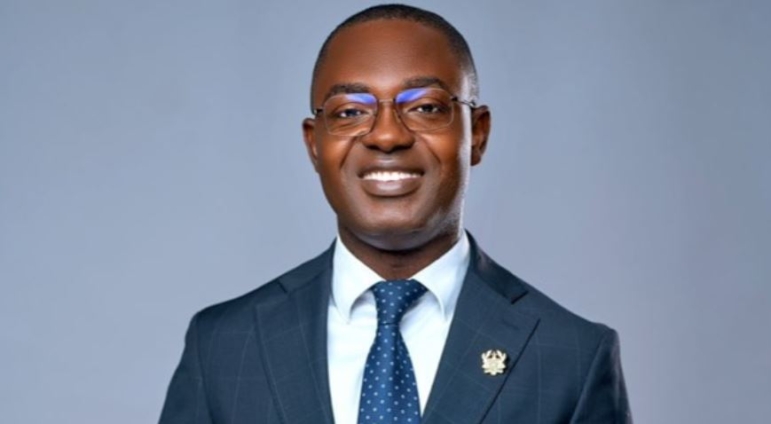
PUSAG President Ibrahim Issah celebrated the reforms as a triumph of persistent advocacy, stating that the changes finally address long-standing structural inequities that have hindered private-university students for years.
Landmark Policy Shift: Charter Acquisition Now Optional
The most significant reform hailed by PUSAG is the minister’s landmark directive concerning university charter acquisition.
Previously, private institutions were required to seek a presidential charter to operate independently, a process often criticised for being excessively rigid and slow.
PUSAG commended the Minister for making charter acquisition optional for private universities, a move the association believes is a decisive blow against structural rigidity.
“Government's decision on university charter marks a national turning point... This move is more than policy revision. It is justice restored, innovation unlocked, and opportunity expanded.”
PUSAG President Ibrahim Issah, who has vigorously campaigned for fairness and a modern regulatory system, stated:
“Today, that advocacy has yielded generational results.”
A New Dawn in Student Financing: Three Major Victories
The second area of major reform lies in the student-financing architecture, which PUSAG described as one of the "greatest victories" for private-university students in recent history.
The reforms ensure that private-university students are no longer disadvantaged by the centralized financial calendar geared toward public institutions.
PUSAG proudly acknowledged three specific government interventions resulting from their advocacy:
- Dedicated Disbursement Calendar:
- For the first time, private-university students will receive loan disbursements on a separate, predictable calendar. This eliminates the financial disadvantage previously caused by their academic calendars, which often differ significantly from those of public universities.
- 100% Increase in Student-Loan Support:
- The government has agreed to double the quantum of student loan assistance. PUSAG noted this directly responds to their position papers and eases financial pressure for thousands of students struggling with fees.
- Introduction of the “Student Loan Plus” Facility:
- A major breakthrough is the creation of a higher-tier loan option under the Student Loan Plus framework. This system allows students with greater financial needs to access more substantial support without bureaucratic hurdles.
PUSAG emphasised that these are not abstract wins but “life-changing interventions born out of persistent, uncompromising advocacy.”
Legacy of Leadership and Policy Shaping
PUSAG credits its current leadership for establishing the Association as a decisive voice in national education policy. Key achievements championed by President Issah's tenure include:
- Leading the national campaign for fair student financing and presenting actionable proposals to the Student Loan Trust Fund (SLTF) and the Ministry of Education.
- Proposing a tiered loan system, which directly influenced the introduction of Student Loan Plus.
- Securing the inclusion of over 2,500 students previously denied the opportunity to undertake National Service due to regulatory lapses.
Minister Hailed for Responsiveness
PUSAG reserved its highest praise for the Minister of Education, Haruna Iddrisu, celebrating his approach to engaging student leadership.
The Association concluded that the minister's willingness to act swiftly on legitimate concerns has set a new standard for leadership, proving that progress is inevitable when government and student leaders collaborate with sincerity.
“These achievements and reforms stand as the enduring legacy of a leadership era defined by courage, policy engagement, and relentless advocacy. The Government’s actions mark a turning point — not only for private universities, but for the future of tertiary education in Ghana.”
Latest Stories
-
Anti-LGBTQ Bill: Forget the rumour mongers, I’m a man of action, and will pass the bill – Speaker
19 minutes -
Women and children among those killed in Sudanese army shelling of wedding celebration
23 minutes -
President Mahama is not sincere with Ghanaians on LGBTQ bill matter – Hassan Tampuli
41 minutes -
Gov’t to establish Prison Industrial Hub to equip inmates with income-generating skills – Prison Service boss
60 minutes -
Alhassan Tampuli donates cement, roofing sheets to support storm victims in Gushegu
1 hour -
Alhassan Tampuli appeals for urgent support for storm victims in Gushegu
1 hour -
The hypocrisy must stop; pass Anti-LGBTQ+ Bill now – Alhassan Tampuli to Mahama
1 hour -
Imprisonment should be rehabilitative, not punitive – Ghana Prisons boss at UNGA
1 hour -
Ga Adangbe traditional priests petition Mahama over McDan aviation licence revocation
2 hours -
Anti-LGBTQ Bill: NDC’s arrogance is worrying – Hassan Tampuli
2 hours -
Let’s give OSP time to mature, not to scrap it – Hassan Tampuli
2 hours -
Nigeria convicts 386 Islamist militants in mass trials
2 hours -
Djibouti president wins election with 97.8% of vote, state media says
2 hours -
We don’t have mandate to deduct tax from rent allowance of security services personnel – Interior Ministry clarifies
2 hours -
Ablakwa receives Presidential Special Envoy on Reparations to advance global agenda
3 hours