

Audio By Carbonatix
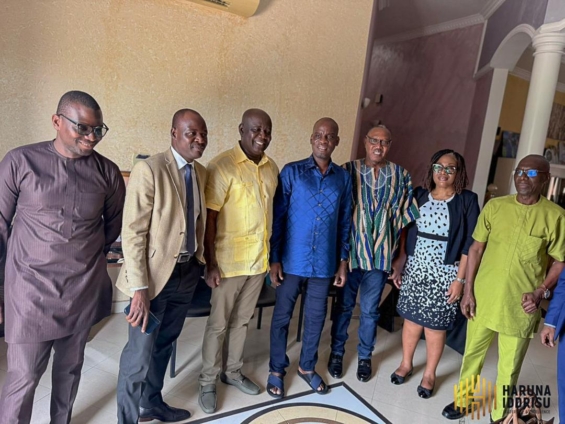
The Minister for Education, Haruna Iddrisu, has successfully brokered a high-level consensus on the 2026 GETFund Allocation Framework, paving the way for a revised educational infrastructure financing in Ghana.
Following a series of strategic deliberations with parliamentary and sector leaders, the proposed formula is now set to be laid before Parliament for approval.
The meeting brought together key stakeholders, including the Deputy Minister for Education, the Chair of the Parliamentary Select Committee on Education, and the Administrator of the GETFund, to align the 2026 budget with the national transformation agenda.
Prioritising the vulnerable and healthcare
The 2026 framework introduces landmark shifts in resource distribution, most notably the creation of a dedicated funding stream for Special Needs Education and disability support. This move is designed to address long-standing equity gaps within the sector.
Furthermore, the formula officially integrates President John Dramani Mahama’s pledge to Otumfuo Osei Tutu II regarding the completion of the KNUST Teaching Hospital.
By providing a guaranteed financial lifeline to the project, the government aims to significantly boost both healthcare training and service delivery in the Ashanti Region and beyond.
The Ministry has described the new formula as the "full operationalisation" of a revised strategy aimed at strengthening transparency and accountability. The 2026 framework is built on three core pillars:
- Equity: Ensuring fairness in the distribution of resources across all regions.
- Strategic Alignment: Directly funding the education priorities of the current administration.
- Accountability: Enhancing the efficiency of GETFund disbursements.
“The 2026 framework marks the beginning of the reset and full operationalisation of a revised allocation formula designed to align with the reset agenda of His Excellency John Dramani Mahama,” stated a press release on Tuesday, February 24, signed by Hashmin Mohammed, Press Secretary to the Minister.
Collaborative path to Parliament
The ministry highlighted that the "focused and forward-looking" discussions have resulted in a strong partnership between the Executive and the Legislature.
This synergy is expected to facilitate a smooth passage of the formula through Parliament, ensuring that educational projects for the 2026 fiscal year can commence without delay.
The Minister expressed satisfaction with the collaborative spirit of the engagement, noting that the "transformative agenda" for Ghana’s education sector remains on track to deliver more inclusive and well-resourced institutions nationwide.
Latest Stories
-
Let The Constitution direct Chieftaincy to deliver “All Development Is Local”
60 minutes -
John Jinapor outlines renewable energy, nuclear power priorities for 2027
1 hour -
Ghana explores centre of excellence for hearing, communication and cochlear implant care
2 hours -
Schizophrenia-related disorders lead mental health cases recorded in Ghana
3 hours -
Dutch authorities enlist Ghana in hunt for fugitive drug lord Bolle Jos
3 hours -
Ghana housing finance conference adopts communiqué to improve affordable housing access
8 hours -
Special Initiatives Minister urges Wa Technical Institute to enrol more girls as EU-backed solar training lab opens
8 hours -
In the matter of my first year at the Bar
8 hours -
ActionAid Ghana calls for an end to child marriage, greater investment in girls’ rights
8 hours -
Newsfile to tackle World Cup visa scandal, beach demolitions, education strikes, BRICS bid
9 hours -
UK-Ghana Trade & Investment Summit: Trade Resource Centre to help businesses maximise UK-Ghana trade opportunities
9 hours -
Embassy of Denmark celebrates World Maritime Day
9 hours -
Linking LEAP to productive inclusion could cut extreme poverty by 2030 – UNICEF
10 hours -
Trade Ministry backs use of creative arts to rehabilitate prison inmates
10 hours -
Negotiations with government to continue despite strike suspension – GNAT
10 hours