

Audio By Carbonatix
The United Nations Development Programme (UNDP) support to indigenous innovators and entrepreneurs is driving sustainable community development in health, education and reducing unemployment in Ghana.
The initiative has doubled its target of reaching 6,000 young Ghanaians through enterprise development programmes to 12,000 in the last one‑and‑a‑half years, with youth advancing technologies to assist persons with disabilities.
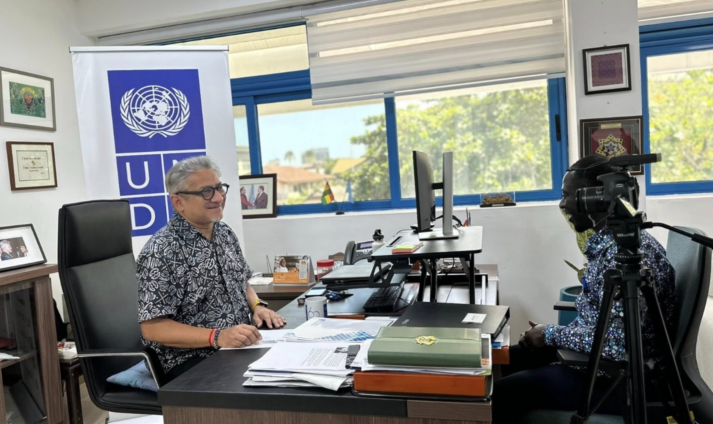
Speaking to the Ghana News Agency, Mr Niloy Banerjee, UNDP Ghana Resident Representative, said the entrepreneurship training reached young people predominantly from rural communities and non‑elite backgrounds.
“The results have surprised even those running the programmes. One graduate developed a motorised, computer‑aided walking stick for the visually impaired. Another improvised a wearable nebuliser – a backpack‑mounted breathing aid for people with respiratory conditions,” he said.
Mr Banerjee lauded the young innovators, saying, “These are not Silicon Valley concepts; they are solutions invented largely from local materials, aimed squarely at local problems.”
He explained that UNDP did not prescribe problems but encouraged participants to solve local challenges using technology and digital tools, with support from the organisation.
He noted that the approach deliberately targeted disadvantaged and vulnerable communities, with cohorts taken through boot camps to refine ideas, test concepts and connect with specialists in marketing, finance and product development, ending with investment relationships.
Mr Banerjee emphasised the need for government, financial institutions, private sector and development partners to provide patient capital, technical assistance and infrastructure to ensure scalability.
“But the model hits a wall at a point. Once an enterprise reaches around GHS50,000 in annual turnover, scaling to the next level – GHS10 million and beyond – requires credit. And Ghana’s banking system, structured around risk aversion, is not designed to provide it.
“No bank will say: for the first five years you don’t have to pay interest; from the sixth year you pay two per cent; the seventh year, three per cent. Nobody is doing that,” he told GNA.
Mr Banerjee said the absence of patient capital hindered the growth of enterprises into job‑creating businesses, making the credit gap one of UNDP’s chief campaign priorities in Ghana.
“What Ghana needs is a financial ecosystem that allows its most promising grassroots innovators to grow into genuine engines of national development,” he said.
Mr Banerjee called for a mindset shift towards supporting enterprises to anchor Ghana’s industrialisation demands, pledging UNDP’s continued support to authorities in addressing challenges facing young innovators and entrepreneurs.
The UNDP works in 170 countries and territories to eradicate poverty while protecting the planet, including all 16 regions of Ghana, where its interventions focus on environment and climate change, inclusive development, and governance and peace building.
Latest Stories
-
Mahama reaffirms commitment to private investment and industrial growth
50 seconds -
‘We have been used and dumped’ – NDC’s James Agbey warns over grassroots neglect
10 minutes -
Ghana defender Marvin Senaya begins training ahead of comeback
13 minutes -
Joyce Bawah Mogtari urges women leaders to build strong support networks
29 minutes -
Bawumia engages GUTA over import duties, VAT and rising business costs
30 minutes -
Fuel prices begin to fall as Star Oil cuts petrol to GH¢16.45
31 minutes -
GoldBod supplies banks with US$282m in weekly forex sales
33 minutes -
Joyce Bawah Mogtari says Obaasima Conference should help women connect and learn
34 minutes -
Ghana’s Crude Oil Production Rebounds by 30% After Five Years of Decline
54 minutes -
Nzema East launches Responsible Cooperative Mining Programme to tackle environmental destruction
1 hour -
Ghana included in WHO lead-testing programme as questions remain over local exposure risks
1 hour -
2026 Amputee World Cup: We will win the trophy – Samson Deen
1 hour -
Controller and Accountant-General pays promotion arrears to 56,003 GES teachers ahead of deadline
1 hour -
2026 Amputee World Cup: We want to make the continent proud – Black Challenge coach
1 hour -
International Day of the Girl: Central Region Education Directorate calls for action to tackle child marriage, teenage pregnancy
1 hour