

Audio By Carbonatix
Dr Tedros Adhanom Ghebreyesus, the Director-General of the World Health Organization (WHO) has underscored the critical role of digital technologies in strengthening Africa’s health systems.
Delivering a virtual message at the GITEX Future Health Africa conference in Casablanca, he noted that recent cuts to international aid had disrupted healthcare delivery across many African countries.
However, he said the situation, presented an opportunity for nations to transition from aid dependency to greater health sovereignty through strategic investments.
Dr Ghebreyesus emphasised that digital innovations, including Artificial Intelligence (AI), could help build resilient, efficient, and equitable health systems if properly designed and implemented.
In that regard, he stressed the need for solutions that responded to real needs, protected health data and supported health workers while strengthening national institutions and regional collaboration.
“Digital technologies, including artificial intelligence, are a powerful tool for building resilient, equitable, and efficient health systems. What matters most is how these tools are designed and deployed,” he said.
He expressed appreciation to Morocco for its leadership in the health space and partnership with WHO as they united to build a “healthier, safer, fair, and sovereign Africa.
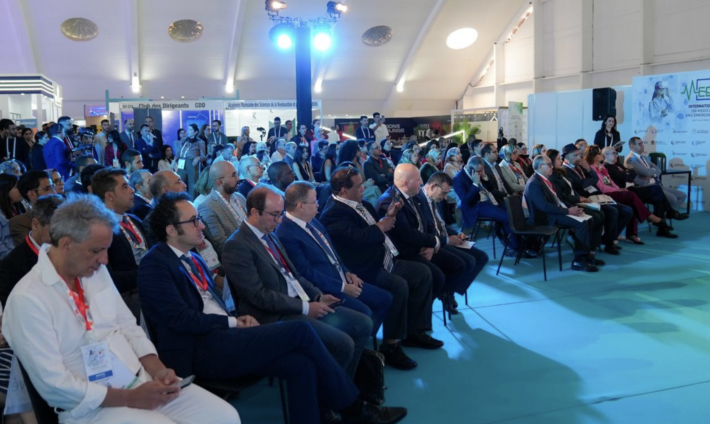
The inaugural GITEX Future Health Africa conference brought together global medical experts, scientists, digital innovators, exhibitors, policymakers, and investors to explore how technology could improve access, quality, and security in healthcare across Africa.
The three-day landmark conference organised by the Mohammed VI Foundation for Sciences and Health (FM6SS), the Moroccan Ministry of Health, and Social Protection and KOAUN International, was under the high patronage of His Majesty King Mohammed VI, the King of Morocco.
Held on the theme: “Digitising Africa’s healthcare future: Essential care advancing with AI,” it featured scientific conferences, specialised workshops, and an exhibition and innovation spaces as well as several pacts to push the frontiers of health care.
The conference will be climaxed on Wednesday with more forward-looking scientific sessions, commitments, and declarations towards a futuristic health system.
Latest Stories
-
Assemblies of God mobilises 2,500 leaders ahead of historic World Congress
1 minute -
Major Accra roads to get facelift ahead of Ghana’s 70th Independence anniversary – Agbodza
15 minutes -
Account for GH¢650bn allocated to existing programmes before new economy – Oppong Nkrumah to gov’t
26 minutes -
‘You’re an action man’ – Abena Osei-Asare hails Rent Commissioner’s hostel fee crackdown
27 minutes -
Mahama directs Finance Minister to allocate GH¢1bn for Housing Fund in 2027 Budget
34 minutes -
NPP celebrates Bawumia on birthday, prays for 2028 election victory
34 minutes -
Mahama recounts ‘exhausting and frustrating’ struggle to find a home as a young spouse
39 minutes -
‘Take damaged banknotes to commercial banks for replacement’ – BoG warns against repairing cedi notes for resale
47 minutes -
Lebanon’s Hezbollah gets $200 million from Iran to help displaced, sources say
47 minutes -
Bisa Kdei to launch annual Highlife music event ‘The Convention’
48 minutes -
BoG cautions public against digital financial fraud, ‘double-your-money’ schemes
48 minutes -
WPL 2026/27: Ampem Darkoa Ladies to start title defence against Northern Ladies
1 hour -
WPL 2026/27: Hasaacas Ladies face Army Ladies in opening round as GFA announce Southern Zone fixtures
1 hour -
Eduwatch calls for urgent resolution of teachers’ strike and reforms
1 hour -
Media worker, journalist remanded over alleged GH¢800k fraud
1 hour