

Audio By Carbonatix
Africa is so proud of Ghana.
Did I really hear South African activist Jacinta Ngobese-Zuma, the driving force behind this hatred, accuse the Ghanaian government of overreacting? Really!
“A tree that forgets the roots that held it upright will one day curse the wind for its fall.”
Africa is a fascinating continent. We have perfected the art of chanting “unity” while practicing selective hostility. We gather at luxurious summits to preach Pan-Africanism, clap loudly for speeches about “African brotherhood,” and pose for photographs beneath giant AU banners. Only to return home and treat fellow Africans like unwanted pests.
And nowhere is this contradiction more embarrassing than in South Africa.
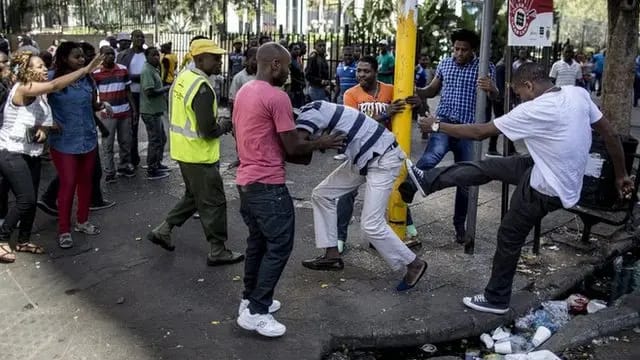
Let us stop insulting intelligence with diplomatic euphemisms. When Africans are hunted, threatened, looted, and attacked because they are foreigners, that is not “criminality.” It is not “community frustration.” It is xenophobia ugly, deliberate, and shamelessly repeated.
Yet every time it happens, South Africa suddenly develops a strange national allergy to accountability. Politicians become poets of excuse-making. Analysts begin intellectual gymnastics worthy of Olympic medals. Poverty. Unemployment. Inequality. Resource competition. Everything is blamed except the obvious truth standing in front of everyone.
Because apparently, unemployment now magically teaches people how to identify Zimbabweans, Nigerians, and Ghanaians with sniper-level precision.
Curiously, the anger is almost always directed at fellow Africans, not every foreign national. That detail alone destroys half the excuses before they are even spoken.
Then enters activist Jacinta Ngobese-Zuma, confidently informing the world that Ghana “overreacted.” According to her, nobody was beaten, the backlash was exaggerated, and the evacuation of Ghanaians was merely a public relations stunt.
Remarkable.
So now Africans must wait until bodies pile high enough before they are permitted to feel threatened? What exactly is the approved threshold for panic? One corpse? Ten burnt shops? A livestreamed mob attack?
This is the arrogance that makes the situation even more infuriating. South African commentators speak as though other African countries owe them eternal patience while contributing endless disrespect in return.
Let us ask an uncomfortable question: how many South African companies operate peacefully across Africa?
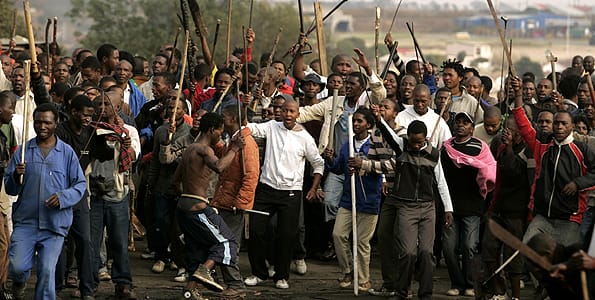
From Ghana to Nigeria to Kenya, South African businesses expand aggressively, make profits comfortably, and enjoy protection under local laws. Their citizens are not chased through markets. Their stores are not systematically targeted by mobs screaming nationalist slogans. Nobody is organizing “Operation Drive Out South Africans.”
Why?
Because most African countries still understand basic coexistence better than the self-appointed “gateway to Africa.”
And then comes the tired sermon about illegal immigration.
Fine. Every country has immigration laws. Ghana has them. Nigeria has them. Kenya has them. South Africa has them too, supposedly. So if undocumented migrants exist in large numbers, are South Africans admitting that their law enforcement institutions are asleep at the wheel?
Since when did immigration enforcement become a community blood sport?
Civilized states use police, courts, and deportation systems. They do not outsource border control to angry mobs armed with stones, petrol bombs, and delusions of patriotism.
If laws are failing, fix the institutions. But once mobs begin deciding who deserves to stay alive, the issue is no longer immigration. It becomes moral collapse.
What makes this betrayal particularly disgusting is history itself.
During apartheid, South Africa was not abandoned. African countries sacrificed politically, economically, and diplomatically to support liberation movements. Ghana stood firmly with the anti-apartheid struggle. African students marched. African governments mobilized. Ordinary Africans carried South Africa’s pain as though it were their own.
Nelson Mandela acknowledged this solidarity repeatedly because he understood something modern South African nationalism seems desperate to forget: freedom was not won alone.
Yet today, fellow Africans are treated like invaders by people whose freedom was defended by the same continent they now insult.
That is not merely hypocrisy. It is historical ingratitude bordering on national arrogance.
And where are the leaders? Carefully crafting speeches. Offering recycled condemnations. Managing optics while pretending not to see a recurring pattern.
At some point, silence becomes suspicious.

Perhaps the most honest reaction came from leaders who boycotted the African Union meeting in South Africa. At least they understood symbolism. You cannot host continental unity conferences while Africans are dodging violence in your streets.
Africa now faces a brutal question, is Pan-Africanism a principle or merely decorative vocabulary for conferences?
Because unity that disappears during hardship was never unity to begin with.
And until South Africa confronts this honestly, without excuses, denial, or activist theatrics, the continent will continue watching a nation rescued by African solidarity repay that debt with hostility, arrogance, and astonishing amnesia.
History never forgets those who repaid solidarity with hostility.
A people who forget yesterday’s rescue may one day stand alone in tomorrow’s fire.
Latest Stories
-
‘I never said I’ll declare a state of emergency’ – Mahama on galamsey
5 minutes -
Bobby Banson condemns EOCO’s attempted arrest of Nana Agyei Baffour Awuah
30 minutes -
When Kumasi begins to look like somebody is in charge
30 minutes -
Parliamentary probe into cocaine seizure would be a waste of time – Inusah Fuseini
36 minutes -
Cocaine seizure: Focus on Ghana’s reputation, not partisan blame – Osae-Kwapong
43 minutes -
Two Invitations, Three Interrogations: Did Baffour Awuah tell the whole story?
52 minutes -
Drug cartels may be seeing Ghana as easy route – Lenin Anane Agyei
2 hours -
Ghana risks gaining notoriety as drug-trafficking hub – Bobby Banson
2 hours -
Government dismissed my drug trafficking warning, then tried to arrest me – Ntim Fordjour
2 hours -
Day Two: 3rd Republic Bank-JoyNews Habitat Fair Clinic underway at Junction Mall
2 hours -
NACOC addressing inherited gaps in fight against drug trafficking – Deputy Director-General
2 hours -
Taekwondo goes to school as GTF launches five-region youth campaign
2 hours -
The issues Mourinho is struggling to fix at Real Madrid
2 hours -
Hundreds throng EducationUSA College Fair in Kumasi in pursuit of abroad studies
2 hours -
Drug bust: NACOC should be part of port inspection team – Twum-Barimah
2 hours