

Audio By Carbonatix
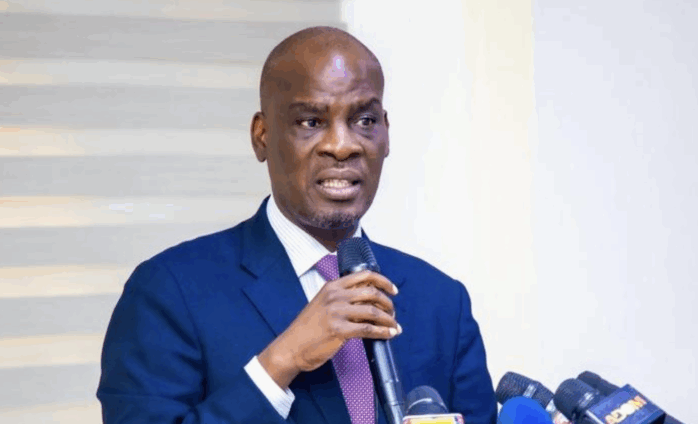
The Minister for Education, Haruna Iddrisu, has pledged a government-led review of the recently announced teacher recruitment quotas, signalling a potential increase in the 7,000 slots currently available for the 2026 academic year.
The minister’s intervention follows a wave of discontent from the Ghana National Association of Teachers (GNAT) and sister unions, who have labelled the initial allocation as a "drop in the ocean". Critics argue that the figure fails to absorb the backlog of over 10,000 trained graduates currently languishing on waitlists after completing their studies at various Colleges of Education and tertiary institutions.
Speaking on the sidelines of the May Day celebrations in Kumasi on Friday, 1st May 2026, Mr. Iddrisu conceded that the education sector’s recruitment numbers were disproportionately low when compared to other wings of the civil service.
He pointed to the 15,000 recruitment slots granted to the health sector as a benchmark, arguing that the sheer scale of Ghana's educational infrastructure necessitates a much larger workforce.
“The 7,000 is not enough, particularly where health workers had 15,000 and others. There are more schools than hospitals, so government will work and up the numbers,” the minister stated emphatically.
The minister's "more schools than hospitals" logic highlights a pressing logistical reality in Ghana's public service planning. With thousands of basic and second-cycle institutions spread across the 16 regions, the demand for qualified educators has outpaced the current budgetary ceiling.
Education advocates have long noted that while the Free Primary Healthcare and Mahama Care initiatives are expanding health infrastructure, the education sector remains the nation’s largest employer and requires a corresponding investment in human capital to maintain quality standards.
Mr. Iddrisu assured the teacher unions that the government is not deaf to their grievances. He indicated that high-level consultations are already underway to adjust the figures to better reflect "national needs" and the actual number of graduates ready for posting.
The ministry’s commitment to up the numbers is expected to bring relief to thousands of graduates who have been advocating for their inclusion in the national payroll.
By aligning recruitment with the physical number of schools across the country, the government aims to reduce the current teacher-to-pupil ratio and ensure that no classroom is left without a professional instructor.
Latest Stories
-
Zonda Tec launches HOWO T3M truck to support agric and logistics
9 minutes -
Obuasi SHTS scandal: Eduwatch calls for sex offenders’ register and mandatory background checks for teachers
21 minutes -
GloMeF CEO urges intensified public education on new road traffic regulations
32 minutes -
‘Any tax on ChatGPT is an attack on education and innovation’- Akim Swedru, MP
36 minutes -
Obuasi SHTS sexual abuse scandal exposes systemic failure in child protection – Moving Masculinity
36 minutes -
Hubtel CEO calls for national data-sharing framework to boost AI development
39 minutes -
Twelve Golden Rules of real estate development in Ghana, Africa
43 minutes -
Five new telephony cell sites in Ashanti Region to be activated in October 2026 – Sam George
44 minutes -
Mahama cuts sod for Afienya Industrial Park, targets 120 enterprises
49 minutes -
Rush for fuel from accident tankers is stealing, punishable by law – NPA boss, Edudzi Tamakloe
54 minutes -
GhIG pushes for legislation to regulate geoscientists’ activities
1 hour -
Mfantsipim @150: Ace Anan Ankomah leads project to preserve school’s musical heritage
1 hour -
Gov’t launches rCOMSDEP in Ahanta West, Mpohor Fiase to promote responsible community mining
1 hour -
AI is forcing professionals to rethink how they deliver value – Hubtel CEO
1 hour -
Daily Insight for CEOs: Strengthening the CEO’s Leadership Legacy
1 hour