

Audio By Carbonatix
The Director of Faculty of Academic Affairs and Research at the Kofi Annan International Peacekeeping Training Centre (KAIPTC) says the refusal of the security services and their political masters in engaging citizens has resulted in the brutalities recorded in recent times.
Prof. Kwesi Aning believes that the experiences and observations of citizens must be an integral part of intelligence gatherings by the Police Service and the military.
According to him, the use of brute force on citizens will only degenerate in civil unrest rather than pouring water on troubled waters.
"As citizens, our experiences and observations are key early warning indicators. They can contribute to the intelligence assessment. It is when the security services and their political masters refuse to listen and engage; that is why Wa, Ejura and Sene [military brutalities] have happened. So we have to ask ourselves how do we create a conducive environment where we can engage and dialogue.”
“The citizens who are raising their voice, those who are complaining are all driven by one aim; we want to partner and collaborate in a manner that will contribute to a functional, stable society; that allows us to go about our business," he said.
Speaking to Samson Lardy Anyenini on JoyNews' Newsfile, Saturday, Prof. Aning said denial of insecurity in Ghana by the Police Service is laughable and will only compound the security situation in parts of the country.
His comment comes in the wake of recent military brutalities recorded in the country in recent times.
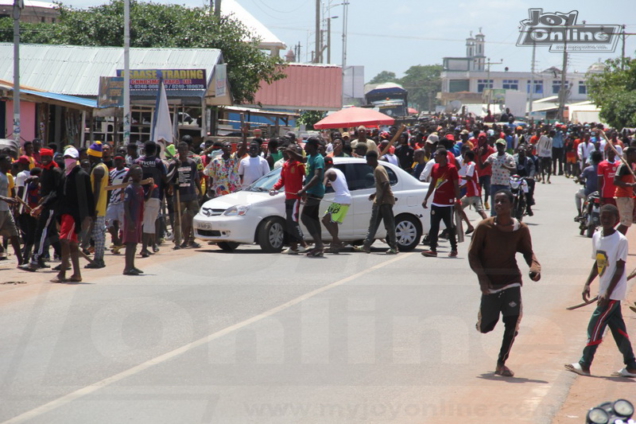
It was first in Ejura, where military personnel shot and killed two protesters and injured four others, demonstrating the killing of Ibrahim “Kaaka” Mohammed, a social activist and member of the #FixTheCountry movement, who was beaten to death by unidentified people.
Within 72 hours, another group of soldiers went on a rampage in the Wa township, brutalising residents after claiming a mobile phone belonging to one of them had been stolen.
Prof. Aning believes the approach adopted by the military was uncalled for, and community engagement would have yielded positive results rather than combat.
The security expert said that the Ghana Police Service has historically failed in its crowd control and management.
Prof Aning also questioned the quality of intelligence gathering and decision-making process among security services in dealing with protests.
He added that the security services must show a duty of care and be measured in their actions when dealing with civilians.
The security expert also blamed the political leaders for failing to act swiftly to assuage the agony and grievances of the youth in Ejura.
Prof Kwesi Aning called on the Defence and Interior Committee of Parliament to interrogate the intelligence assessment, which led to the roping of the military in the internal security situation in the Ejura community.
Latest Stories
-
Kwaku Azar writes: A-G vs OSP
12 minutes -
Mfantsipim–Adisadel rivalry built excellence, not division – Sam Jonah
37 minutes -
Vice President launches Mfantsipim’s 150 years of shaping Ghana’s greatest mind
54 minutes -
I assure Otumfuo, Mahama will join him to commission KNUST Teaching Hospital by end of this year – Haruna Iddrisu
2 hours -
Gov’t to roll out free special education for persons with disabilities from July 1 – Education Minister
2 hours -
“We used it to test our officiating officials’ readiness” – Bawah Fuseini after CAA Athletics event
2 hours -
Volleyball emerges as Ghana’s fastest rising sport
3 hours -
National Sports Fund needs strong leadership from the top – Administrator David Wuaku
3 hours -
JoySports Exclusive: Steve McLaren in talks with GFA after expressing interest in Black Stars job
3 hours -
Fire guts auto parts warehouse at Bubuashie, one fire officer injured
3 hours -
I owe my victory to coach Ofori Asare – Allotey after winning WBA Africa Gold Super Flyweight belt
3 hours -
Church of Pentecost supports over 2,000 BECE candidates in Obuasi with career guidance seminar
5 hours -
Brandon Asante and Coventry all but promoted to Premier League despite Sheffield Wednesday draw
5 hours -
GPL 2025/26: Late Kwartemaa strike downs Hearts in Tema
5 hours -
Ghana Faces Sierra Leone Moment as Prosecutorial Powers come under strain
5 hours