

Audio By Carbonatix
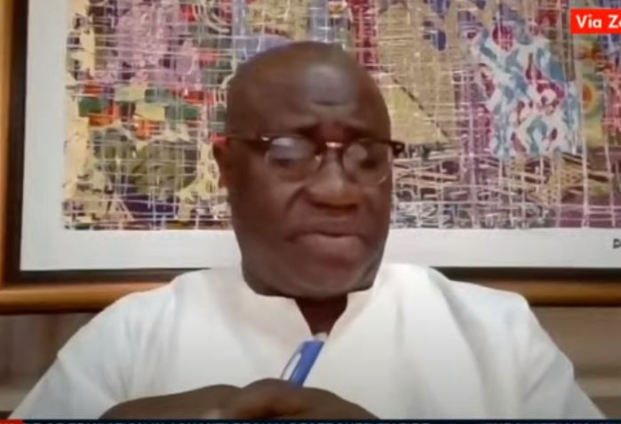
Director of Academic Affairs and Research at the Kofi Annan International Peacekeeping Training Centre, Professor Kwesi Aning, says the current disturbances in Bawku should be treated as a national crisis.
According to him, there are multiple interests at play in the conflict which makes it difficult for intelligence on the ground to reach the relevant stakeholders.
Speaking on Newsfile on Saturday, Prof Aning explained that on his visit to Bawku in December, the activities in the area showed preparations were underway for the enskinment of a new Naba.
However, he said the intelligence gathered on the floor did not reach the government’s chain of command.
“Where did the intelligence get lost? Because I have spoken to enough of the people on the ground to know that reports were written and sent up the chain, so where did they get truncated?” he said.
The Director of Academic Affairs said loss of intelligence in the chain of command reveals that several people have a keen interest in the conflict and therefore took advantage of the disturbances.
“This is no more a Bawku crisis, it's a Ghana crisis .. because the multiple interests who are feeding into this thing they are not only located in the North East or in Bawku they are located in Accra.
“Those who are exploiting the insecurity through trafficking network have also been benefiting so the kinds of blow back that will happen if this new chief enters Bawku is that no amount of military force will be able to coil the anger and the violence between Kusasi and the Mamprusi,” he told host, Samson Lardy Anyenini.
His comments come after a release by the government directed the North East Regional Security to treat all those involved in the enskinment process as criminals.
Subsequently, reports indicated that the North East Security Council said the arrest of all those involved might cause problems.
Meanwhile, the youth of Kusasi have expressed disappointment in the decision by the Security Council and have threatened to undertake the arrest.
However, Professor Aning said the youth “should take the intelligence to the police and let the state act. We need to see the state taking the lead in a proactive guard.”
He stressed that government must act fast to prevent the conflict from escalating into war.
Touching on how to end the ‘war’ he said, “it can only be stopped by the state being responsible and saying this is why we have been voted into power.
“This is why we have our security agencies; they are trained, let's give them a chance to deliver and they will be able to deliver. The state must be seen to be working.”
Latest Stories
-
Mahama urges African governments to treat healthcare as an investment, not budget cost
32 minutes -
Bawumia congratulates John Boadu and new NPP executives, pledges support ahead of 2028
34 minutes -
‘No talent should be left out’ – Bawumia pledges inclusive NPP campaign for 2028
40 minutes -
Prof. Mike Oquaye recounts how he blocked Special Prosecutor’s attempt to arrest Bawku Central MP
55 minutes -
Make health sovereignty a priority for Africa – Mahama
1 hour -
Dorimon Naa, Wa West DCE lead massive clean-up exercise; threaten sanctions against recalcitrant residents
1 hour -
Photos From Adom FM Y2K Jam
1 hour -
Praye Tiatia steals the show at Adom FM Y2K Jam [Watch]
2 hours -
Boakye Agyarko congratulates John Boadu, pledges support for NPP leadership
2 hours -
Antwi HiMight thrills fans with Antwi ne Antwi hits at Adom FM’s Y2K Jam [Video]
2 hours -
Amb. Edward Boateng congratulates Boadu, Kodua on election wins
2 hours -
John Boadu pledges to rebuild NPP from grassroots and restore ‘winning machinery’
2 hours -
Ashaiman Assembly deploys monitoring system to curb dumping in storm drain
3 hours -
John Boadu must rebuild, unite NPP for 2028 – Edward Boateng
3 hours -
Executive intimidation of opposition undermines separation of powers – Prof Oquaye
3 hours