

Audio By Carbonatix
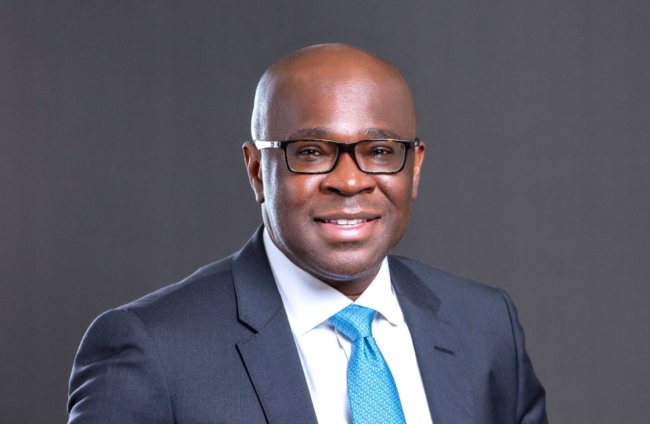
The President of the Ghana Association of Banks, Kwamina Asomaning, has stressed the critical need for ongoing dialogue between banks and the Bank of Ghana to ensure effective regulation and policy implementation.
Speaking on Joy News’ PM Express Business Edition last Thursday, the Managing Director of Stanbic Bank Ghana, underscored that while banks acknowledge their status as regulated institutions, they also possess invaluable insights that could enhance monetary policy decisions.
"There's one word that comes to mind—it's dialogue. We want to have a dialogue with the central bank. Our experience has been that in a few instances, policies or directives have been issued without adequate consultation," Mr Asomaning stated.
He stressed that banks interact with a broad range of customers across multiple economic sectors and hold vast amounts of data, relationships, and insights.
He argued that these insights could be instrumental in shaping monetary policies that are both effective and practical.
"We understand and accept the fact that we are regulated institutions. We accept that we cannot dictate how we should be regulated, but we interface with a large number of customers who operate in many sectors of the economy.
"We have a wealth of data, relationships, and insights. And we feel that monetary policy can benefit from some of the insights that come through us."
Mr Asomaning pointed out that new policies and directives often come with unintended consequences that could have been avoided if there had been prior engagement with industry stakeholders. He called for more information sharing before the enactment of major policy shifts.
"It often is the case that when these new policies are released, there are unintended consequences. And we feel very strongly that these unintended consequences can be avoided when proper dialogue is had."
He also highlighted the recurring issue of policy interpretation challenges within the banking sector.
According to him, financial professionals frequently struggle to achieve a uniform understanding of newly introduced regulations, which could lead to confusion and inefficiencies in implementation.
"There's also always the issue of interpretation. Oftentimes, these directives come out, and we as professionals even struggle to have a consistent understanding of what the intent is or was.
"It’s a bit of a travesty to have regulations or directives out there, and bankers are scrambling to agree on what the interpretation is."
Kwamina Asomaning expressed optimism that fostering a closer relationship between the banking industry and the central bank would create a more efficient regulatory environment.
He stressed that open channels of communication at all levels would lead to a more productive and effective partnership between the two entities.
"We feel that if we can have a much closer dialogue at all levels, that should lead to a much more effective relationship between the two of us."
Latest Stories
-
A source of excellence across generations – Vice President Opoku-Agyemang lauds Mfantsipim
18 minutes -
(Photos) Mfantsipim School launches historic 150th anniversary
41 minutes -
Knights and Ladies of Marshall group backs Catholic Bishops’ stance on anti-LGBTQ+
2 hours -
Bright Simons writes: All the Filla in the Ibrahim Mahama/E&P – Gold Fields Saga
2 hours -
Monetise Idiocy In Ghana
2 hours -
The Ghanaian prophet and the mysterious death of his scottish wife Charmain Speirs
3 hours -
Nearly 400 sentenced in Nigeria for links to militant Islamists
3 hours -
Ghana’s recovery supported by gold strength despite global oil price pressures – Standard Bank Research
3 hours -
Methodist Church hails Mfantsipim@150; calls for “fresh consecration” to excellence
4 hours -
‘Excellence is our inheritance’ – Nana Sam Brew-Butler hails Mfantsipim’s 150-year reign in leadership
4 hours -
Kwaku Azar writes: A-G vs OSP
4 hours -
Mfantsipim–Adisadel rivalry built excellence, not division – Sam Jonah
4 hours -
Vice President launches Mfantsipim’s 150 years of shaping Ghana’s greatest mind
5 hours -
I assure Otumfuo, Mahama will join him to commission KNUST Teaching Hospital by end of this year – Haruna Iddrisu
5 hours -
Barcelona dominate derby to extend La Liga lead
5 hours