

Audio By Carbonatix
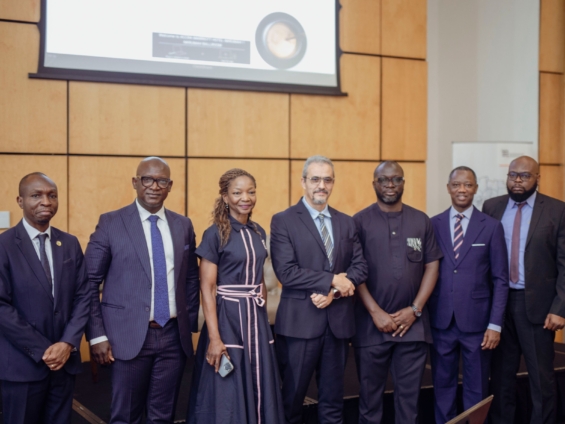
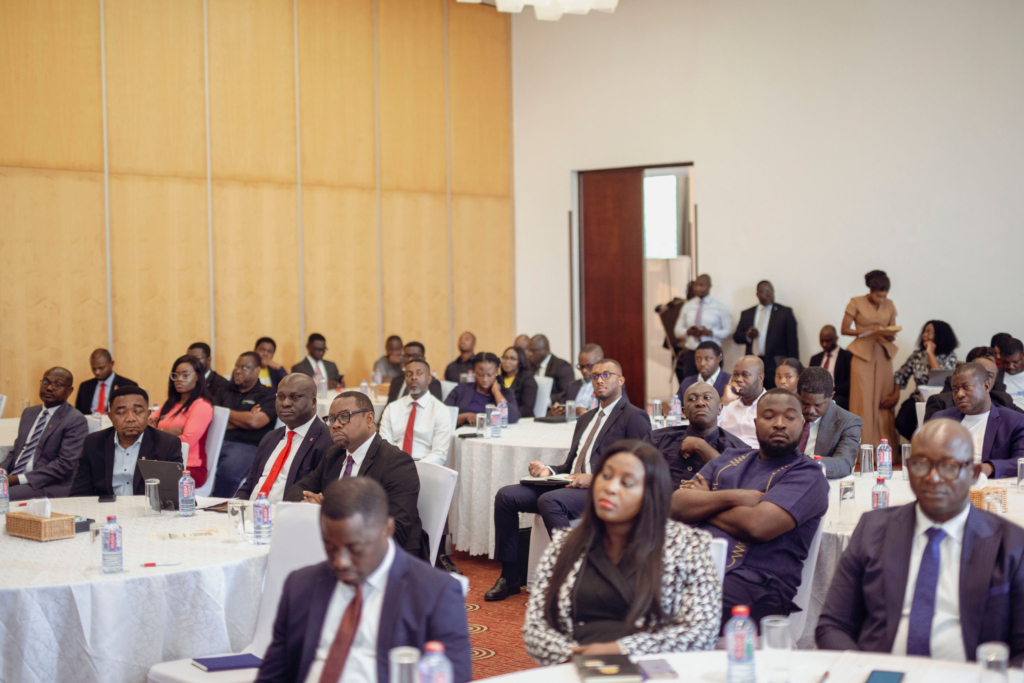
Ghana’s banking sector has taken a major step toward strengthening its defences against rapidly escalating cyber threats, as top banking executives, regulators, and cybersecurity specialists convened for the 2025 C-Suite Cybersecurity Workshop in Accra.
Held at the Marriott Hotel and organised by the Ghana Association of Banks in partnership with Digital Jewels Africa, the high-level session emphasised that cybersecurity has become a strategic business survival issue rather than a technical afterthought.
Updated industry data presented at the workshop showed cybercrime losses rising from GH¢23.3 million in 2024 to GH¢14.9 million in the first half of 2025, reaching GH¢19 million by the third quarter.
This represents a 17 percent year-on-year increase, with cyber incidents up by 52 percent in the first half of 2025 alone, signalling the severity and acceleration of the threat.
In a detailed presentation on the evolving cyber landscape, Tokunbo Taiwo, Group Chief Technology Officer of Digital Jewels Africa, revealed that organised criminal networks are increasingly targeting Ghana’s financial institutions with sophisticated tools and coordinated approaches.
He highlighted key areas of concern, including online fraud and phishing, which accounted for 36 percent of reported cases; ransomware attacks against banking and healthcare systems; mobile payment exploitation linked to Ghana’s GH¢570 billion mobile money market; supply chain infiltration through cloud vendors; AI-powered phishing and deepfake executive impersonation; and cloud misconfigurations that continue to be a leading cause of data breaches.
Mr Taiwo stressed the urgency of building trust through strong security standards, operational vigilance, and proactive investment in defensive capabilities.
Throughout the workshop, participants agreed that cybersecurity must now sit at the core of executive decision-making, shaping business continuity, customer confidence, regulatory compliance, and competitive positioning.
Speakers warned that failure to align cybersecurity with organisational strategy risks reputational harm, financial losses, customer disruption, and systemic exposure, with consequences extending beyond any single institution.
The discussions called for stronger investment, clearer governance, institutional alignment, and sector-wide coordination as Ghana accelerates its digital transformation and expands electronic financial services.
A major highlight of the workshop was an executive-level cyber crisis simulation led by Adedoyin Odunfa, Founder and CEO of Digital Jewels Africa. The simulation placed banking leaders in a high-pressure real-time scenario involving compromised online platforms, customer panic, media scrutiny, regulatory deadlines, and decision-making with incomplete information.
Participants proposed response strategies and analysed outcomes, revealing that cyber incident response requires more than technical solutions. The exercise demonstrated that communication management, stakeholder coordination, regulatory engagement, and executive decisiveness are equally critical to limiting damage and restoring system confidence.
Chief Executive Officer of the Ghana Association of Banks, John Awuah, emphasised the need for stronger collaboration among banks and cybersecurity authorities, noting that cyber risks cut across institutional boundaries and could undermine the stability of the broader sector.
He committed to supporting continued workshops, intelligence-sharing platforms, and coordinated readiness initiatives, stressing that the resilience of Ghana’s banking system depends on collective action rather than isolated institutional efforts. His remarks reinforced the shared sentiment that Ghana’s financial sector will stand or fall together in the face of cyber threats.
The 2025 C-Suite Cybersecurity Workshop was widely viewed as a turning point in Ghana’s approach to digital security, moving cybersecurity discussions from IT departments to boardrooms and from reactive responses to proactive sector-wide strategy.
As Ghana positions itself as a growing digital economy and regional financial hub, the banking leaders gathered in Accra signalled a clear understanding of what is at stake, acknowledging that the digital systems powering modern finance can either support national progress or collapse under the weight of unchecked cyber vulnerabilities.
Latest Stories
-
Kwabena Boamah appointed Board Chair for Impact Investing Ghana
2 minutes -
Striking teacher unions to meet Fair Wages and Salaries Commission on October 6
16 minutes -
EOCO working with AG to arraign Nana Baffour Awuah before weekend court
19 minutes -
Duraplast reassures customers after fire, announces October 5 reopening
27 minutes -
Call off strike, gov’t will not renege on promotion arrears pledge – Haruna Iddrisu appeals to teacher unions
29 minutes -
Committee set up to validate teachers eligible for 20% deprived-area allowance – Education Minister
33 minutes -
Five-member committee to search for new Black Stars coach after Sports Ministry-GFA meeting
1 hour -
Pinktober: Breast cancer survival exceeds 90% when detected early – Breast Society of Ghana
1 hour -
TCDA to adopt Upper West’s MATCO mango farm as northern prototype, issues warning against felling shea trees
1 hour -
‘Fear delegates’ tag: Afoko touts genuineness among delegates ahead of NPP delegates conference
1 hour -
John Boadu: The leader our party needs at this time – Amb. Edward Akwasi Boateng
2 hours -
Baffour Awuah: EOCO arrested, detained MP after hours of waiting, questioning – Afenyo-Markin
2 hours -
EOCO court warrant authorised search of Baffour Awuah’s law firm, not residence – Afenyo-Markin
2 hours -
NPP delegates conference: 3,000 to 4,000 police personnel deployed for security in Kumasi – Anthony Karbo
2 hours -
KGL Foundation commits $200,000 to support juvenile football for the next two years
2 hours