

Audio By Carbonatix
Ghana’s rice sufficiency is receiving a boost as three new varieties by the Crops Research Institute of the Council for Scientific and Industrial Research (CSIR) triumphed on the test field.
The varieties, CRI-Enepa, CRI-Kantinka and CRI-Amakwatia were able to resist the rice blast disease.
Stakeholders in the agriculture sector have been meeting annually to identify key issues in agriculture and present findings to the government for intervention.
In 2019, it came up, rice farmers at Atwima Nwabiagya North, one of the largest producers of rice, have been facing problems with the blast disease and Rice Yellow Mottled virus (RYMV).
“Farmers are not getting good seeds, some go to the milling centre for their seeds and others too use seeds for several seasons,” said District Director of Agriculture, Maxwell Adu Poku.
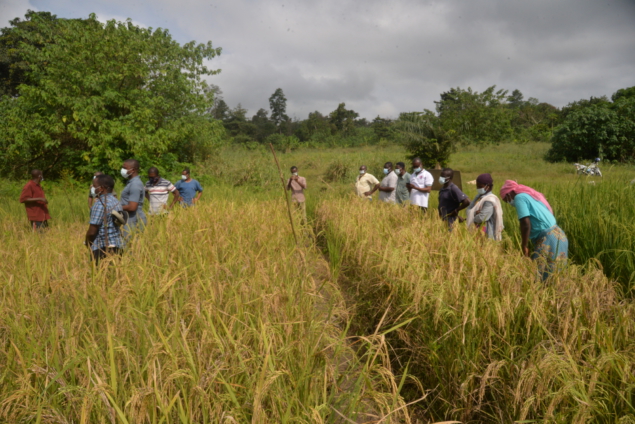
The government through the Modernizing Agriculture in Ghana (MAG) project, with support from the Canadian government, aided CSIR-CRI to set up a rice disease verification trial at Abira meant to help farmers manage the diseases.
The project involved three interventions: The introduction of newly released varieties to farmers, proper land preparation and application of pesticides.
“We’ve raised bans and during the land preparation stage we did paddling and leveling to manage water and weeds in the field and we gave them some fungicides and insecticides to manage the disease.
"The three interventions put together have resulted in the varieties showing up some tolerance to the disease,” said Godfried Ohene-Mensah, a principal technologist with the Crops Research Institute.
For the demonstration farm, the farmers were supplied two seeds in addition to the three supplied by CRI.
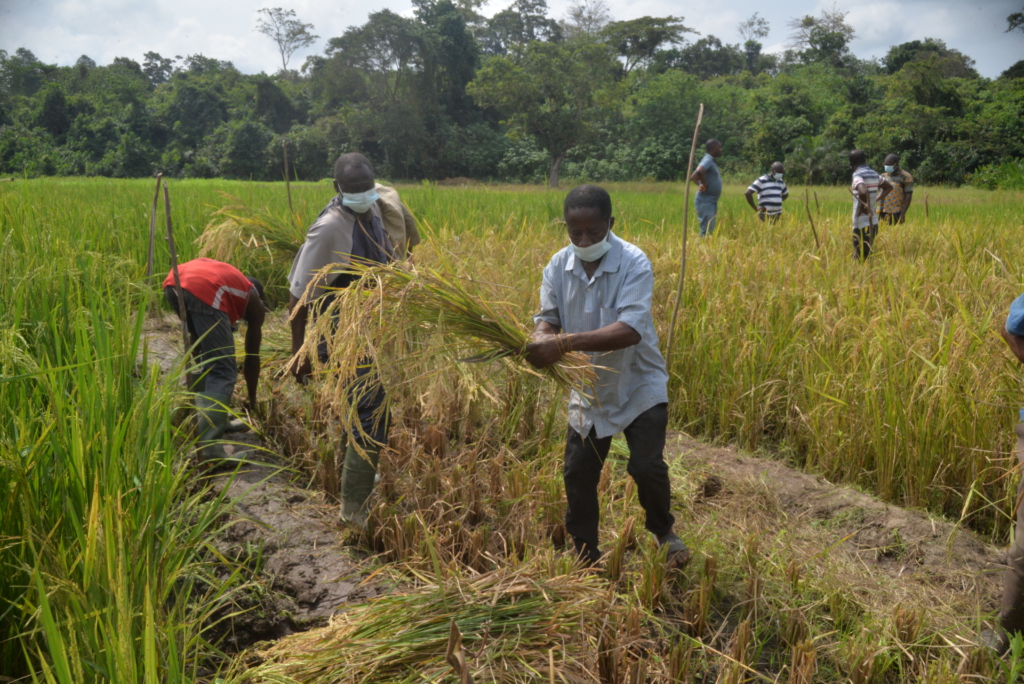
CRI-Enepa came tops followed by CRI-Katinka and finally CRI-Amankwatia.
“It is amazing that the three varieties could withstand the disease,” Nuhu Mumuni a farmer was impressed.
The Ashanti Regional Coordinator for Research-Extension-Linkage Committee (RELC), Dr. Ernest Baafi is however calling on the government to provide the farmers with equipment to ease their burden.
“The government can help the farmers by providing power tillers and mechanical threshers to ease their labour challenges and increase agricultural productivity,” he said.
The intervention will soon be rolled out in other districts.
Dr. Baafi called for support for the Crops Research Institute to make enough seeds available for farmers.
Latest Stories
-
Seven African referees selected for World Cup 2026 as Ndala, Issa Sy miss out
5 minutes -
Why diaspora investors are using Accra real estate to hedge against global uncertainty in 2026
28 minutes -
GWL urges public support to stem water thefts
29 minutes -
Fire guts 2-storey apartment at Ashaley Botwe
31 minutes -
Come down and account, it’s a constitutional requirement – Martin Kpebu to Ofori-Atta
39 minutes -
The power of the private courtyard: How regalia is redefining resort-style living in Accra
51 minutes -
Beyond roads and bridges: Understanding the true role of your MP
52 minutes -
UK says Russia ran submarine operation over cables and pipelines
53 minutes -
NPRA recovers GH¢27m in 2025, 30% of defaulted pension contributions
56 minutes -
Power fluctuations slash Ashanti region water production by 959,000 cubic metres in March
1 hour -
Beyond the festivities: Gomoa must turn visibility into development
1 hour -
DVLA clarifies it is not responsible for Toyota Voxy commercial operations
1 hour -
Calls for Ofori-Atta’s return a non-issue if trial proceeds in absentia – Pius Hadzide
1 hour -
France names Ghana first beneficiary of newly established National Health Compact
1 hour -
US Immigration, extradition outcomes likely to influence each other in Ofori-Atta case – Amanda Clinton
1 hour