

Audio By Carbonatix
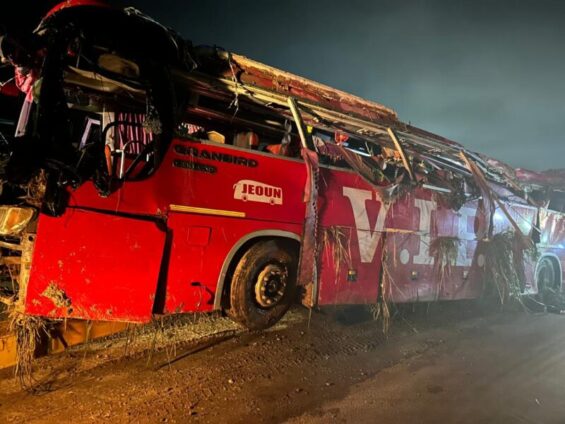
Cecil Garbrah, a transport consultant, has expressed deep frustration over Ghana’s approach to road safety.
In an interview on Joy News’ PM Express on October 14, he did not mince his words, describing the country’s efforts to address road safety as a “joke” and accusing leaders of only taking the issue seriously after major accidents occur.
“We have been joking with road safety. That is it. We are joking. We wait till there’s a big bang, then what happens? We’ll talk about it, and then the pressure comes down,” Mr Garbrah said.
His sentiment highlights the reactive, rather than proactive, approach Ghana seems to take regarding road safety concerns.
According to him, the response to road accidents is often short-lived, with discussions about preventive measures only taking place after tragic incidents, and fading away soon after.
This, Mr Garbrah argued, points to a lack of seriousness within the system: “It is simply because we are not a serious country. I mean, I say this without fear of favour.”
He emphasised the urgency of addressing the country’s road safety issues, calling on stakeholders to focus on sustained action rather than temporary outrage.

One of the key issues Garbrah identified is the lack of proper equipment and resources for road safety enforcement.
Despite the existence of trained personnel within the National Road Safety Authority (NRSA) and other bodies, they often lack the basic tools needed to do their jobs effectively.
“If you look at the National Road Safety Authority, they’ve got the men working, and then they don’t have the equipment,” he lamented, highlighting the basic issue of not even having enough vehicles to patrol and monitor roads.
He questioned the country’s commitment to road safety, asking, “What sort of budget do we have for Road Safety?”
Beyond just preventing accidents, Mr Garbrah believes road safety enforcement could be a source of revenue for the government.
He pointed to the frequent disregard for road regulations, such as people talking on mobile phones while driving or not wearing seatbelts, as areas where fines could be imposed.
“If you look at people flouting the road regulations every day in our lives, I think we can make a lot of money,” he remarked.
He stressed that effective road safety is not just about laws but ensuring compliance: “What are we looking for? We are looking at road safety in general so you and I will arrive alive in one piece and not in pieces.”
A key reason for Ghana’s lacklustre road safety efforts, according to Garbrah, is the political class’s failure to prioritise the issue.
“Every politician will come and say, vote for me. Have you heard any politician talking about road safety to say, ‘Vote for me, and then accident will be the issue of yesterday?’ No,” he stated emphatically.
In Mr Garbrah’s view, road safety should be elevated as a key political and social issue, given that roads are essential for the daily transport of goods, services, and people.
Latest Stories
-
Church of Pentecost supports over 2,000 BECE candidates in Obuasi with career guidance seminar
31 minutes -
Brandon Asante and Coventry all but promoted to Premier League despite Sheffield Wednesday draw
53 minutes -
GPL 2025/26: Late Kwartemaa strike downs Hearts in Tema
59 minutes -
Ghana Faces Sierra Leone Moment as Prosecutorial Powers come under strain
1 hour -
Don’t consume fish or seafood from Tema Shipyard until further notice – FDA warns
1 hour -
Why volunteering might be Africa’s most underrated career accelerator
1 hour -
ActionAid Ghana raises concern over gender gaps in Feed Ghana Programme
1 hour -
Windstorm wreaks havoc in Gushegu, displacing nearly 2,000 residents and damaging schools
1 hour -
Friends of Bridget Bonnie Marks her 35th birthday with donation to Kasseh Model Health Centre
2 hours -
From Ekumfi Kokodo to the Pulpit Stage: Essi Donkor’s gospel journey takes shape
2 hours -
Landfilling waste management creates no value, it’s an economic waste
3 hours -
Photos: Speaker Bagbin Commissions MPs constituency office under parliamentary decentralisation programme
3 hours -
Black Stars technical advisor Winfried Schäfer sacked as GFA shakes up backroom staff
3 hours -
Wenchi water project almost complete, critical to gov’t agenda – GWL MD
3 hours -
Anti-LGBTQ+ bill not part of government’s legislative agenda – Inusah Fuseini
3 hours