

Audio By Carbonatix
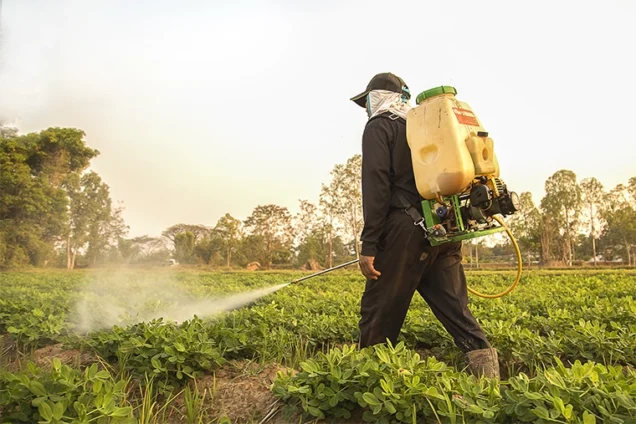
In a recent advisory to the Ministry of Food and Agriculture, renowned rural development expert Maxwell Abilla has raised concerns over the rampant use of pesticides and chemicals in Ghana’s agricultural sector. His open letter to Dr Bryan Acheampong, the Minister of Food and Agriculture, has sparked positive discussion in mainstream media, shedding light on the pressing need for sustainable agricultural practices.
Abilla’s communication highlighted the significant threats that excessive pesticide and chemical usage poses to both public health and the environment. "The continued reliance on chemical inputs in farming is leading to widespread environmental contamination and a decline in soil fertility, which, in turn, is contributing to serious health issues such as neurological and reproductive problems," Abilla noted. He underscored that while Ghana’s Pesticides Control and Management Act of 1996 provides a comprehensive framework, the lack of enforcement and monitoring exacerbates the risks.
The rural development expert has called for immediate policy revisions to mitigate these challenges. His advisory advocates for a two-pronged approach: strengthening the enforcement of current regulations and promoting Integrated Pest Management (IPM) techniques. IPM, which encourages biological and ecological control measures, offers a sustainable alternative to the heavy dependence on chemicals, ensuring a balanced approach to farming that aligns with environmental conservation efforts.
Maxwell Abilla’s call for action also includes increased education and capacity-building initiatives for farmers. He emphasized the need for a multi-stakeholder approach, involving government agencies, agricultural organizations, and academic institutions, to collaborate on implementing safer farming practices. "Farmers need to be educated on the dangers of excessive chemical use and be trained in alternative methods such as crop rotation and the use of biopesticides," Abilla urged.
Dr Bryan Acheampong has acknowledged the advisory, stating that the ministry is considering the recommendations and will work towards fostering a more sustainable agricultural environment. "We are committed to addressing these concerns and ensuring that Ghana’s agriculture remains both productive and safe for future generations," he said.
The advisory further calls for greater investment in research and development to explore new pest management strategies that reduce dependence on harmful chemicals. This, Abilla believes, would not only protect the environment and human health but also position Ghana as a leader in sustainable agricultural practices.
As discussions on this vital issue continue, stakeholders are optimistic that the Ministry of Food and Agriculture will take the necessary steps to safeguard the country’s agricultural sector while promoting the well-being of its citizens and the environment.
Latest Stories
-
The Ghanaian prophet and the mysterious death of his scottish wife Charmain Speirs
9 minutes -
Nearly 400 sentenced in Nigeria for links to militant Islamists
30 minutes -
Ghana’s recovery supported by gold strength despite global oil price pressures – Standard Bank Research
37 minutes -
Kwaku Azar writes: A-G vs OSP
1 hour -
Mfantsipim–Adisadel rivalry built excellence, not division – Sam Jonah
2 hours -
Vice President launches Mfantsipim’s 150 years of shaping Ghana’s greatest mind
2 hours -
I assure Otumfuo, Mahama will join him to commission KNUST Teaching Hospital by end of this year – Haruna Iddrisu
3 hours -
Barcelona dominate derby to extend La Liga lead
3 hours -
Gov’t to roll out free special education for persons with disabilities from July 1 – Education Minister
3 hours -
Importers and Exporters Association declares full support for Publican AI port system
3 hours -
“We used it to test our officiating officials’ readiness” – Bawah Fuseini after CAA Athletics event
3 hours -
Volleyball emerges as Ghana’s fastest rising sport
3 hours -
National Sports Fund needs strong leadership from the top – Administrator David Wuaku
4 hours -
JoySports Exclusive: Steve McLaren in talks with GFA after expressing interest in Black Stars job
4 hours -
Fire guts auto parts warehouse at Bubuashie, one fire officer injured
4 hours