

Audio By Carbonatix
Blue-circular economy looks at the recycling of resources embedded in wastewater and solid waste streams to reduce overdependence on limited resources for sustainable development.
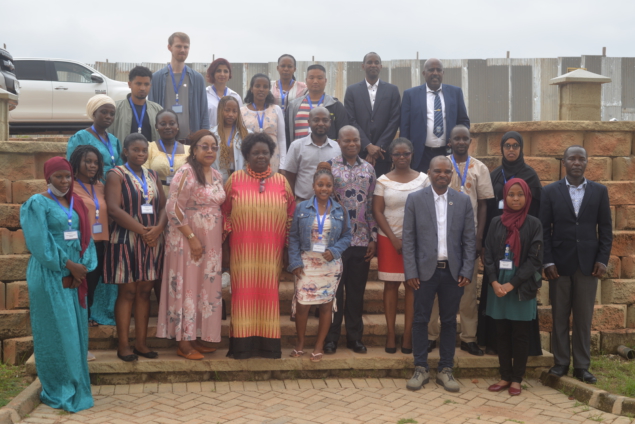
The Norwegian University of Science and Technology (NTNU) and The Regional Water and Environmental Sanitation Centre Kumasi (RWESCK) ALL4WASH summer school is supported by the Norwegian Partnership Programme for Global Academic Cooperation (NORPART) spearheaded by NTNU.
The summer school aim at strengthening capacities in blue-circular economy in the global north and south.
It is under the theme: “Unlocking the opportunities of Blue-Circular Economy for sustainable communities of the future.”
It brought together students from Norway in the global north with students from Mali, South Africa, Ethiopia, Uganda, Tanzania and Ghana in the global south to come up with solutions for environmental problems.
Prof. Esi Awuah of the department of civil engineering urged product developers to make products that can be recycled.
She urged the Environmental Protection Agency to come out with policies to guide product manufacturing.
“I think that every product developer must have cradle to cradle. How do you start?
“How do you end and how do you come back so that we don’t waste resources.
“And then policies should be put in place particularly the EPA that guides us on our projects so that if you are going to have a project you should look at the concept of blue circular economy.
“What will happen if I finish with the production of the product? If you are producing plastic bottles, how do you collect it back rather than leaving it aloof to become someone’s headache,” she said.
Director of RWESCK, Prof. Sampson Oduro-Kwarteng said that waste resources can be reprocessed to reduce production cost and boost businesses.
“Waste is a resource that can be diverted into different uses to minimize cost of production and to promote businesses,” he said.
Prof. Razak Seidu of the Norwegian University of Science and Technology and the All4WASH project leader stressed the need for the training of a new generation of water and environmental engineers that are equipped with the requisite knowledge and skills to tackle emerging global problems considering the sustainable development goals (SDGs).
“More importantly, we have to train a new generation of water and environmental engineers who have a deeper understanding of blue-circular economy approaches to be active participants in the knowledge economy of the water and sanitation sector in order to address the challenges we are confronted with,” he said.
Latest Stories
-
Wenchi water project almost complete, critical to gov’t agenda – GWL MD
16 minutes -
Anti-LGBTQ+ bill not part of government’s legislative agenda – Inusah Fuseini
18 minutes -
Anti-LGBTQ Bill: Forget the rumour mongers, I’m a man of action, and will pass the bill – Speaker
1 hour -
Women and children among those killed in Sudanese army shelling of wedding celebration
1 hour -
President Mahama is not sincere with Ghanaians on LGBTQ bill matter – Hassan Tampuli
1 hour -
Gov’t to establish Prison Industrial Hub to equip inmates with income-generating skills – Prison Service boss
2 hours -
Alhassan Tampuli donates cement, roofing sheets to support storm victims in Gushegu
2 hours -
Alhassan Tampuli appeals for urgent support for storm victims in Gushegu
2 hours -
The hypocrisy must stop; pass Anti-LGBTQ+ Bill now – Alhassan Tampuli to Mahama
2 hours -
Imprisonment should be rehabilitative, not punitive – Ghana Prisons boss at UNGA
2 hours -
Ga Adangbe traditional priests petition Mahama over McDan aviation licence revocation
2 hours -
Anti-LGBTQ Bill: NDC’s arrogance is worrying – Hassan Tampuli
3 hours -
Let’s give OSP time to mature, not to scrap it – Hassan Tampuli
3 hours -
Nigeria convicts 386 Islamist militants in mass trials
3 hours -
Djibouti president wins election with 97.8% of vote, state media says
3 hours