

Audio By Carbonatix
The vision to drive blue-circular communities globally is yielding positive results with the development of viable environmental solutions.
That is a major outcome of the Norwegian University of Science and Technology and the Regional Water and Environmental Sanitation Centre Kumasi (RWESCK) ALL4WASH Summer school in Kumasi.
The fortnight-long programme yielded six modules.
Blue-circular economy looks at recycling resources embedded in wastewater and solid waste streams.
It is meant to reduce overdependence on limited resources for sustainable development.
Students from Norway in the global north came together with students from Mali, South Africa, Ethiopia, Uganda, Tanzania and Ghana in the global south to come up with solutions for environmental problems.
The students were put into six groups to find sustainable ways to prevent waste using the RWESCK building as a case study.
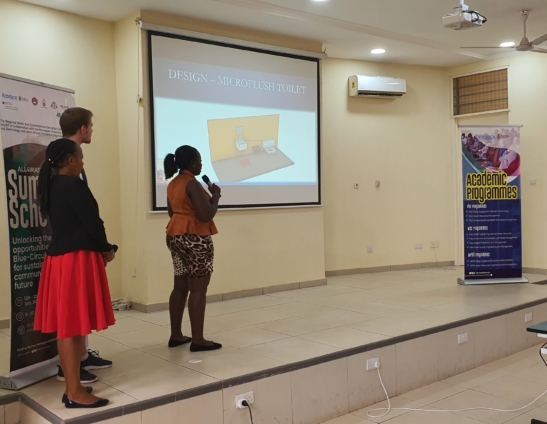
All the groups presented on the solutions to some waste management problems in the building.
Ms. Priscilla Badaweh Coffie and her group members presented on how solid waste can be reduced in the RWESCK building.
They introduced a new technology in the form of a bin that will sort out waste into various chambers to ensure easy recycling.
“So basically, we were looking at the solid waste management in this building and we were able to come up with a compartmentalized bin.
“Which will do automatic separation of solid, plastics and other waste into the various compartments,” she said.
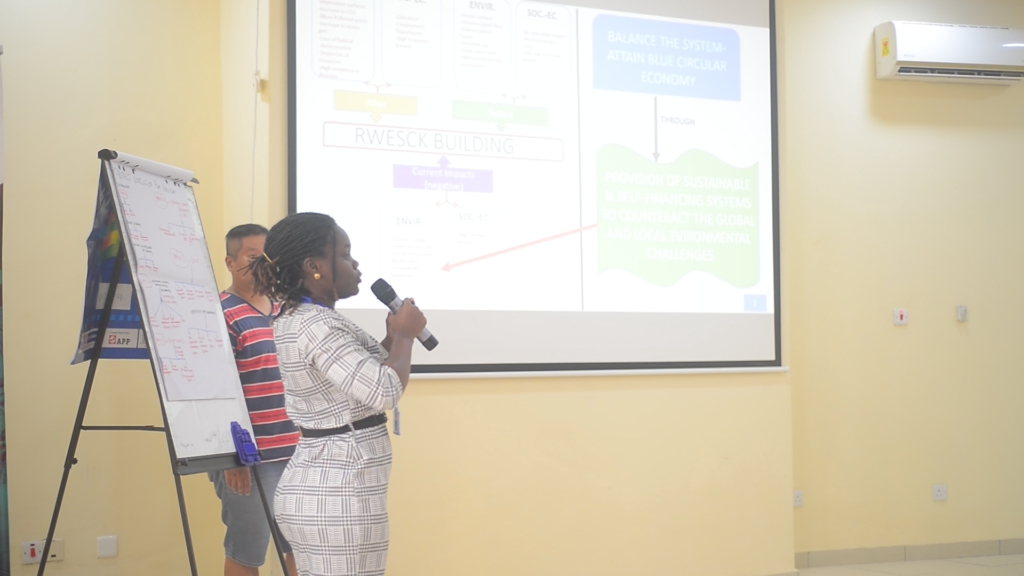
Ms. Munira Iddi Kaoeneka and her group also looked at cheaper ways of treating waste water in the RWESCK building.
They also talked about planting trees in the surroundings to improve the beauty and provide shade for students and teachers.
“And so, we decided to make revisions in the wastewater treatment that is done in this building by implementing cost effective technologies that will be able to treat waste water.
“Also take into account the infrastructure and the aesthetics of the buildings so we have an ABR and wet land construction.
“The ABR will be very cost effective and the wetland will be able to implement something that can be also appealing to the eye, having plants and trees there so that the students and teachers can rest and recreate,” she said.
Prof. Esi Awuah, of the department of civil engineering commended the student’s efforts.
She also said that they are going to enforce the solutions that the students worked on.
“I think that this summer school is different from the others.
“So far, the people have really put in much more than I expected.
“We are going to implement them and that is the joy,” she said.
Latest Stories
-
Ghana explores centre of excellence for hearing, communication and cochlear implant care
1 hour -
Schizophrenia-related disorders lead mental health cases recorded in Ghana
1 hour -
Dutch authorities enlist Ghana in hunt for fugitive drug lord Bolle Jos
2 hours -
Ghana housing finance conference adopts communiqué to improve affordable housing access
6 hours -
Special Initiatives Minister urges Wa Technical Institute to enrol more girls as EU-backed solar training lab opens
7 hours -
In the matter of my first year at the Bar
7 hours -
ActionAid Ghana calls for an end to child marriage, greater investment in girls’ rights
7 hours -
Newsfile to tackle World Cup visa scandal, beach demolitions, education strikes, BRICS bid
7 hours -
UK-Ghana Trade & Investment Summit: Trade Resource Centre to help businesses maximise UK-Ghana trade opportunities
8 hours -
Embassy of Denmark celebrates World Maritime Day
8 hours -
Linking LEAP to productive inclusion could cut extreme poverty by 2030 – UNICEF
9 hours -
Trade Ministry backs use of creative arts to rehabilitate prison inmates
9 hours -
Negotiations with government to continue despite strike suspension – GNAT
9 hours -
‘Ghana cannot afford to waste public resources; every cedi has a job’ – Ato Forson
9 hours -
Ghana expects economic boost as World Assemblies of God Congress brings 10,000 delegates to Accra
9 hours