

Audio By Carbonatix
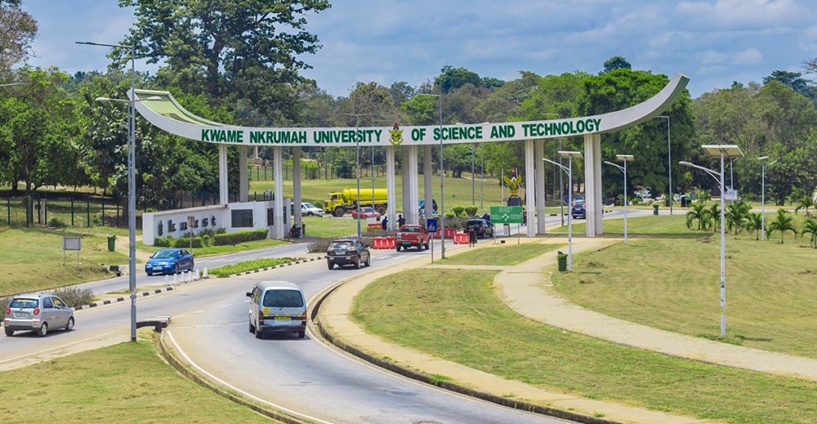
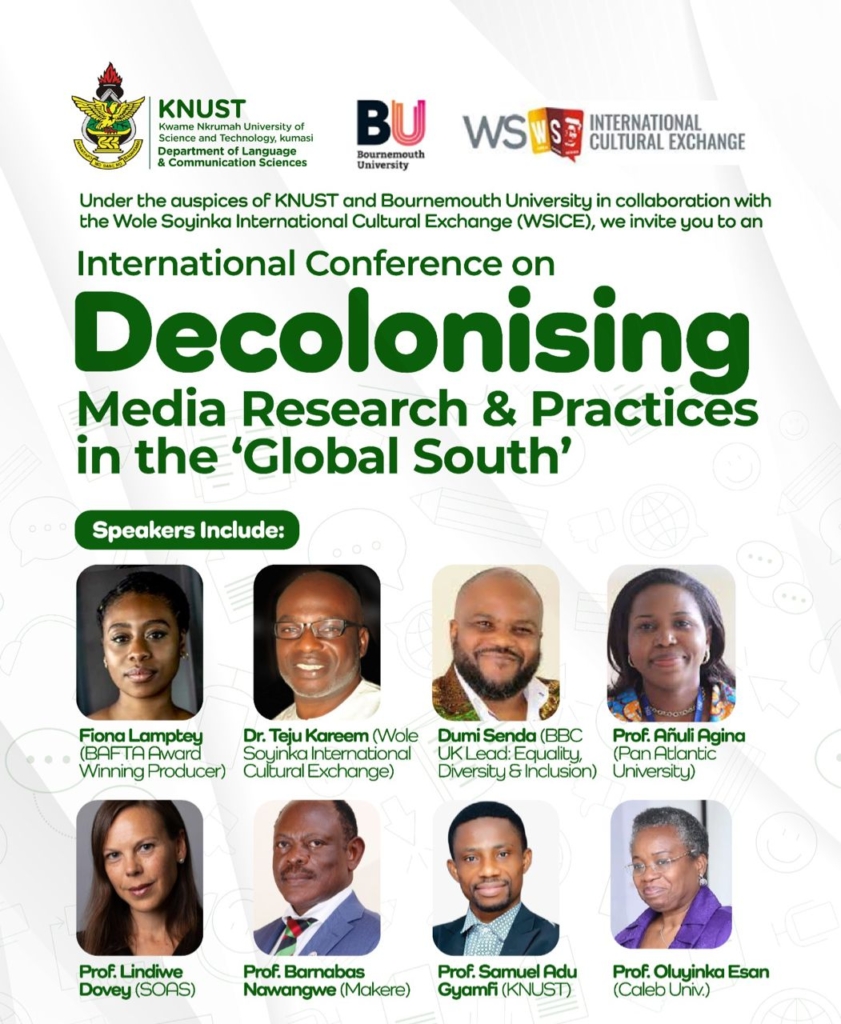
The Kwame Nkrumah University of Science and Technology and its collaborators at the Bournemouth University and the Wole Soyinka International Cultural Exchange have begun a three-year project titled “Media Decolonisation Imaginary”.
The project which starts in 2024, is expected to end in 2026 after its in-person and virtual inaugural section in January.
The first day of the inaugural sections, facilitated by the collaborators, focused on “Tracking Africa’s Journey on Decolonisation” thus exploring nexuses between decolonisation, Intersectionality, globalisation, cosmopolitanism, neo-colonialism, transnationalism, and (re)appropriation.
The second day also focused on the need to understand the intersectional nature of African identities in decolonised contexts as it has become apparent. In this light, Postcolonial scholarship advocates for ethical accountability that is demonstrated in, amongst other ways: Apprehending dominant Western knowledge systems during transnational collaborations between the West and the so-called Global South.
Notable speakers included Fiona Lamptey, the award winning British Filmmaker, Prof. Barnabas Nawangwe, Vice- Chancellor, Makerere University, Uganda, Prof. Samuel Adu-Gyamfi, Historian, KNUST , Prof. Oluyinka Esan, Caleb University, Nigeria and Dumi Sanda, BBC.
The project is coordinated by Dr. Samantha Iwowo, Dr. Szilvia Ruszev, Bournemouth University, Prof. Charles Marfo, Dr. Fortune Tella , KNUST and Dr. Teju Kareem, WSICU.
With its focus on Africa, South Asia, and Latin America, the project aims to develop a theoretical line of rethinking current decolonization practices in media, while linking this closely with educational practice and media production.
The project starts initial contributions towards theorising decolonization by revisiting the ontological underpinnings and epistemological consequences of colonized media methodologies.
The project follows the ambition to advance new and inclusive methodologies for decolonizing media research, especially as the concept of media itself is in constant change, impacted by historiographical positionalities, and technological innovations in interdependence with global capitalism.
This will bring together a cross-national and interdisciplinary team of scholars and media practitioners interested in exploring decolonising methodologies in media research.
The two aims of the initiative are to create a shared theoretical and methodological framework that will see an international team of researchers facilitating collective discussions to identify gaps and explore innovative new understandings of decolonization in media research methodologies and practice.
New findings and understandings of decolonisation will be used to explore their potentialities for impact in pedagogy, practice, praxis, media industries, and minoritised communities in the "Global South".
Latest Stories
-
Nana Akomea explains why he ignored polls ahead of NPP election
49 minutes -
‘Bamba’s message was clever, very clever’ – Akomea on NPP election upset
1 hour -
Nana Akomea reveals why he was disappointed after placing third in NPP election
1 hour -
Saudi Arabia urged to spare man sentenced to death over Facebook post
2 hours -
NPP to deliberately select candidates for orphan constituencies ahead of 2028 election
2 hours -
NPP wants early profiling of parliamentary candidates to avoid costly campaigns – Nana Akomea
2 hours -
At least 22 dead after two boats collide on Congo river, official says
2 hours -
Heavy rains lead to Senegal floods, government reports several deaths
3 hours -
FTBLRLIFE targets Ghana in expansion of global grassroots football network
4 hours -
NPP has secured the ‘blessing of time’ for 2028 election – Nana Akomea
4 hours -
NPP says early flagbearer selection has helped stabilise party reorganisation
5 hours -
Kennedy Agyapong disciplinary case awaits committee report, says Nana Akomea
5 hours -
Former ‘American Idol’ contestant sentenced to life without parole for wife’s murder
5 hours -
Education Ministry commends Ghanaian teachers on World Teachers’ Day 2026
6 hours -
NPP can reconcile with aggrieved members who want to return – Nana Akomea
6 hours