

Audio By Carbonatix
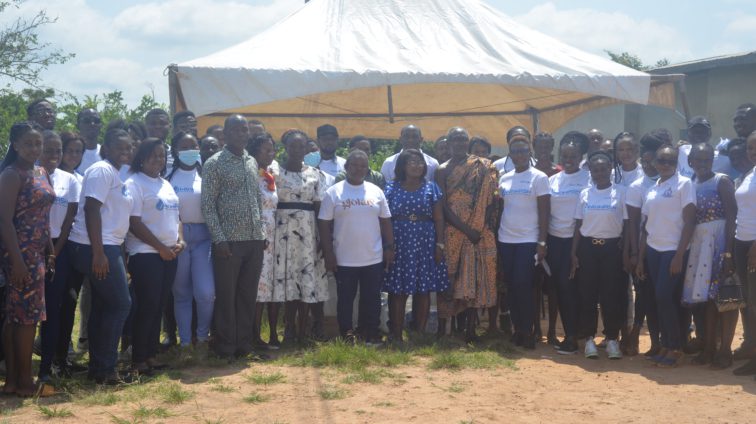
Women in Water Sanitation and Hygiene (WinWASH) have sensitised pupils at Odaho M/A JHS in the Ejisu-Juaben Municipality of the Ashanti region on the need to practice good hygiene.
The group, which is under the Regional Water and Environment Sanitation Centre (RWESCK), at the Kwame Nkrumah University of Science and Technology, educated the pupils on the consequences of unsanitary living.
The exercise was in commemoration of World Toilet Day under the theme: “Valuing Toilets”.
Interim Coordinator of WinWASH, Mrs. Augustina Adjei-Boateng revealed that the community school was chosen due to its limited resources.
She believes sensitizing the younger generation on the need to live healthy is a better approach to solving the menace of poor sanitation.
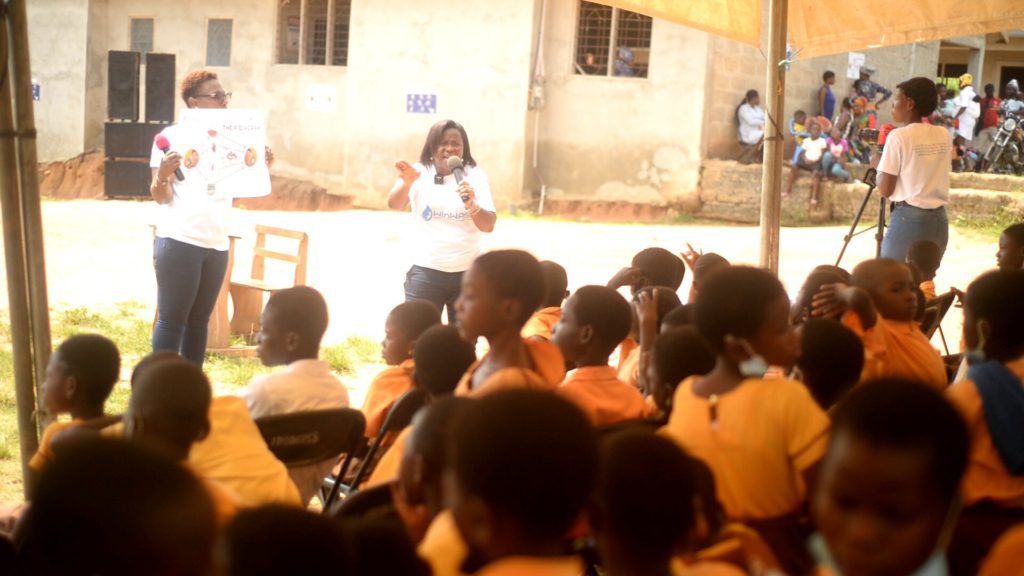
“We chose the children because we know they can carry the message along to their parents.
“We want to tackle sanitation problems with the upward approach,” she said.
Mrs. Augustina Adjei-Boateng appealed to benevolent organizations and individuals to contribute towards providing toilet facilities for deprived communities in the country.
She believes the government cannot always be overburdened with provisions of such basic amenities.
“Not much attention is paid to how our toilets facilities and their management are in shambles.
“The government and stakeholders need to be aware that the situation is dire.
“Everybody knows the value of toilets. We can’t always sit down for the government to provide toilets for our homes.
“Individuals must take it upon themselves to provide toilets in their homes and places which lack such amenities,” she said.
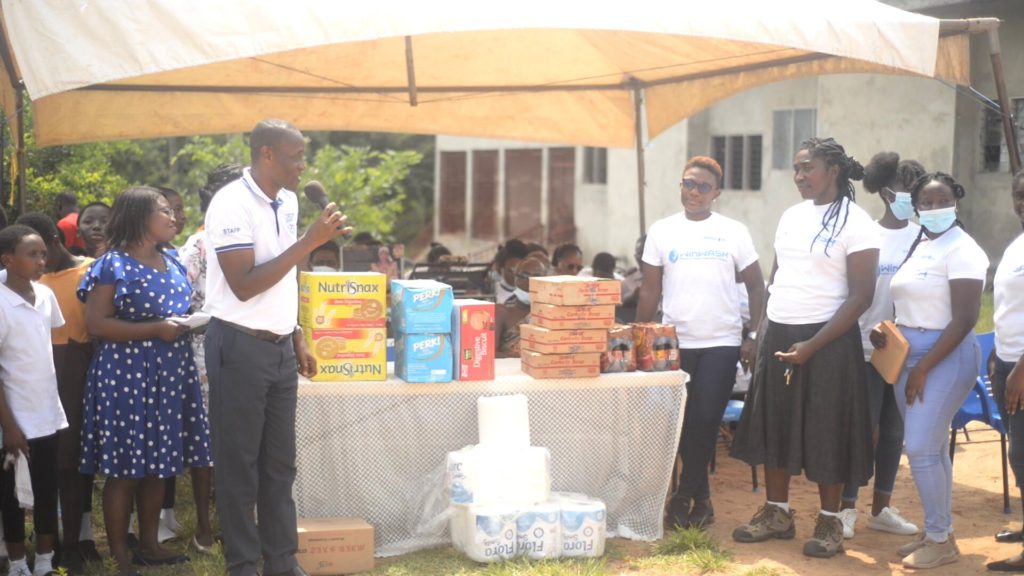
The group also donated sanitary items including two hand washing stations, soaps, and tissues to encourage good hand washing practices and alleviate the spread of contagious diseases.
Head teacher of Odaho M/A Junior High School, Kingsley Annor was thankful for the gesture and called on other institutions to emulate same.
“My students and I have learnt a lot today. We’ve been educated on the need to have toilet facilities in our homes and communities.
“Also, we’ve been taught to wash our hands regularly after using the toilet.
“We are grateful to WinWASH for this magnanimous gesture,” he said.
He appealed to the government to come to their aid as toilet facilities currently present at the school were inadequate and in a dilapidated state.
“Unfortunately, some of the institutions, especially basic schools, do not have toilet facilities and, that is the problem we are facing in this school.
“I appeal to all benevolent, interested individuals and organisations who can assist the school to come and help us in that regard.
“We have only a pit toilet facility, and it is not a proper one for an entire institution.
“Looking at the number of students, it is a big challenge for us,” he said.
Latest Stories
-
Let The Constitution direct Chieftaincy to deliver “All Development Is Local”
9 minutes -
Ghana explores centre of excellence for hearing, communication and cochlear implant care
2 hours -
Schizophrenia-related disorders lead mental health cases recorded in Ghana
2 hours -
Dutch authorities enlist Ghana in hunt for fugitive drug lord Bolle Jos
2 hours -
Ghana housing finance conference adopts communiqué to improve affordable housing access
7 hours -
Special Initiatives Minister urges Wa Technical Institute to enrol more girls as EU-backed solar training lab opens
7 hours -
In the matter of my first year at the Bar
7 hours -
ActionAid Ghana calls for an end to child marriage, greater investment in girls’ rights
7 hours -
Newsfile to tackle World Cup visa scandal, beach demolitions, education strikes, BRICS bid
8 hours -
UK-Ghana Trade & Investment Summit: Trade Resource Centre to help businesses maximise UK-Ghana trade opportunities
8 hours -
Embassy of Denmark celebrates World Maritime Day
8 hours -
Linking LEAP to productive inclusion could cut extreme poverty by 2030 – UNICEF
9 hours -
Trade Ministry backs use of creative arts to rehabilitate prison inmates
9 hours -
Negotiations with government to continue despite strike suspension – GNAT
9 hours -
‘Ghana cannot afford to waste public resources; every cedi has a job’ – Ato Forson
9 hours