

Audio By Carbonatix
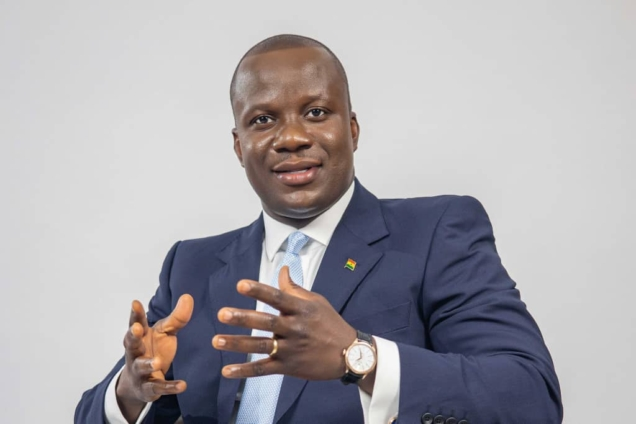
The Member of Parliament for Damongo and former Minister of Lands and Natural Resources, Mr Samuel Abu Jinapor, has affirmed that the establishment of the Office of the Special Prosecutor (OSP) received bipartisan backing, including from the opposition National Democratic Congress (NDC).
Speaking on JoyFM's Super Morning Show on Monday, 22 December, Mr Abu Jinapor clarified that the NDC did not oppose the creation of the office.
“The NDC did not oppose the establishment of the OSP. The committee brought a unanimous report, and indeed the ranking member at the time, who is now the Attorney-General Dominic Ayine, spoke in favour of the establishment of the OSP,” he stated.
Reflecting on the rationale behind the Akufo-Addo government’s decision to establish the OSP, Mr Abu Jinapor, who served as Deputy Chief of Staff at the time, emphasised the importance of having a dedicated institution to combat corruption.
“I was very much involved. It is one that I believe is noble; it is one that I believe should be commended, which was to get an office dedicated to fighting corruption,” he added.
The former Minister for Lands and Natural Resources said discussions about the OSP have become overly personalised, a trend he warned undermines a fair and honest assessment of the institution’s mandate, performance and future relevance.
“I think the conversations about the OSP should be discussed dispassionately, and it should be hard,” he said, stressing that scrutiny of the anti-corruption body must be rigorous but free from emotion and personal attacks.
Mr Abu Jinapor emphasised that the debate surrounding the OSP should not be reduced to the personality of the Special Prosecutor.
“These conversations shouldn’t be about the person of the Special Prosecutor, Kissi Agyebeng,” he said, adding that institutions should be assessed based on their structures, effectiveness and outcomes rather than the character of their leaders.
He noted that the OSP was established as part of broader efforts to strengthen Ghana’s anti-corruption framework and therefore deserves a balanced appraisal that examines whether it is adequately resourced, properly integrated into the justice system and sufficiently empowered to fulfil its mandate.
The Damongo MP urged political actors, civil society and the media to elevate the discussion by focusing on reforms that can improve institutional efficiency and accountability, arguing that constructive, institution-focused criticism would better serve the national interest and the fight against corruption.
Latest Stories
-
I have supported highway authority financially to fix roads in my constituency – A Plus
51 minutes -
US, Iran fail to reach peace agreement after marathon talks in Pakistan
1 hour -
ECG kicks off Phase Two of transformer upgrades at Lashibi; brief outages expected
2 hours -
Port crises loom as 11,000 drivers threaten four-day strike
3 hours -
A source of excellence across generations – Vice President Opoku-Agyemang lauds Mfantsipim
4 hours -
(Photos) Mfantsipim School launches historic 150th anniversary
4 hours -
Knights and Ladies of Marshall group backs Catholic Bishops’ stance on anti-LGBTQ+
5 hours -
Bright Simons writes: All the Filla in the Ibrahim Mahama/E&P – Gold Fields Saga
5 hours -
Monetise Idiocy In Ghana
5 hours -
The Ghanaian prophet and the mysterious death of his scottish wife Charmain Speirs
6 hours -
Nearly 400 sentenced in Nigeria for links to militant Islamists
6 hours -
Ghana’s recovery supported by gold strength despite global oil price pressures – Standard Bank Research
7 hours -
Methodist Church hails Mfantsipim@150; calls for “fresh consecration” to excellence
7 hours -
‘Excellence is our inheritance’ – Nana Sam Brew-Butler hails Mfantsipim’s 150-year reign in leadership
7 hours -
Kwaku Azar writes: A-G vs OSP
7 hours