

Audio By Carbonatix
“There is more to ethics for biological sampling than just the informed consent process.”
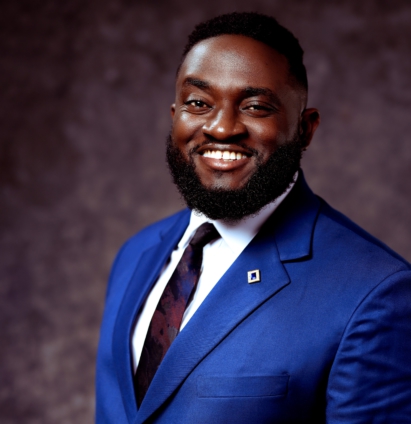
That’s the advice of the Postdoctoral Research Fellow of The Global Health and Infectious Diseases Research Group at KCCR, Dr. Anthony Afum-Adjei Awuah.
His statement sought to shed light on the community-specific considerations that need to be made in order to increase the success of implementing any study, especially those involving taking blood or body fluid samples.
Dr. Anthony Afum-Adjei Awuah said this while speaking at The Global Health Network webinar on Ethics of Data Science in Global Health Research: Regional Case Studies and Practical Examples.
The session covered an introduction to the ethics of data science in global health research; ethical issues arising in Academic Social Media (ASM) platforms and some regional case studies from Africa, Latin America & the Caribbean, and Asia.
The event, held on zoom had individuals from 39 countries and diverse fields registering. Of the 2962 who registered, 1167 unique viewers attended.
Dr. Anthony Afum-Adjei Awuah, Principal Investigator for TGHN-GHANA’s Epidemic and Pandemic Preparedness Community of Practice spoke on Ethical challenges to Epidemic/ Pandemic Biological Sampling at the Community Level: Lesson from SeroCoV Study - Ghana
SeroCoV is a community-based cross-sectional study that investigated the seroprevalence (the level of a virus in a population, as measured in blood serum) of COVID-19 in three African Countries. In Ghana, the study objective was to estimate the extent of infection in the general population within three major cities, determined by ‘SARS-CoV-2 seropositivity’.

Dr. Afum-Adjei Awuah, who was a co-investigator on the SeroCoV study, explained the study implementation concept, including the biological sampling process.
He noted important points to consider as researchers when embarking on a community-based study that requires taking biological samples such as blood. Some important points to consider include extensive community engagement, participant feedback, and sufficient privacy and confidentiality throughout the data management process for the study.
He said, “There are many things you would have to consider before proceeding to enter any community to collect biological samples from seemingly healthy people. These considerations are not set in stone and may differ significantly depending on your setting. Although they may not be ethical requirements as we know them, they will increase the chances of technical success of the study implementation, increase public confidence in research, and reduce the risk of unnecessary incitement and conspiracy theories against research, especially in resource-limited settings.”
In his presentation, Dr. Afum-Adjei Awuah who is also a Lecturer at the Department of Molecular Medicine, School of Medicine and Dentistry, KNUST, highlighted peculiar challenges faced during the implementation of the SeroCoV study even though ethical considerations and requirements were met.
“Our study team was arrested by the Military in Kumasi for recruiting study participants from a Military base that fell within the study area without prior authorization from the Military even though we had ethical approval for the study.
However, the team was released right after we met with the military leadership to explain what our goal was, the importance of the study, the study procedures, and how we went through the needed regulatory requirements and extensive stakeholder engagement. This experience with the military helped us see how we could improve our stakeholder engagement strategies for community-based studies in urban areas,” he recalled.
Other challenges included dealing with conspiracy theories, issues of conflicts of interest in the informed consent process within households that infringe on the ethical principle of autonomy, and personal and religious beliefs of the participants that disrupt the study recruitment process.
Also on the panel was Aashna Uppal, a PhD Student at The Global Health Network, University of Oxford, United Kingdom; Luciana Monteiro-Krebs, Data Curator at the Hub Fiocruz TGHN, Fiocruz, Brazil; Daniella Morelli, Associate researcher at the Institute for Clinical Effectiveness and Health Policy (IECS); and Dr. Aliya Naheed a scientist specialized in Non-Communicable Disease and Regional lead at The Global Health Network Asia.
Professor Julio Canario Guzman, Founder of Fundación Etikos, Dominican Republic, chaired the event.
Latest Stories
-
GCB Bank surges GH¢0.45, ETI gains GH¢0.06 as GSE ends week higher
18 minutes -
Two teens jailed 55 years for robbery
45 minutes -
UDS demands apology for MPhil student wrongly branded as Tamale robber
1 hour -
“We don’t sell fish!” – Tema Shipyard CEO hits back over dead fish discovery
2 hours -
Sam George defends anti-LGBTQ+ Bill as ‘national priority’ amid debate over gov’t focus
3 hours -
Sam George unveils massive 1,150-cell site rollout to end network woes
3 hours -
This Saturday on Prime Insight: Fuel levy suspension, LGBTQ+ legislation, and Damang Mine controversy
4 hours -
Struggling Real suffer title blow with Girona draw
4 hours -
Mahama nominates Pamela Graham as Auditor-General
5 hours -
The five big sticking points in US-Iran talks
5 hours -
Melania Trump’s speech propels Epstein crisis back to forefront
6 hours -
What everyone should know about C-sections
6 hours -
Gunmen kill at least four people at Afghanistan picnic spot
7 hours -
Health Ministry engages Ga Mantse ahead of Free Primary Healthcare launch
7 hours -
We can tackle multiple priorities – Sam George defends Anti-LGBTQ Bill push
7 hours