

Audio By Carbonatix
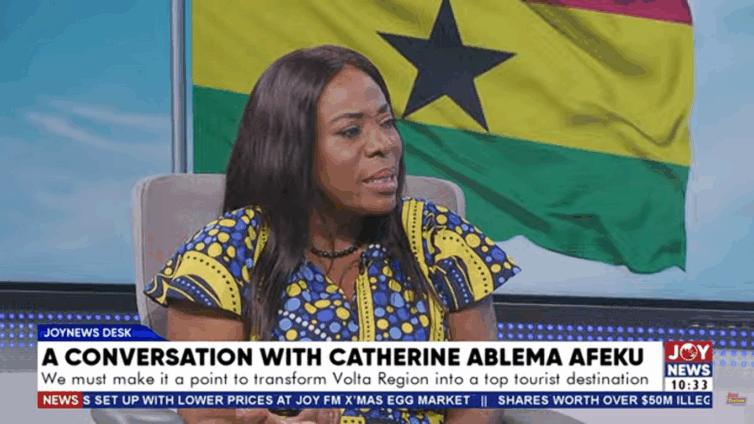
Former Minister for Tourism, Arts and Culture, Catherine Afeku, has criticised successive governments for failing to prioritise the tourism sector, despite its proven capacity to transform Ghana’s economy.
Speaking on JoyNews’ NewsDesk on Friday, December 19, Ms Afeku said her experience in Cabinet revealed an imbalance in government priorities, with sectors such as education and energy consistently receiving more attention and funding than tourism.
“To be fair, tourism is a sector that has not been prioritised in our country, and that is a true statement,” she said.
“I have sat in Cabinet and seen how other sectors of the governance structure are treated as priority sectors. But when you look at other jurisdictions, tourism can change the dynamics of the economy,” she added.
Ms Afeku cited Ghana’s globally recognised Detty December festivities as an example of how limited state support has left major tourism initiatives largely driven by private individuals.
She disclosed that the initiative began in 2016 through the efforts of Nigerian artiste Mr Eazi, whom she said she met personally during the early days of the event at a venue near Bishop Duncan-Williams’ church in Accra.
“We were not even putting money into Detty December to give credit,” she noted. “It was sustained through private enthusiasm. I don’t see the necessary verve from the government. The state does not have to take over completely, but it must support these initiatives.”
According to the former minister, tourism-related activities generate substantial revenue for the country through hotel bookings, food sales, transportation services and visits to tourist sites.
However, she warned that without deliberate investment, the state cannot expect long-term returns.
“If you don’t put in the necessary resources, you can’t get it back,” she stressed.
Ms Afeku compared Ghana’s approach with countries such as Spain, which she said has built a strong economy around tourism despite lacking natural resources like cocoa or gold.
“Ghana put in a little effort between 2018 and 2019, and we were able to secure about three billion dollars,” she revealed.
“Yet we queue for the IMF to give us half of that. If we invest resources into just that one sector, you will see the ripple effect across the economy.”
Latest Stories
-
Power restoration fault suspected in Kumasi Central Market fire
1 hour -
The 7-foot giant of Ngleshie Amanfro: Seven-foot Ghanaian Ephraim Saawa dreams of joining the national basketball team
2 hours -
Government promises support for Kumasi Central Market fire victims
2 hours -
Vibes The Movie: Big Ghun’s Ghanaian film earns five nominations at 2026 REFFA
3 hours -
MamaCare CEO warns unresolved conflicts among health workers could undermine maternal and neonatal care
3 hours -
Health professionals urged to translate medical knowledge into practice to save mothers
3 hours -
Conflicts among care providers linked to maternal, neonatal deaths – Expert
5 hours -
GIS marks 10th TIME conference, champions improved teaching practices
5 hours -
BRICS Or Balance? What Ghana’s bid really means
5 hours -
GPRTU wants full TRAFFITECH-GH implementation to start in 2027
5 hours -
Mahama announces plans to import electric wheelchairs for PWDs
6 hours -
KGL U17 Colts 2026: Western beat Prempeh Elite Academy to set up final final with Greater Accra Region
6 hours -
Late Solanke strike salvages 10-man Spurs draw at Man United
6 hours -
Gender Ministry to monitor welfare of Nana Akua Addo’s children amid domestic violence case
6 hours -
Benedict Okyere Yeboah: Ghana’s football problem goes beyond sacking a coach
6 hours