

Audio By Carbonatix
The Bank of Ghana (BoG) Monetary Policy Committee (MPC) Report for May 2020 curiously puts the end-March 2020 public debt at 59.3 percent.
Since the 2019 Debt Report and the IMF show the end-2019 debt level at 63 percent, it is unlikely to decline substantially to 59.3 percent.
BoG itself observes a revenue shortfall, higher expenditures, high borrowing (e.g., US$3 billion bond; loans of US$230 million and domestic bonds), and a slowdown in GDP. The fiscal section of the MPC Statement reads verbatim as follows.
“Provisional data for the first quarter on the execution of the budget show a widening of the deficit relative to what was observed for the same period in 2019. As at the end of the first quarter, a deficit, equivalent to 3.4 percent of GDP has been recorded compared with a deficit target of 1.9 per cent of GDP.
“The larger deficit is explained by shortfalls in tax revenues—on the back of shortfalls in international trade taxes, taxes on goods and services and taxes on income and property in response to unfavourable external and domestic conditions—and higher pace of spending, which included some unbudgeted Covid-19 related expenditure.
The expanded deficit led to an increase in the debt stock to 59.3 percent of GDP at the end of March 2020" (emphasis added).
The Public Debt CANNOT be 59.3 percent at the end-March 2020 unless GOG is keen to continue the controversial “parallel” fiscal reporting that it denies. The MPC statement may not include the “exceptional” expenditures that the Ministry of Finance (MoF) now includes in only footnotes.
However, it is worth discussing in a banking context, even if the fiscal data and text are from MOF since they relate to the Consolidated Fund and other Public Accounts at BOG—unless some MOF records do not form part of the Treasury Single Account (TSA) initiative and, therefore, not visible to BOG.
The issue is key since it affects“financing” of the Budget that Parliament approves—as an outcome of the budget deficit, borrowing, and amortization of debt. Other sections discuss BOG “zero-financing” and “fiscal dominance” rules, which were performance criteria under the 2014-2019 Enhanced Credit Facility (ECF) Program. At the time, the background of sustained global crisis (2008 and 2014), disruption in gas supply from Nigeria, and single-spine wage (budget) overruns did not seem to matter.
Find full report below:
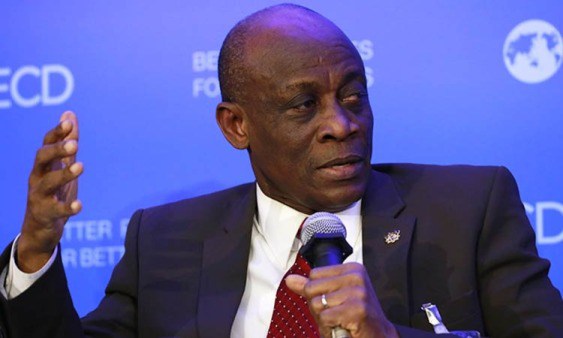
The writer, Seth Terkper is the former Minister for Finance.
Latest Stories
-
Government reaffirms commitment to combat Human Trafficking at first 2026 HTMB meeting
7 minutes -
TaxForGalamsey: Awula Serwah slams ‘ignorance’ defence in levy scandal, demands sanctions for MMDCEs
30 minutes -
Collecting levies from galamseyers is wrong; sanctions must be enforced – Kenneth Ashigbey
39 minutes -
BeTechConnected launches Future of Work Africa Podcast to amplify African voices on jobs, innovation
49 minutes -
Rejecting pesewa coins is illegal, fuels inflation – BoG warns traders
1 hour -
New Juabeng MP seeks details on GRA’s customs AI system
1 hour -
TaxForGalamsey: Levies were institutional, not personal – Kwakye Ofosu explains lack of sanctions
1 hour -
Feeding Hungry Pupils: 38-year-old female teacher initiates food bank to promote teaching and learning at Abankoro
2 hours -
Education Minister announces 2027 start date for Jomoro College project in Western Region
2 hours -
‘Sit us down and explain ‘it’—Customs agents raise alarm over new GRA AI system
2 hours -
Gov’t commits GH¢25m seed fund to Ghana Defence University project
2 hours -
Fighters condemns PAC Chair Abena Osei-Asare over Agbana comments; renew call for inclusive politics
2 hours -
72 Days to Mundial: Ghana’s risky gamble after sacking Otto Addo
2 hours -
Health Ministry boosts cardiovascular care with new guidelines, GH¢6m equipment support
2 hours -
OmniBSIC Bank delivers 104% profit growth, assets and deposits double in 2025
2 hours