

Audio By Carbonatix
Sexual harassment has emerged as the most significant threat to academic freedom in Ghana's tertiary institutions, according to the 2025 Africa Academic Freedom Monitoring Report released by the African Coalition for Academic Freedom (ACAF).
The report, launched at the Centre for Democratic Development (CDD-Ghana) in Accra on Tuesday, 24th June, 2026, assessed the state of academic freedom in 30 African countries and found that violations continue to undermine teaching, learning, research, and institutional autonomy across the continent.
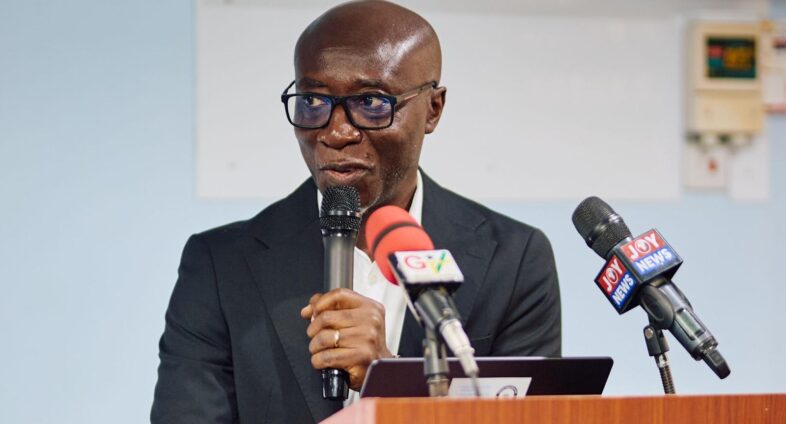
Speaking at the launch, African Coalition for Academic Freedom’s Regional Director, Professor Kwadwo Appiagyei-Atua, said sexual harassment ranked among the highest violations recorded in Ghana, describing it as a major challenge that continues to affect students and the broader academic environment.
According to him, the report recorded a negative violation score of 72 out of 100 across the countries assessed, highlighting persistent threats to academic freedom despite efforts by governments and educational institutions to strengthen protections.
“There are also issues about sexual harassment in terms of the relationship between academics and students, which students complain about, especially female students who have been at the mercy of some academics for sex to get marks or to reward them with some other favours and so on, but most of the students are not able to report," he noted.
Professor Appiagyei-Atua noted that while sexual harassment remains a major concern in Ghana's tertiary institutions, the country has performed relatively better on the academic freedom index compared to many other African countries.
He, however, cautioned against complacency, stressing that important gaps remain and called for stronger institutional safeguards, effective reporting mechanisms, and sustained collaboration among stakeholders to address the challenges identified in the report.
“Comparatively, if you look at the state of academic freedom on the continent generally, you can see that, relatively, Ghana ranks quite high. Yes, but it doesn't mean that the picture is rosy in Ghana. There are several violations that also take place, and as we said, we don't only look at violations by the state but also within the university space, where violations can be committed by university management as well as by academics, for example, in their relationship with students. So overall, you can rank Ghana as among the best-performing on the continent, but there are still some important gaps that need to be filled," he explained.
The National Union of Ghana Students (NUGS) has meanwhile pledged its support to efforts aimed at addressing the concerns highlighted in the report.
National Secretary of NUGS, Titus Owusu Darko, said the union is committed to working with the Africa Coalition for Academic Freedom, tertiary institutions, and other stakeholders to tackle sexual harassment and other violations that undermine students' rights and welfare.
“NUGS, we are committed to partnering with all the CSOs, most importantly the African Coalition for Academic Freedom, and contributing our quota to this particular development. We believe in advocacy, and so as the apex student body representing over 13.5 million Ghanaian students, both home and abroad, we are willing to contribute our quota and support everything that we can do in our capacity to support this particular development so that the present issues will be dealt with," he stressed.
The report's findings serve as a reminder that although Ghana has made progress in promoting academic freedom, more work remains to eliminate violations that continue to affect the rights, dignity, and academic experiences of students, lecturers, and researchers.
Stakeholders at the launch called for stronger policies, increased accountability, and sustained collaboration among government, tertiary institutions, student bodies, and civil society organisations to safeguard academic freedom and create safer learning environments across the country.
Latest Stories
-
Ten people linked to Kenya’s first-ever Ebola case quarantined as screening concerns grow
13 minutes -
Ghana warns medical travellers to South Africa to obtain visas for treatment beyond 90 days
20 minutes -
Canada suspends plans to expand assisted dying to people with mental illness
21 minutes -
Minority accuses Sports Ministry, NSA of creating fake portfolios for VISA applicants
22 minutes -
6th Inter Tourism Expo comes off in Cape Coast this October; register now
42 minutes -
Afenyo-Markin accuses government of diverting attention from cocaine seizures linked to Ghana
42 minutes -
GJA gives Armed Forces 14 days to account for alleged assaults on Sika Official, Bullet TV’s Philip Abutiate
44 minutes -
PAC gives CWSA 30 days to recover GH¢10m in unpaid water bills from police, army, hospitals, other public institutions
46 minutes -
Major Accra roads to get facelift ahead of Ghana’s 70th Independence anniversary – Agbodza
1 hour -
Account for GH¢650bn allocated to existing programmes before new economy – Oppong Nkrumah to gov’t
1 hour -
‘You’re an action man’ – Abena Osei-Asare hails Rent Commissioner’s hostel fee crackdown
1 hour -
Mahama directs Finance Minister to allocate GH¢1bn for Housing Fund in 2027 Budget
1 hour -
NPP celebrates Bawumia on birthday, prays for 2028 election victory
1 hour -
Mahama recounts ‘exhausting and frustrating’ struggle to find a home as a young spouse
2 hours -
‘Take damaged banknotes to commercial banks for replacement’ – BoG warns against repairing cedi notes for resale
2 hours