


Audio By Carbonatix
Nigeria’s next president will have a lot on his plate. In the weeks leading up to tomorrow’s election, Africa’s most populous country has seen acute shortages of both gasoline and hard currency, leading to chaotic scenes at gas stations and banks across the nation.
It was the culmination of eight years in which Nigerians have, by nearly every metric, become poorer and less safe.
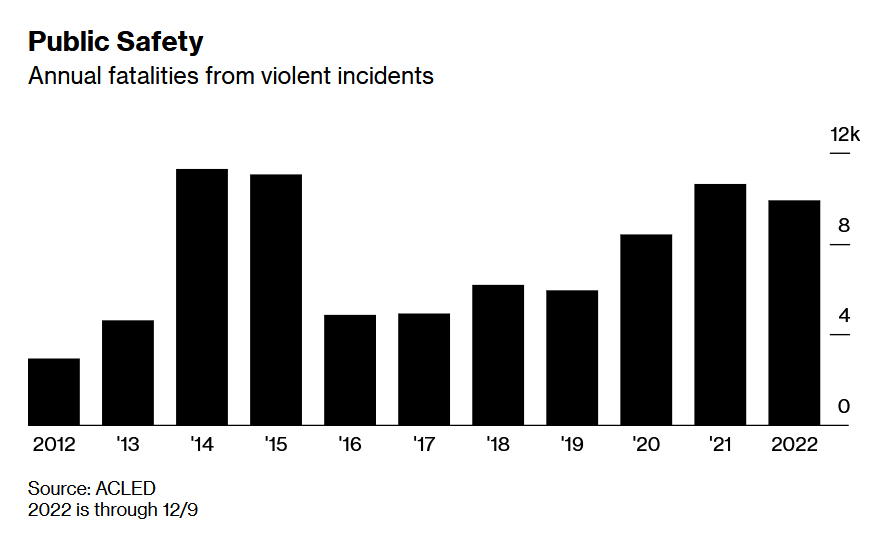
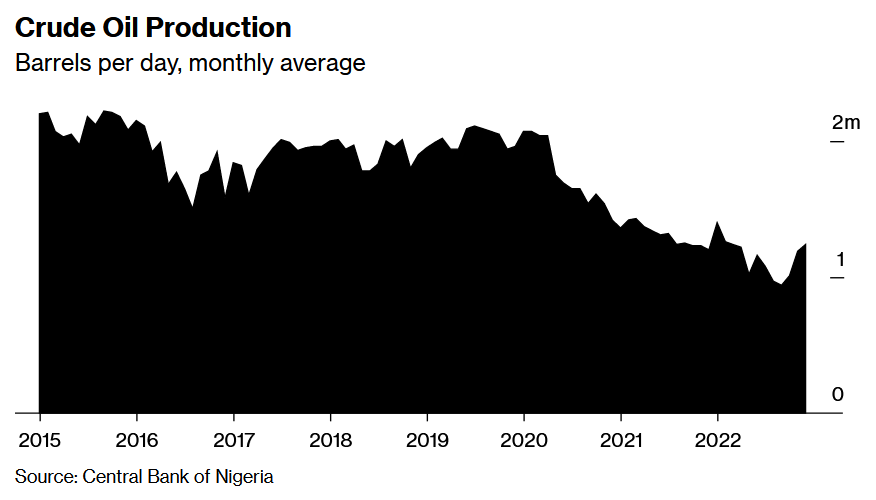
Criminality and violence has spread throughout the country, driven by Nigeria’s stark economic deterioration over the course of President Muhammadu Buhari’s time in office. Production of oil, the lifeblood of the economy, fell to a multidecade low last year; inflation hit a 17-year high; and economic growth slumped, averaging just 1.1% annually from 2015 to 2021.
The three candidates vying to replace Buhari have all promised to fix the economy and sort out insecurity. But the challenge is immense.
At least half of Nigerians are under- or unemployed, a figure that rises to two-thirds for young people, who make up the majority of the population.
Roughly two-thirds of Nigerians — 133 million people — now live in multi-dimensional poverty, according to government data released in November, meaning they lack access to basic necessities including water, food, healthcare and shelter.

The lack of economic prospects is fueling a brain drain. Approvals of visa applications to the UK, Nigeria’s onetime colonial ruler, soared last year.

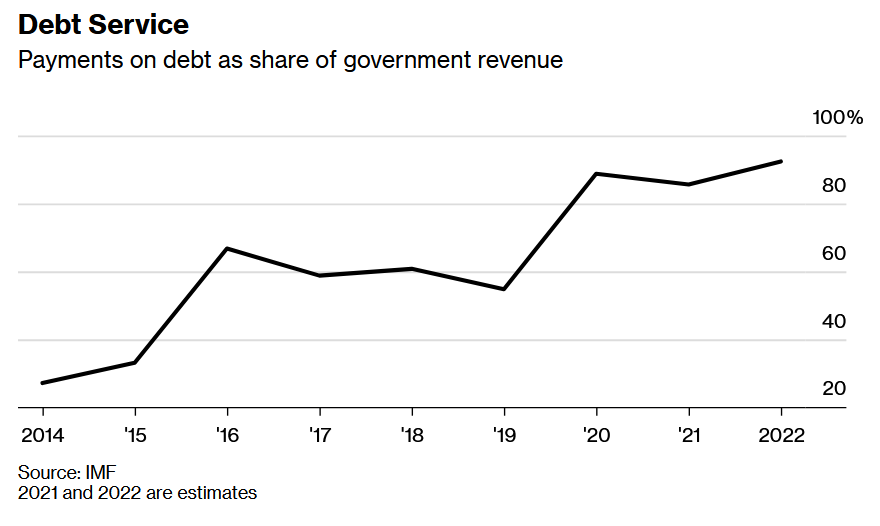
The Buhari administration has built or completed some major infrastructure projects. But it has not done enough to boost revenue, and borrowing to fund construction of highways and railways and to cover budget deficits has sent debt service costs skyrocketing.
The International Monetary Fund estimates that interest payments will consume 111% of federal government revenue this year.
Ruling party candidate Bola Tinubu, opposition party nominee Atiku Abubakar and surprise third-party contender Peter Obi have all promised to enact crucial reforms that the World Bank and International Monetary Fund have long clamored for, including cutting a popular gasoline subsidy that cost the country more than half what it made pumping crude last year.
But those policies come at a political cost, and Nigerians are already disillusioned with the government. Righting the ship will not be easy.
Latest Stories
-
Kwakye Ofosu rejects NPP Minority’s call for apology over anti-LGBTQ bill
5 minutes -
Music giant Universal gets $64bn takeover offer
17 minutes -
NPP criticism of anti-LGBTQ Bill ‘nothing more than political posturing’ — Kwakye Ofosu
24 minutes -
Joy FM was birthed over a bowl of fufu’ – Tommy Annan-Forson shares interesting story
30 minutes -
World Athletics to introduce standalone World Marathon Championships from 2030
35 minutes -
Africa’s voice in global journalism grows as funding, AI and misinformation shape newsrooms
37 minutes -
First Atlantic Bank holds Annual General Meeting, reports strong growth and bold outlook for 2026
39 minutes -
Ghanaian-founded fintech WeWire secures Canadian PSP license to bridge African, global payments
42 minutes -
Uganda confirms 2027 AFCON dates
51 minutes -
40 convicted in Northern Region crime crackdown
51 minutes -
‘We’re days away from parts of the world experiencing actual shortages:’ Eric Nuttall on energy
1 hour -
‘I’m Obroni in every country’ – Coco Blasian on music, survival and making Accra home
1 hour -
IMANI wants NIC to probe possible conflicts of interest in reinsurance arrangements
1 hour -
First Atlantic Bank strengthens balance sheet as net interest income surges 67%
1 hour -
Choplife Gaming donates to Korle Bu Radiotherapy unit for Women’s Week 2026
1 hour