

Audio By Carbonatix
Small and medium-sized biopharmaceutical companies that have embraced the responsibility of addressing the gap in life-saving antibiotics are encountering significant obstacles.
Prominent figures in the sector emphasized that if these challenges are not adequately addressed and overcome, the world will remain trapped in a critical scenario where its pool of vital antibiotics, essential for preserving life, will gradually diminish, leading to a significant reduction.
These conclusions were drawn from a global online seminar held on August 24 by the Centre for Science and Environment (CSE) as part of a series aimed at tackling the crisis in antibiotic research and development to mark the second in a series initiated by CSE to address the antibiotic research and development crisis.
Antibiotic resistance, an insidious pandemic, is rendering treatments ineffective and reducing options, consequently affecting health, livelihoods, and economies. In 2019 alone, approximately five million deaths were linked to this phenomenon.

The webinar, titled 'Small and Medium Scale Antibiotic Developers: Challenges they face and the way forward,' zoomed in on developers situated in India.
It fostered a gathering of influential stakeholders and experts, including Vasan Sambandamurthy, Senior Vice President of Global Operations at Bugworks Research India Pvt Ltd; Jitendra Kumar, Managing Director of the Biotechnology Industry Research Assistance Council (BIRAC) under the Department of Biotechnology, Government of India; Sachin Bhagwat, Senior Vice President of Drug Discovery at Wockhardt Research Centre; T S Balganesh, President of GangaGen Biotechnologies Pvt Ltd; and Amit Khurana, Director of the Sustainable Food Systems Programme at CSE.
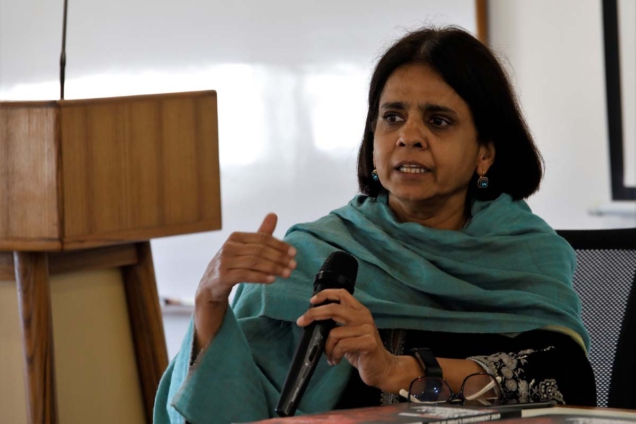
Director General of CSE, Sunita Narain emphasised the necessity of conserving existing antibiotics while simultaneously producing new ones to combat formidable drug-resistant infections.
She said while the larger pharmaceutical entities have retreated, smaller companies have stepped into the breach, assuming a pivotal role.
Narain, who is also a member of the Global Leader’s Group on Antimicrobial Resistance (AMR), remarked, "They [small and medium-scale companies] have a huge task at hand and a lot depends on how they are supported."
This webinar series stems from a CSE assessment titled 'A Developing Crisis,' published in Down To Earth (July 16-31). The evaluation revealed the fragility of the global antibiotic pipeline across pre-clinical and clinical development stages.
Among the findings, an analysis of 15 high-revenue pharmaceutical companies' clinical pipelines unveiled that major entities have largely forsaken new antibiotic R&D. In response, small and medium-scale pharmaceutical companies have risen to the occasion, albeit with a range of challenges.
Amit Khurana from CSE highlighted the myriad challenges faced by Indian small and medium antibiotic developers. "They can play an important role in rejuvenating the global pipeline, if their concerns are addressed,” he indicated.
During the webinar, antibiotic developers candidly articulated their challenges across scientific, financial, and regulatory dimensions of drug development.
Vasan Sambandamurthy of Bugworks, a biopharmaceutical firm working on traditional antibacterial agents, underscored the need for harmonized global regulatory measures to facilitate innovators' utilization of generated data, augmenting the funding allocated to antibiotic innovators.
Sambandamurthy proposed opening clinical trials for innovator drugs in India and advocated for accelerated approval pathways, enhancing clarity on the qualification of life-saving antibiotics. He emphasized how this step could drive innovation and invigorate the discovery space.
"We also need accelerated approval pathways so that it is clear how a life-saving antibiotics can qualify. It will spur a lot of innovation and help companies across the discovery space,” he said.
Sachin Bhagwat of Wockhardt, engaged in the development of four traditional antibiotics, stressed the significance of striking a balance between immediate unmet needs and long-term innovative projects. He emphasized the importance of nurturing discovery talent and the imperative of breaking down problems into solvable components.
“There has to be emphasis on nurturing the discovery talent. If the current situation continues, we won't be able to do much even if we put in all resources,” he cautioned.
T.S Balganesh of GangaGen Biotechnologies, specializing in non-traditional therapies like protein antibacterials and bacteriophages, highlighted the challenge of sourcing funds and the dependence on Indian and neighboring countries for support due to varying pathogen resistance levels.
"The problem of commercialisation is different from the problem of development. There are problems at several levels. We need to break it down and address each of them,” he stated.
Addressing concerns, Jitendra Kumar of BIRAC detailed initiatives aimed at supporting the field, recognizing AMR as a pandemic and a crisis. He assured that they are committed to deploying every possible resource to address the issue.
"We have been working on it and will do whatever is possible from our side,” he assured
CSE's assessment called for critical reforms to stimulate a sustainable and equitable antibiotic R&D ecosystem. A call for greater public financing, coordinated national responses, and balanced public-private partnerships resonated.
Despite not fitting the strictest definition, antibiotics possess attributes of a 'global public good,' reinforcing the need to optimize public funding for both innovation and equitable global accessibility.
Latest Stories
-
Berekum Chelsea edge Aduana FC in Bono derby to boost survival hopes
3 hours -
‘They can’t control the team’ – Ernest Thompson doubts local coaches for Black Stars role
4 hours -
Ghana-born midfielder Seidu realises ‘dream’ with Atlético Madrid debut
4 hours -
GPL 2025/26: Bubakari strikes late to hand All Blacks vital win over Dreams FC
4 hours -
Fatal crash on Kintampo–Tamale highway claims four lives
4 hours -
2025–26 FA Cup Semifinal Draw: Chelsea, Man City Learn Wembley Opponents
4 hours -
GPL 25/26: Gold Stars back on top after beating Nations FC
5 hours -
GPL 2025/26: Heart of Lions roar back with victory over Vision FC in Kpando
6 hours -
Solomon Agbasi: Hearts keeper in stable condition after concussion
6 hours -
GPL 2025/26: Late Salim Adams penalty earns Medeama draw at Bechem
6 hours -
Hearts pip Young Apostles 1-0 to end 5-game winless run
6 hours -
Boakye Agyarko marks Easter Sunday with a call for Godly leadership ahead of nationwide campaign tour
7 hours -
Pepsi withdraws as UK festival sponsor after Kanye West backlash
7 hours -
Pope Leo calls for global leaders to choose peace in his first Easter Mass
8 hours -
Kpando MP highlights progress on road projects
8 hours