

Audio By Carbonatix
As the rest of the world struggled to deal with the Covid-19 pandemic, New Zealand’s Prime Minister Jacinda Ardern only needed three months to work out a strategy that would keep her citizens protected.
Her tactful approach to control represented a mastery in leadership. By empathizing with her citizens while remaining steadfast in her containment directives, Ardern trounced efforts by her mostly male peers from around the world, who often appeared to be losing the fight.
It is no wonder then that some media declared her the most efficient leader on the planet. And of course, owing to her great reputation, she went on to win a second term with a landslide result in the October 2020 general election
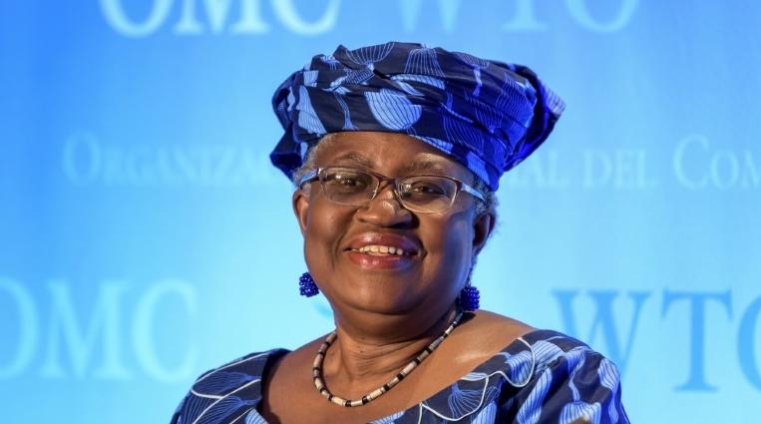
At home, in Africa, the continent is celebrating the appointment of Nigerian economist Ngozi Okonjo-Iweala as the first woman and African to head the World Trade Organisation.
Okonjo-Iweala beat eight of the world’s best contenders from four continents to clinch the post, with her selection being favoured by an excellent track record that includes raising nearly $50bn in aid for Africa’s poorest countries in 2010 while she worked at the World Bank.
This was five years after she negotiated an $18bn debt write-off for Nigeria as Finance minister, helping the country obtain its first-ever sovereign debt rating. Already, we know that she will do a great job in her new office after she vowed to take on global health challenges, amongst other issues Ardern and Okonja-Iweala are great examples of just how much success women can achieve if put in positions of leadership.
Yet they are not the only ones; everywhere you look, there are women leading exciting revolutions - from agriculture to medicine to aviation and the arts. And there is room for more, particularly in the fields of science, technology, engineering and mathematics (STEM), where it was previously thought that women’s participation was hindered by a lack of role models.
That hurdle has since been overcome with numerous girls beating insurmountable odds to become doctors, engineers, pilots and researchers, amongst other novel professionals. Obviously then, it is rather unsettling that even after such a show of initiative, today, in 2021, highly qualified women are still required to contest unconscious biases, discrimination, and uninviting climates in professional environments.
As a result of these workplace difficulties, women only make up 28 percent of researchers across the world with most opting to leave the scientific workforce early following disparities that keep them stuck in junior positions with no decision-making authority.
The situation is the same in sub-Saharan Africa where women make up only one-third of researchers in all disciplines, according to UN data. It is even harder for women in the region to advance in their careers owing to deep-rooted cultural barriers that demand them to balance their professional lives with family responsibilities.
However, we are now at a change-point, where the world is beginning to realize that no meaningful progress can be achieved without women in key leadership positions. It is, therefore, my hope that we will begin to see a commitment to inclusivity that deliberately seeks to break the unnecessary biases that women professionals continue to suffer.
For starters, I propose a review of the stratification in Africa’s healthcare system, where women dominate at the level of service delivery but are overshadowed by men in decision making positions. This would especially be a great time for such a review because, after the Covid-19 pandemic, the world understands the importance of superior healthcare systems.
Afterwards, we can move on to address the other inequalities that prevent women from playing a leading role in Africa’s pursuit of a transition to a knowledge-based economy that is driven by innovation.
It is a choice, but it is also the only choice we have.
*****
Sophia Baah is the Chief Operating Officer of mPharma, a Pan-African technology-driven healthcare company building
Latest Stories
-
Gender Ministry meets Nana Akua Addo’s husband over domestic violence after hospital discharge
29 minutes -
UG Vice-Chancellor urges swift operationalisation of National Research Fund
46 minutes -
Pope Leo to have surgery after lump found in lung
53 minutes -
Joseph Cudjoe writes: Ghana must break free from the dangerous mindset that natural resources are the foundation for wealth
1 hour -
Children among 109 dead after boat capsizes off Djibouti, UN says
1 hour -
OmniBSIC Bank’s 11th health walk promotes fitness and business growth
2 hours -
2026 World Maritime Day: Danish Embassy organises “The Gulf of Guinea Speaks”
2 hours -
New Economy will tackle unemployment and restore hope – Ato Forson
2 hours -
IMMILAC president recounts personal losses as security women lead breast cancer awareness campaign in Wa
2 hours -
University of Ghana postpones October 12 reopening as GAUA strike persists
2 hours -
Bahass Foundation launches vocational skills training to support mental health recovery in Wa
3 hours -
NPP orders parliamentary aspirants and their supporters to suspend campaign activities
3 hours -
Techiman unites against child marriage: Joy Impact Makers Awardee leads charge on International Day of the Girl Child
4 hours -
Ghana Psychological Association calls for greater involvement of people with lived experience in mental health care
5 hours -
Ablakwa says Ghana could evacuate more citizens from South Africa if the situation worsens
5 hours