

Audio By Carbonatix
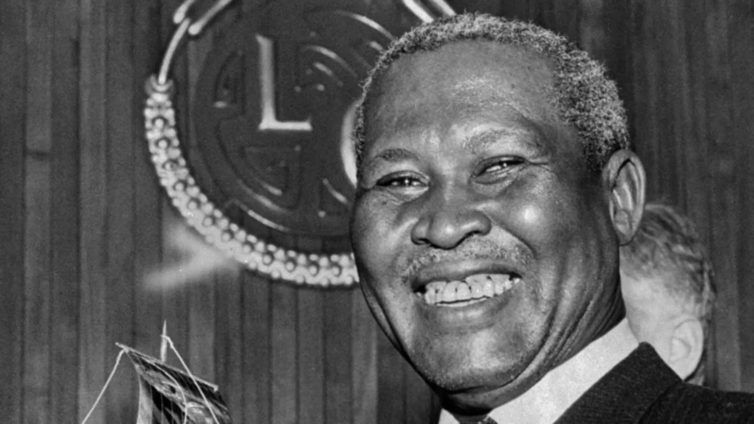
A South African court is due to re-examine the circumstances around the death of one of the most renowned campaigners against the racist system of apartheid, which had initially been described as accidental.
A 1967 inquest ruled that Chief Albert Luthuli was walking on a railway line when he was struck by a train and died after fracturing his skull.
Activists and his family have long cast doubts on the official version of events, and have said they welcomed the re-opening of the inquest.
Luthuli, who at the time of his death was the leader of the then-banned African National Congress (ANC), won the Nobel Peace Prize in 1960 for spearheading the fight against apartheid.
The ANC went on to lead the struggle against white-minority rule and came to power in 1994, following the first democratic elections.
The National Prosecuting Authority (NPA) has said that it "will be presenting evidence before the court in an attempt to have the initial findings into the deaths of Chief Luthuli... overturned". It has not said what that evidence is.
Nearly six decades ago, the initial inquiry into the Nobel laureate's death "found that there was no evidence which disclosed any criminal culpability on the part of any of the employees of the South African Railways or anyone else", the NPA said last week.
- Ghosts of apartheid haunt South Africa as compensation anger brews
- Timol inquest: Verdict gives hope to apartheid victims
But campaigners suspected the authorities had killed him and covered it up.
Luthuli's grandson, Albert Mthunzi Luthuli, told South Africa's IOL news site that the family "welcomes the re-opening of the inquest", even though it is now years after the deaths of "many people that we suspected of being involved in my grandfather's murder".
"We believe the TRC [Truth and Reconciliation Commission] let many families of victims down by giving amnesty to apartheid murderers," he added, referring to the post-apartheid process where perpetrators of violence in the previous decades were encouraged to come forward to fully confess their crimes.
At the time of his death, Luthuli was not allowed to leave his residential area in Groutville - now in KwaZulu-Natal province - or take part in politics.
He was South Africa's first winner of the Nobel Peace Prize. The award was later given to three other South Africans: Archbishop Desmond Tutu in 1984, and Nelson Mandela and FW de Klerk in 1993.
The Luthuli case is one of two highly anticipated inquests into the deaths of anti-apartheid figures re-opening on Monday. The other concerns lawyer Mlungisi Griffiths Mxenge, who was killed in 1981.
He had been stabbed 45 times and his throat had been slit.
An inquest into his death a year later failed to identify his murderers and it was only nine years later that they were revealed - when Butana Almond Nofemela, confessed to killing Mxenge and seven other ANC members.
He was part of a covert hit-squad, or counter-insurgency unit, that detained and killed anti-apartheid activists.
Nofemela, together with the squad's commander Dirk Coetzee and David Tshikalange, were in 1997 found guilty of Mxenge's murder but were granted amnesty by the TRC before the criminal case could be concluded.
Explaining the reopening of the inquest into Mxenge's death last year, the justice ministry said this was because new evidence had emerged, suggesting that "certain critical information" had not been presented to the TRC.
In South Africa, inquests often look into determining how a person died and whether anyone should be held responsible for their death.
Latest Stories
-
I have supported highway authority financially to fix roads in my constituency – A Plus
58 minutes -
US, Iran fail to reach peace agreement after marathon talks in Pakistan
1 hour -
ECG kicks off Phase Two of transformer upgrades at Lashibi; brief outages expected
2 hours -
Port crises loom as 11,000 drivers threaten four-day strike
3 hours -
A source of excellence across generations – Vice President Opoku-Agyemang lauds Mfantsipim
4 hours -
(Photos) Mfantsipim School launches historic 150th anniversary
4 hours -
Knights and Ladies of Marshall group backs Catholic Bishops’ stance on anti-LGBTQ+
5 hours -
Bright Simons writes: All the Filla in the Ibrahim Mahama/E&P – Gold Fields Saga
5 hours -
Monetise Idiocy In Ghana
5 hours -
The Ghanaian prophet and the mysterious death of his scottish wife Charmain Speirs
6 hours -
Nearly 400 sentenced in Nigeria for links to militant Islamists
7 hours -
Ghana’s recovery supported by gold strength despite global oil price pressures – Standard Bank Research
7 hours -
Methodist Church hails Mfantsipim@150; calls for “fresh consecration” to excellence
7 hours -
‘Excellence is our inheritance’ – Nana Sam Brew-Butler hails Mfantsipim’s 150-year reign in leadership
7 hours -
Kwaku Azar writes: A-G vs OSP
7 hours