

Audio By Carbonatix
Elon Musk's SpaceX says it has cut Starlink satellite communication links to more than 2,500 devices used by scam compounds in Myanmar.
More than 30 compounds are believed to be operating along the Thai-Myanmar border, where people from around the world are trafficked and forced to work on scams generating tens of billions of dollars annually.
Announcing the move, Lauren Dreyer, head of Starlink business operations, said the firm takes action on the rare occasion it identifies violations.
The service's termination follows Monday's takeover of one of the largest compounds, KK Park, by the Myanmar military, as it retakes territory lost to insurgent groups over the past two years.
Campaigners have long warned that Starlink technology has enabled the mainly Chinese crime syndicates to operate from remote locations along the border.
Myanmar has become infamous for these operations, which defraud victims through romantic ploys and bogus investment schemes.
Workers are lured under the guise of legitimate jobs, only to be held captive and forced into criminal activity.
Survivors recount gruelling conditions, long hours, torture and beatings for failing to meet targets. Many of the victims come from African countries.
"In Myanmar... SpaceX proactively identified and disabled over 2,500 Starlink Kits in the vicinity of suspected 'scam centers'," Dreyer said in a post on X.
"We are committed to ensuring the service remains a force for good and sustains trust worldwide: both connecting the unconnected and detecting and preventing misuse by bad actors," she added.
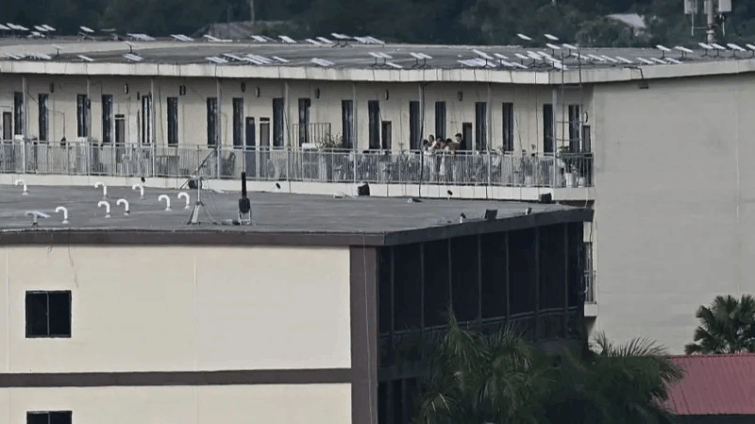
On Monday Myanmar's military said it had "cleared" KK Park, releasing more than 2,000 workers and confiscating 30 Starlink terminals.
Photographs show the satellite dishes on the compound's rooftops and footage supplied to the BBC showed thousands of workers leaving KK Park on foot.
However, at least 30 other scam compounds remain active along the border, employing tens of thousands globally. Many are protected by militia groups loyal to the Myanmar military and it is unclear whether they have also lost access to Starlink services they once relied on.
These centres have become a key component of Myanmar's wartime economy, as the junta battles various rebel groups while relying on Chinese support to maintain its hold on power.
Latest Stories
-
Edmond Boateng takes up secretary role at Honorary Consular Corps of Ghana
1 hour -
Gambia appoints British barrister to prosecute gruesome Jammeh-era crimes
1 hour -
Girl group Flo on entering into their ‘bombastic, confident, strong’ era
2 hours -
Germany suspends military approval for long stays abroad for men under 45
2 hours -
Liverpool face uphill Champions League task after PSG thrashing in Paris
2 hours -
‘Ketamine Queen’ sentenced to 15 years in Matthew Perry overdose death
2 hours -
Nigeria begins mass trial of 500 terrorism suspects
2 hours -
Atletico Madrid stun 10-man Barcelona to seize Champions League semi-final advantage
3 hours -
Black Stars coach to be announced by next week – Sports Minister
3 hours -
Chiefs, queen mothers and principal elders of Odau group denounce ‘rebellious Etweresohene’, pledges allegiance to Okyenhene
3 hours -
KNUST library dress code sparks online backlash over strict rules
3 hours -
Cultural Diplomacy in Action: Ghanaian youth leaders present symbolic smock to U.S. Chargé d’Affaires
3 hours -
Ghana Card payment activation under review – NIA breaks silence on financial integration
3 hours -
Ofori-Atta’s ICE release on bail positive; he poses no risk – Amanda Clinton
3 hours -
Ken Ofori-Atta’s passport seized after bail, set to reappear in US Court on April 27
3 hours