

Audio By Carbonatix
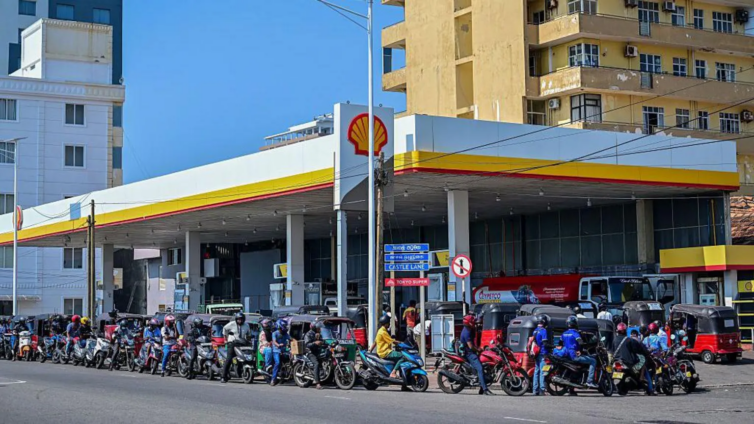
Sri Lanka has declared every Wednesday a public holiday to conserve fuel as the island nation grapples with possible shortages in the wake of the US and Israel's war with Iran.
"We must prepare for the worst, but hope for the best," President Anura Kumara Dissanayake said at an emergency meeting with senior officials on Monday.
This is the latest in a series of belt-tightening measures undertaken by Asian countries since the war hocked off the Strait of Hormuz, which used to carry millions of barrels of oil from the Gulf into the region.
Nearly 90% of all oil and gas flowing through the strait last year was bound for Asia, the world's largest oil-importing region.
What are other Asian countries doing?
Elsewhere in Asia, authorities have resorted to a variety of austerity measures.
In Thailand, for example, the government is urging people to swap suits for short-sleeved tees to reduce reliance on air conditioning, while in Myanmar, private vehicles are allowed only to operate on alternate days depending on their licence plate numbers.
Bangladesh has brought forward the Ramadan holidays at universities and introduced planned blackouts nationwide to conserve energy.
In the Philippines, some government offices have mandated that staff work from home at least one day a week, while President Ferdinand Marcos Jr has banned non-essential travel in the public sector.
And Vietnam is strongly encouraging citizens to stay at home more to conserve fuel. The government also called on people to "ride bicycles, carpool, use public transport, and "restrict personal vehicle use when unnecessary."
What else is Sri Lanka doing?
Sri Lanka's new four-day week will also apply to schools and universities, but it will not affect state institutions providing essential services, such as the health and immigration authorities, officials say.
Authorities picked Wednesday instead of Friday as the additional off day so that government offices would not be closed for three days in a row, they added.
Motorists are also now required to register for a National Fuel Pass which rations the amount of fuel that people can buy.
This has sparked some unhappiness among some Sri Lankans who feel that the fuel quotas - 15 litres for private cars and five litres for motorcycles - are too low.
The rationing mechanism was first implemented in 2022, during the country's worst economic crisis, when it ran out of foreign reserves and was unable to import essential items or buy enough fuel.
Oil prices have soared since the US and Israel started bombarding Iran late last month, and is currently hovering at around $100 a barrel.
Latest Stories
-
M&C Group backs Ghana’s 24-hour economy agenda, pledges investment and jobs
3 minutes -
Rapper Cannella talks music, values and ambitions on Fresh Juice
7 minutes -
CLOGSAG suspends nationwide strike; gives gov’t 14 days to resolve pay dispute
13 minutes -
Rivals on paper, brothers in spirit: Opare Addo celebrates friendship with Sammi Awuku at ADISCO anniversary
20 minutes -
Ghana’s economy expands by 6.0% in 2025, with strong 5.8% growth in final quarter
24 minutes -
Five things to know about Black Stars new boy Marvin Senaya
53 minutes -
Set up constitutional reforms implementation committee—CPCR urges President
1 hour -
Ghanaians are worse off now than in 2024—Awal Mohammed
1 hour -
We must transition from crisis management to institutional discipline—UEW Lecturer
1 hour -
Two fire officers injured as tanker explodes a second time at Potsin Junction
1 hour -
BoG to cut policy rate further despite geopolitical risks
2 hours -
Inflation to go up in March 2026 – Report
2 hours -
Dozens killed after Afghanistan rehab centre struck
2 hours -
Minerals Commission warns public over fraudulent emails by impostors
2 hours -
Photos: Fuel tanker explodes at Potsin Junction
2 hours