

Audio By Carbonatix
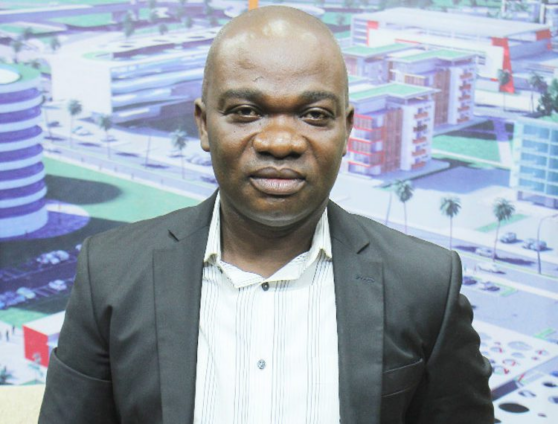
A lecturer in political marketing at the University of Education, Winneba, Dr Bernard Tutu Boahene, has called for a shift in Ghana’s economic management approach from crisis response to sustained institutional discipline.
His comments come amid remarks by the Governor of the Bank of Ghana, Dr Johnson Asiama, who stated that Ghana’s economy is stabilising faster than expected, with key indicators showing notable improvement across several sectors.
Speaking on JoyNews’ AM Show on March 17, Dr Boahene said while recent reports by the Bank of Ghana reflect transparency, their relevance to the everyday Ghanaian remains a key concern.
“I feel that this whole issue about the reports that the Bank of Ghana has given to Ghanaians is good, and I like it in terms of its transparency and all that. These are all figures. These are statistics. And if inflation is around 3.3 percent, obviously, the practicality of it is what makes it interesting to the ordinary Ghanaian on the streets,” he stated.
He questioned how improvements in macroeconomic indicators translate into real benefits for citizens, citing the increase in gross international reserves from $13 billion in January to $14.5 billion in March.
According to Dr Boahene, the more immediate concern for many Ghanaians, particularly importers, is the stability of the cedi against the US dollar.
“I think that the key thing here for the Ghanaian importer, not really the Ghanaian exporter, has to do with the stabilisation of the cedi and how it has been performing against the dollar in recent times,” he explained.
He stressed the need for deliberate long-term strategies, urging government and policymakers to move beyond short-term fixes.
“I feel that we need to transition from crisis management to institutional discipline,” he said.
Dr Boahene further urged authorities not to become complacent with recent gains but rather to intensify efforts to achieve lower inflation rates.
“If this government and subsequent governments can come up with plans, interventions, and strategies—and not become complacent with the gains—then we can work even harder to ensure that Ghana attains an inflation of 0.1 percent or even 1 percent," he noted.
Touching on concerns that Ghanaians continue to experience hardship despite relatively lower inflation figures, he explained the distinctions between inflation, deflation, and stagflation.
“There is a fine line between three inflationary terms: inflation itself, deflation, and stagflation. These are three terms, and they work separately at different times,” he said.
He explained that inflation generally leads to rising prices, which can benefit producers through increased profits and expansion but places a burden on consumers.
“With inflation, everything is getting expensive. The good thing is that you may have jobs because it favours producers. But for the buyer, it is not good,” he stated.
On deflation, he said consumers often delay purchases in anticipation of further price drops, which can slow economic activity.
“For instance, a contractor may say cement prices are coming down, so I will wait till next week before buying. So, the consumer defers the purchase because of anticipated price reductions—that is, deflation,” he explained.
However, Dr Boahene described stagflation as the most concerning scenario, noting that it creates uncertainty and fear.
He added that managing these three economic conditions requires careful policy coordination and strong institutions.
“For me, I feel that it is about the management of these three interfaces. That is where I believe we need to move away from crisis management to institutional build-up,” he stated.
Dr Boahene further stressed the importance of strengthening Ghana’s productive sectors, including agriculture, manufacturing, and services, to reduce reliance on imports and foreign aid.
“If you do not build these sectors and we keep relying on foreign aid and imported products, it will get to a point where we will be in trouble,” he warned.
“For now, we are managing, but it appears that we are getting closer to the ditch. The smallest thing could push us into trouble,” he added.
He concluded by noting that the Bank of Ghana and its leadership now carry increased responsibility in steering the country towards long-term economic stability.
“I also believe that because of our attitude towards national building, the Bank of Ghana boss and his team have more responsibilities now,” he concluded.
Latest Stories
-
Conflicts among care providers linked to maternal, neonatal deaths – Expert
1 hour -
GIS marks 10th TIME conference, champions improved teaching practices
2 hours -
BRICS Or Balance? What Ghana’s bid really means
2 hours -
GPRTU wants full TRAFFITECH-GH implementation to start in 2027
2 hours -
Mahama announces plans to import electric wheelchairs for PWDs
2 hours -
KGL U17 Colts 2026: Western beat Prempeh Elite Academy to set up final final with Greater Accra Region
3 hours -
Late Solanke strike salvages 10-man Spurs draw at Man United
3 hours -
Gender Ministry to monitor welfare of Nana Akua Addo’s children amid domestic violence case
3 hours -
Benedict Okyere Yeboah: Ghana’s football problem goes beyond sacking a coach
3 hours -
GPL 2026/27: Darkwah Wiafe’s winner sees All Blacks beat Kotoko
3 hours -
ITF World Tour : Patel Wins Boys’ Singles Final at J100 Accra
3 hours -
Ghana must pursue BRICS partnership if it brings economic benefits – Kpebu
3 hours -
Success and Wright Claims J100 Accra Girls’ Doubles Championship
3 hours -
ITF J100: America’s Wright wins J100 Accra Girls’ Singles Title
4 hours -
Expedition hopes to find aviator Amelia Earhart’s plane on remote island
4 hours