

Audio By Carbonatix
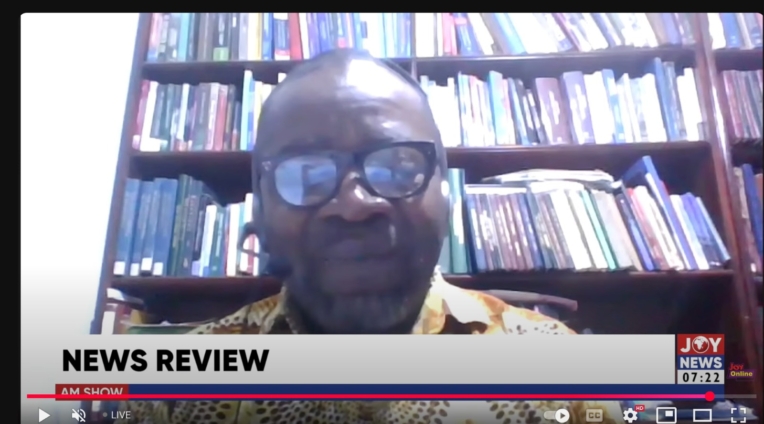
A senior lecturer at the Political Science Department of the University of Ghana, Dr. Kwame Asah-Asante, says Ghana’s fight against illegal mining, popularly known as galamsey, will remain ineffective if the government fails to involve key stakeholders, including traditional authorities, in finding sustainable solutions.
Speaking on JoyNews' AM show on the country’s renewed debate over illegal mining, Dr. Asante stressed that stakeholder engagement is the “first point of call” if the menace is to be tackled meaningfully.
“The first part of call is stakeholder engagement — that is critical. And stakeholders, once you bring them to the table, obviously you cannot do without the chiefs and opinion leaders within the communities. You need them,” he said.
He noted that while conversations around galamsey have focused heavily on pollution, state of emergency declarations, and enforcement, very little attention has been paid to those who control the lands where mining takes place.
According to him, traditional rulers have repeatedly complained that mining leases are granted without their knowledge or consent, creating a gap that allows illegal activities to flourish.
“Traditional rulers, who are the owners of the land, have said time and again that people come there with letters, having been given leases to come and work on the land without their knowledge,” he explained.
Dr. Asante also pointed to international examples, such as Chile and Brazil, where mining operations are planned in consultation with local communities to ensure better regulation, employment opportunities, and environmental protection.
Read also: NPP belittling govt’s efforts in galamsey fight – Mathias Alagbo
He argued that bringing traditional leaders, opinion leaders, and local communities to the negotiation table would make enforcement easier and ensure that mining activities are carried out responsibly.
“If you engage the stakeholders, enforcement will be part of that process. The issue of chemicalization or dechemicalization of mining processes will also be addressed,” he added.
Dr. Asante believes a locally driven, inclusive strategy will yield better results than the current top-down approach.
Latest Stories
-
This Saturday on Prime Insight: Fuel levy suspension, LGBTQ+ legislation, and Damang Mine controversy
2 hours -
Struggling Real suffer title blow with Girona draw
3 hours -
Mahama nominates Pamela Graham as Auditor-General
3 hours -
The five big sticking points in US-Iran talks
4 hours -
Melania Trump’s speech propels Epstein crisis back to forefront
5 hours -
What everyone should know about C-sections
5 hours -
Gunmen kill at least four people at Afghanistan picnic spot
5 hours -
Health Ministry engages Ga Mantse ahead of Free Primary Healthcare launch
6 hours -
We can tackle multiple priorities – Sam George defends Anti-LGBTQ Bill push
6 hours -
Statement: Ghana Chamber of Mines’ Response to Claims in Joe Jackson’s “Ananse Stories about the Economy of Ghana”
6 hours -
GES opens 2026 teacher recruitment for licensed B.Ed graduates
6 hours -
Ghana must value skilled trades, build resilient learners — Ibn Chambas
6 hours -
Ghana must rethink education around relevance, resilience and responsibility — Ibn Chambas
6 hours -
Prince Harry faces defamation lawsuit from charity he co-founded
6 hours -
South Korea deploys thermal cameras to track escaped zoo wolf
6 hours