

Audio By Carbonatix
The Leadership and Advocacy for Women in Africa (LAWA) Ghana, in partnership with the University of Oxford Faculty of Law, has called for the enactment of legislation to address Technology-Facilitated Gender-Based Violence (TFGBV) and respond effectively to emerging digital threatsq.
LAWA Ghana, an organisation advocating laws to protect the rights of women and girls, and the University of Oxford, urged the promulgation of a new law or the amendment of existing legislation to specifically address deepfake abuse, online impersonation, and synthetic sexual content.
The group noted that such legal measures were a necessary next step in ensuring that Ghana’s legal system kept pace with rapidly evolving technological threats.
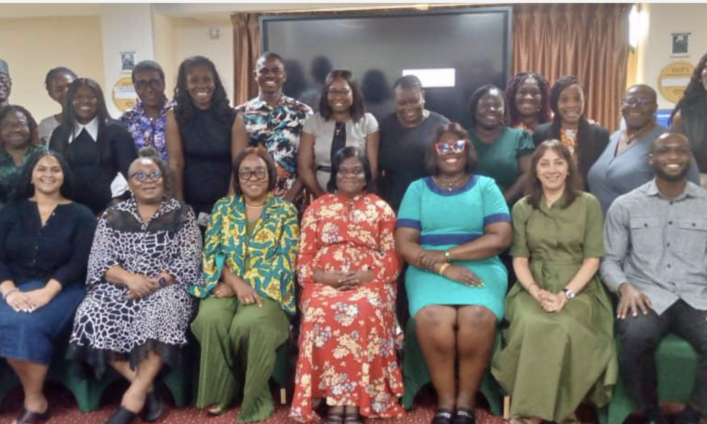
The call was made at a stakeholder engagement held in Accra on Tuesday on the theme: “Technology-Facilitated Gender-Based Violence in the Age of AI: Legal and Policy Pathways for Ghana.”
Professor Shazia Choudhry and Aincre Maame-Fosua Evans of the University of Oxford Faculty of Law presented research on TFGBV, focusing on deepfake and image-based sexual abuse, as well as doxxing, highlighted their harmful effects on women and children.
On deepfakes – the creation, manipulation, and distribution of sexually explicit images or videos by superimposing an individual’s face onto another person’s body using artificial intelligence – Prof Choudhry stated that 98 per cent of such acts were perpetrated against women.
She warned that failure to address the issue could reduce women’s participation in politics, media, and civic spaces due to stigma and social repercussions.
“There are also economic costs for victims and the state, including expenses related to legal action, content removal, mental health support, and loss of productivity,” she said, calling for specialised laws to address the phenomenon.
Speaking on doxxing – the intentional release of a person’s private information online without consent – Maame-Fosua Evans noted that victims often experienced harassment and abuse, adding that Ghanaian women could face similar risks if adequate legal protections were not established.
Madam Fitnat Adjetey, on behalf of LAWA Ghana, said every tool developed by humanity could be weaponised, and that such technologies were increasingly being used against women and girls with impunity.
She acknowledged Ghana’s progress in addressing violence against women and promoting gender equality but noted that existing legal and institutional frameworks did not adequately capture AI-enabled abuses.
Referencing laws such as the Cybersecurity Act, 2020 (Act 1038), the Data Protection Act, 2012 (Act 843), the Domestic Violence Act, 2007 (Act 732), and the Electronic Communications Act, 2008 (Act 775), Madam Adjetey said their provisions did not sufficiently address Technology-Facilitated Gender-Based Violence.
She, therefore, called for amendments to existing legislation or the enactment of a comprehensive law to tackle TFGBV.
“In Ghana today, women, including professionals, students, and community leaders, are facing real harms such as deepfake videos, synthetic sexual images, and online impersonation,” Madam Adjetey said.
“The resulting reputational, emotional, and economic damage is often irreversible. Unfortunately, our current legal framework does not adequately address these emerging harms.”
She stressed the need to address those legal gaps through a participatory and cross-sector approach that reflected Ghana’s constitutional values and social context.
Participants at the workshop recommended the development of clear legal definitions for TFGBV-related offences, strengthened enforcement mechanisms, and increased public awareness to combat the growing threat.
Latest Stories
-
VAST calls for urgent policy overhaul as air pollution kills thousands in Ghana
1 hour -
Outcome to The Drama: 10 of the best films to watch this April
1 hour -
Britain led the fight to end slavery; we shouldn’t be paying for a crime we helped eradicate – Kemi Badenoch
2 hours -
“Who should compensate whom?” – Afenyo-Markin sparks heated Parliamentary debate over slavery reparations
2 hours -
Iran strikes injure US troops at Saudi base
2 hours -
NPP deploys regional heavyweights to oversee polling station and electoral area polls
3 hours -
Akufo-Addo to lead ECOWAS election observers for Benin’s high-stakes presidential transition
3 hours -
Iran war splits older and younger conservatives – as pressure builds for Trump to find exit ramp
4 hours -
Callistus Mahama writes on slavery reparation: ‘We cannot confuse participation with responsibility’
4 hours -
‘The gravest crime against humanity’: What does the UN vote on slavery mean?
5 hours -
Catholic Bishops back Mahama after US university rescinds honorary degree over LGBTQ stance
5 hours -
Ablakwa expresses disappointment over US ‘no’ vote on the UN Slavery Resolution
6 hours -
Luxury watches and cash theft: Joy Sports Editor Fentuo details what happened at the Black Stars camp before the Austria game
6 hours -
India grants ‘penalty-free’ exit window for overstayed Ghanaian nationals
7 hours -
Panic selling sweeps GSE: Market cap sheds GH¢44billion in two days
7 hours